
Large Dining Tables for Park City Ski Homes and Family Gatherings
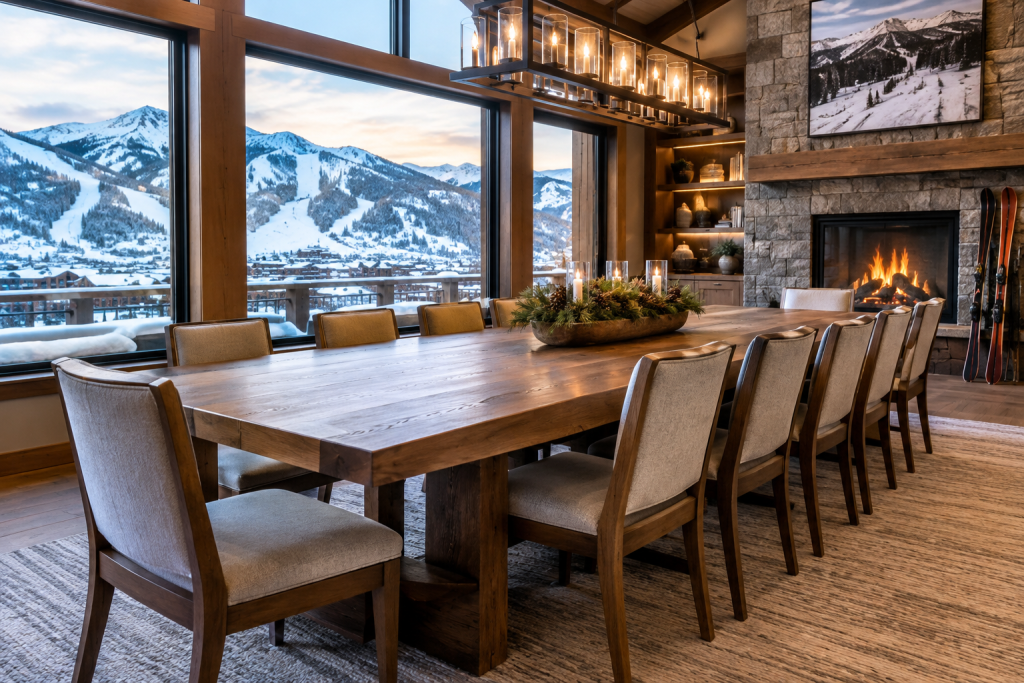
A large dining table can become the organizing piece of a Park City ski home. It needs to support family meals, après-ski snacks, holiday gatherings and the occasional spread of gear that somehow ends up in the dining room. It also needs to look proportionate, work with the chairs or benches you already have in mind, and make it through the home’s access route.
That combination is why an oversized table is worth planning carefully. A larger tabletop alone doesn’t solve every problem. Seating capacity, room clearance, base placement, wood selection, delivery access and the visual weight of the design all matter.
Park City Tables creates built-to-order and specialty custom dining tables for Park City and Utah mountain homes. If you’re considering large dining tables for Park City ski homes, the following questions can help you decide whether a custom build is the right direction and what information to provide before discussing the design.
Start with the way the room will actually be used
“Seats twelve” sounds like a clear requirement until you consider how those twelve people will sit. Are most of them adults? Will the table usually be set with wide dining chairs? Do you want room for serving dishes in the middle? Would benches be useful along one or both sides?
Make a short list before choosing dimensions:
- The usual number of diners.
- The maximum number of guests you want to accommodate.
- Whether seating will use chairs, benches or a combination.
- Whether place settings, serving dishes or centerpieces need additional space.
- Whether the table will be used mostly for meals or also for games, work and gatherings.
Guest count is a starting point, not a complete sizing formula. Chair width and the amount of elbow room each person needs can change the practical capacity. A table that technically fits twelve may not feel comfortable if the chairs are broad or if the base interferes with people’s legs.
Balance table size with room clearance
The table should fit the dining area without making movement feel like an obstacle course. Before requesting an oversized dining table, measure the room’s length and width and note the locations of walls, doors, windows, fireplaces, kitchen openings and other fixed features.
Then measure the complete footprint of the table and seating, not just the tabletop. Pull chairs out as if someone were sitting down. Leave space for people to walk behind occupied chairs where the room layout requires it. If a bench will sit against a wall, think about how it will be accessed and whether it can slide out.
A paper or painter’s-tape outline on the floor can be useful. It gives you a quick sense of whether the proposed dimensions leave comfortable circulation. For a second home or vacation property, a room photo marked with approximate measurements can also help begin the design conversation remotely.
Choose a proportion that suits the home
Large tables can be long and streamlined, broad and substantial, or shaped around a distinctive slab. The right proportions depend on the room and the visual character you want.
A long rectangular table often works well in a dedicated dining room or an open space aligned with the kitchen. A wider tabletop can create more room for serving and conversation, but it also increases the overall footprint. If the room is visually busy, a simpler tabletop and base may keep the table from competing with surrounding finishes.
Mountain-home interiors can support many directions: a farmhouse or trestle design, a modern hardwood table, a live-edge slab or an epoxy river design. The goal isn’t to choose the most dramatic option. It’s to choose a shape and level of detail that make sense beside the flooring, lighting, cabinetry and architecture.
For additional ideas, browse the custom table gallery as design inspiration. Gallery images should be treated as inspiration for a custom build, not as a list of currently available inventory.
Think carefully about the base
The base affects both appearance and comfort. It also matters more as a table gets longer or wider.
Trestle bases can reinforce a farmhouse or traditional direction, while other base styles may create a cleaner modern look. The placement of legs, pedestals or supports influences where chairs can go and whether guests have comfortable legroom. A base that looks excellent from one angle may be less practical if it blocks the preferred seating positions.
When discussing a custom large table, identify whether you prefer:
- A farmhouse, trestle or modern base direction.
- Maximum flexibility for chair placement.
- A visually heavier or lighter appearance.
- Matching or contrasting wood and base materials.
- Separate base assembly for delivery into a difficult-access room.
Custom benches can also be considered when you want flexible seating along one side or a more relaxed gathering-space feel. The bench dimensions and position should be planned with the tabletop and room clearance rather than added as an afterthought.
Select wood for color, grain and design character
Park City Tables’ Standard Collection includes Douglas fir, alder, maple, white oak and black walnut. Each can lead the design in a different direction, so selection is about more than choosing a species that sounds appropriate for a mountain home.
Douglas fir can support a more rustic appearance. Alder offers a warm wood character, while maple can create a lighter, cleaner impression. White oak is a versatile option for traditional or contemporary designs, and black walnut brings deeper color and visual contrast. The finish changes the final appearance as well, so it’s useful to discuss both wood and finish together.
There isn’t one universally best wood. Consider the color you want, the grain character that suits the room, the desired style and how the tabletop will relate to the rest of the home. The custom table wood options page can help organize that part of the conversation.
Know when a specialty build makes sense
A Standard Collection table may be a good fit when you want an established farmhouse, trestle or modern hardwood design with more readily available lumber and a simpler custom process. Published target turnaround for Standard Collection tables is approximately four weeks, subject to materials and project requirements.
A project moves toward the Specialty Collection when it involves unusual dimensions, a live-edge slab, distinctive slab character, an unusual base, an epoxy river design or more individualized material sourcing. An appropriate slab or hardwood may need to be sourced specifically for the project. Specialty projects currently have an advertised target of approximately eight weeks, but that is an estimate rather than a guaranteed completion date.
For tables that need unusual scale or a highly individual material, review the options for specialty custom tables. Clear or colored epoxy can be incorporated into specialty river-table designs when it suits the concept.
Plan the route before the table is built
Access is one of the most important logistical details for an oversized table. Measure exterior doors, interior doors, hallways, stairways and elevators. Note tight turns, low ceilings and any point where the table may need to be carried vertically or assembled.
Share those details early. A table can be designed around access restrictions, and the base may be attached or assembled after the tabletop reaches the intended room. Delivery and setup can include bringing the table into the room, assembling the base when needed, leveling and final placement.
This is particularly useful for second-home owners who aren’t always at the property. Delivery and setup may sometimes be coordinated through a property manager, contractor or other authorized contact. Details should be discussed in advance rather than left to delivery day. More information is available on table delivery and setup.
Consider personalization without overloading the design
A large gathering table can carry a meaningful detail without becoming visually crowded. Custom engraving may include a family name, meaningful date, coordinates, monogram, short inscription, company logo or custom artwork, depending on the build.
Placement can be on the tabletop, apron, base, end, underside or another suitable location. A discreet underside engraving may be right for a quiet family detail, while an end or tabletop placement can make the personalization more visible. Simple custom engraving currently starts at $195; more complex engraving and artwork are quoted individually.
Discuss the engraving at the design stage so its size, placement and relationship to the grain are considered with the rest of the table.
What to send before requesting a quote
You don’t need completed furniture plans to begin. A useful starting package includes:
- A photo of the room from one or more corners.
- Approximate room dimensions and the proposed table area.
- The number of people you want to seat comfortably.
- Chair or bench dimensions, if already selected.
- Photos of tables, bases or wood styles you like.
- Information about doors, stairs, elevators and other access concerns.
- Any interest in live edge, epoxy, engraving or unusual dimensions.
Those details help narrow the size, wood, finish, base, seating plan and construction approach before the design becomes too specific.
Request a custom quote
A large table is appropriate when it fits the way you gather, the scale of the room and the practical route into the home. If a standard size nearly works but not quite, a custom build can focus on the dimensions and details that matter most.
To start, request a custom quote from Park City Tables. Send a room photo, approximate dimensions, the number of people you’d like to seat and examples of tables you like. The team can help narrow the size, wood, style, base, finish and available options. Call 435-200-4982 or use the custom table quote request page.