
Thanksgiving in Park City: Is Your Dining Table Big Enough?
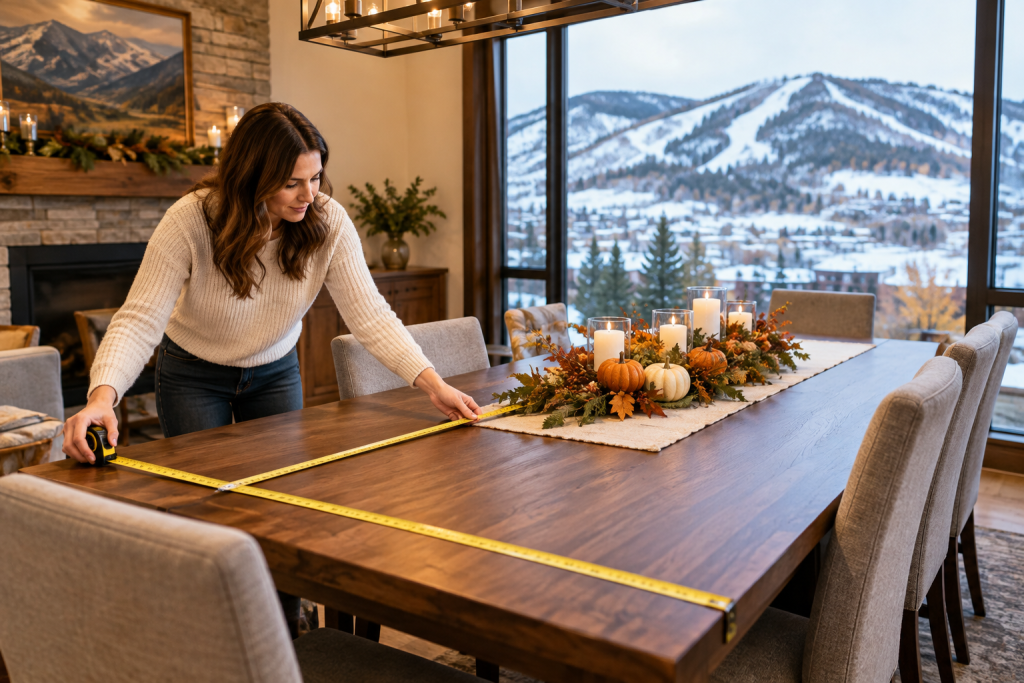
Thanksgiving has a sneaky way of turning a perfectly reasonable dining table into a game of upholstered Tetris. A few extra guests, a serving dish or two, and suddenly someone is balancing gravy on a windowsill.
If you’re planning a holiday gathering in Park City, the right Thanksgiving dining table size depends on more than the table’s length. You’ll also want to look at the number of people you’re seating, chair width, legroom, room clearance, serving space and the way guests will move through the room.
The goal isn’t simply to fit the most chairs possible. It’s to create a table where people can sit comfortably, pass food without an obstacle course and still get up when they need another roll.
Start with the number of people you actually want to seat
Begin with your Thanksgiving guest list, but separate regular seating from occasional overflow. A table for six may be perfectly sensible for everyday meals and still feel undersized when the family grows to ten or twelve for the holiday.
Write down:
- How many adults will sit at the table?
- How many children need full-size seating?
- Will anyone use a wider chair, armchair or mobility aid?
- Do you want room for an occasional extra guest?
- Will serving dishes stay on the tabletop?
- Would a bench provide flexible seating on one side?
Those answers matter because “seats eight” can mean very different things. A narrow chair tucked closely beside another chair is not the same as eight people having enough elbow room for a relaxed meal.
Use table length as a starting point—not the whole answer
As a general planning guide, allow roughly 24 inches of table edge per adult for comfortable everyday seating. You may be able to place people more closely for a short meal, but Thanksgiving usually involves lingering, serving, conversation and repeated reaching across the table.
That guideline gives you a useful first check:
- A 6-foot table has approximately 72 inches of usable length before accounting for corner seating or spacing preferences.
- An 8-foot table provides approximately 96 inches along its length.
- A 10-foot table provides approximately 120 inches along its length.
These figures don’t automatically tell you how many people will fit. The table’s width, base design, chair dimensions and whether anyone sits at the ends all change the result. A trestle base may leave different legroom than a central pedestal. A thick tabletop apron may affect where knees can go. A live-edge edge can also create a less uniform seating line than a straight rectangular top.
Think of length as the first measurement in the conversation, not the final seating promise.
Measure your chairs, not just your table
Chair width is one of the easiest details to overlook. Measure from the outside of one arm or side edge to the other. Then consider how much space people need to pull the chair out and sit down without bumping the person next to them.
Dining chairs with arms, broad upholstered backs or substantial cushions can require more room than simple side chairs. If your Thanksgiving seating includes a mixture of chairs, use the widest chair as your planning reference.
Also check the relationship between the chair seat and the underside of the tabletop. A table can be long enough for a large group but uncomfortable if aprons, braces or a low base interfere with knees. This is particularly important when selecting a custom base or considering a farmhouse or trestle design.
Check room clearance around every side
A table may fit on paper and still make the room feel crowded. Measure from the proposed tabletop edge to the nearest wall, cabinet, railing, fireplace surround or other fixed feature.
Leave enough room for three separate actions:
- Sitting: A guest needs space to pull a chair out and settle in.
- Walking: People should be able to move behind seated guests where the room layout requires it.
- Serving: Someone needs to carry dishes into the room and place or remove them without twisting around furniture.
There’s no single clearance number that works for every room. A dining area used only for meals can be planned differently from an open space that also serves as a passage between the kitchen, living room and entry. Mark the proposed tabletop on the floor with painter’s tape or cardboard. Add the approximate footprint of your chairs and walk around it. It’s a wonderfully unglamorous test, and it catches problems early.
Don’t forget table width and serving space
Length gets most of the attention, but width affects both comfort and function. A narrow table may work well when food is served from the kitchen. A wider table can provide space for serving dishes, candles and seasonal decoration, but it may consume more room clearance.
Ask how Thanksgiving meals usually work in your home. Do platters remain on the table, or does everyone serve from a counter or island? Will children need clear sightlines to adults? Does the room already have a nearby buffet or sideboard?
If you want a large family gathering table but don’t want a permanently oversized piece, consider how a bench, removable leaf or separate serving surface could affect the plan. Any option should be evaluated against the actual room dimensions and the table’s construction.
When a custom table may solve the problem
A custom table can be worth exploring when standard lengths leave you stuck between “too cramped” and “too much furniture.” Built-to-order dining tables allow the design conversation to include table size, wood species, finish, base style, seating requirements, chair width and room clearance from the beginning.
That can be useful in mountain homes where dining areas may have unusual proportions, open-plan layouts or access limitations. A table can be planned around the room rather than selected first and squeezed into place later.
Park City Tables offers both a Standard Collection and a Specialty Collection. Standard designs include farmhouse, trestle and modern hardwood options, with core wood choices including Douglas fir, alder, maple, white oak and black walnut. The Specialty Collection addresses projects such as live-edge slabs, epoxy river tables, oversized tables, unusual dimensions and distinctive bases.
For a closer look at how custom table ordering works, you don’t need finished furniture plans. A room photo, approximate dimensions, desired seating capacity and examples of tables you like can be enough to begin a design conversation.
Plan for access before choosing an oversized table
A table that fits the dining room still has to reach the dining room. Before committing to a long or unusually wide top, measure door openings, hallways, stairways, elevators and tight turns. Second-home owners and vacation-property owners may also want to coordinate access with a property manager, contractor or another authorized contact.
Large furniture delivery can involve more planning than simply leaving a package at the front door. Park City Tables can coordinate delivery and setup in Park City, Deer Valley, Heber City, Midway and surrounding Wasatch Back communities. Details depend on the property and the table design, so access information is useful early in the process. More information is available about table delivery and setup.
Gather these measurements before requesting a quote
You can make the initial conversation much more productive by collecting a small set of details:
- Room length and width
- Distance from the proposed table to walls, cabinets and walkways
- Door, hallway, stairway and elevator dimensions along the delivery route
- Current table length, width and height
- Chair width, depth and arm height
- Number of everyday seats and desired Thanksgiving seats
- Preferred seating at the table ends
- Whether you’re considering benches
- Preferred wood character, color and overall style
- Any interest in engraving, such as a family name, date, monogram or short inscription
A quick room photo is helpful, too. Include the surrounding furniture rather than cropping tightly around the existing table. The broader view can reveal traffic patterns and clearance issues that measurements alone might miss.
Make the decision before the holiday rush
Custom furniture requires planning, especially when a project involves unusual dimensions, a specific slab, a specialty base or personalized details. The current advertised target turnaround is approximately four weeks for Standard Collection tables and approximately eight weeks for Specialty Collection tables. These are estimates, not guaranteed completion dates, and material selection and project requirements can affect timing.
If Thanksgiving is the deadline, begin with measurements rather than a wish list. Once the room, seating goal and access route are understood, it becomes much easier to decide whether your current table needs a temporary seating plan—or whether a custom-sized table makes more sense for the home.
Ready to measure your table?
Request a custom quote from Park City Tables with a photo of your room, approximate dimensions, the number of people you’d like to seat and examples of tables you like. The design conversation can help narrow the size, wood, style, base, finish and available options.
You can also review custom table pricing and explore custom table engraving if you’re considering a family-name table or another personal detail. Call 435-200-4982 or request a quote through Park City Tables.