Choosing a Dining Table for a Midway or Heber City Mountain Home
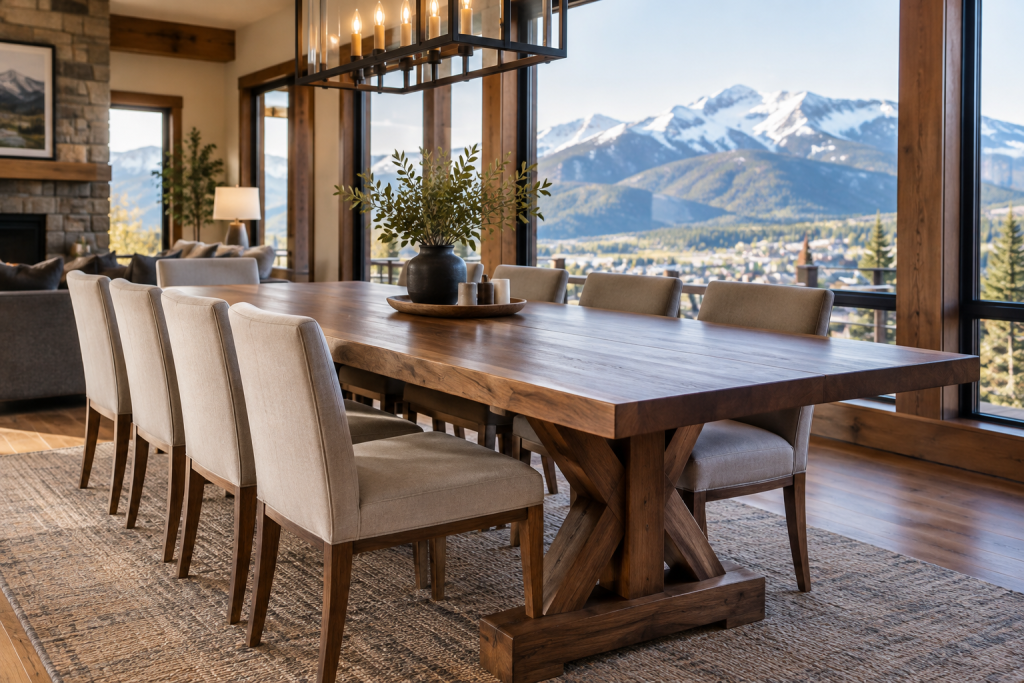
Choosing a custom dining table for a Midway or Heber City mountain home starts with the room—not a catalog photograph. A table that looks perfectly proportioned in a spacious lodge may feel crowded in a narrower dining area. And a beautiful oversized top is not much use if it cannot make the trip through the front door, stairway or elevator.
Homes across Midway, Heber City and the broader Wasatch Back can have very different proportions, furnishing plans and access routes. That is why the most useful planning questions are practical ones: How many people should sit comfortably? How much space is available around the table? Which wood and base suit the room? Can the finished piece reach its final location?
Park City Tables creates built-to-order and specialty dining tables for Park City and Utah mountain homes. You do not need completed furniture plans to begin. A room photo, approximate dimensions, desired seating capacity and a few examples of tables you like can provide a solid starting point.
Start with the room’s usable footprint
Measure the area where people will actually move, pull out chairs and serve food—not just the open rectangle shown on a floor plan. Note nearby walls, islands, fireplaces, cabinets, doors and walkways. A table can technically fit while still making the room awkward to use.
As a planning exercise, place painter’s tape on the floor to mark the proposed tabletop. You can also use flattened boxes or sheets of paper to test the footprint. Walk around it, pull out the chairs and imagine carrying platters to the table. If the taped outline already feels cramped, a larger custom top will not solve the problem.
Room proportions matter as much as square footage. A long, narrow dining area may suit a rectangular table with a relatively modest width. A more open room may accommodate a broader top, a substantial trestle base or a larger gathering table without overwhelming the surrounding furniture.
Choose seating based on real use
Guest count is a helpful starting point, but it is not the whole seating plan. Chair width, armrests, table legs and the amount of elbow room each person needs can change the result. A household that usually seats six may still want occasional seating for holiday meals or visiting family. A second-home owner may plan around a different pattern of use than someone furnishing a primary residence.
Think through these questions before settling on a length:
- How many people should sit comfortably on an ordinary evening?
- How many people should the table handle when guests visit?
- Will chairs have arms, or will some seating be benches?
- Do you need space for serving dishes, centerpieces or place settings?
- Will people sit at the ends, or mainly along the long sides?
A shorter table with comfortable spacing can work better than a longer table that forces chairs together. Conversely, if your mountain home regularly hosts large groups, an oversized table may be appropriate—but the room and access route need to support it. For more ideas about proportions and gathering spaces, review this guide to built-to-order dining tables.
Check access before designing a large table
Delivery planning should happen early, especially for a wide, thick or unusually long top. Measure the path from the delivery vehicle to the room, including exterior doors, interior doors, turns, stairways, elevators and tight hallways. Record the narrowest opening rather than assuming the largest doorway tells the whole story.
Also consider whether the table can be carried flat, tilted or assembled inside the home. A base that attaches after the top is in the room may simplify the final placement, but the complete delivery plan depends on the design and property.
Park City Tables can plan large tables around door widths, stairways, elevators and other access restrictions. Delivery and setup can include bringing the table into the intended room, attaching or assembling the base when needed, leveling and completing final placement. Second-home owners may also coordinate delivery through a property manager, contractor or authorized contact. See the details about table delivery and setup before finalizing an oversized design.
Select a style that belongs in the room
Mountain-home furniture does not have to follow one look. A farmhouse or trestle table can add visual weight and a relaxed gathering feel. A modern hardwood design may suit a cleaner interior with simpler lines. Live-edge construction emphasizes the natural outline and character of a slab, while an epoxy river design adds a more individualized visual element.
Try to evaluate the table alongside the other large shapes in the room. If the space already has prominent stone, heavy beams or strongly figured furniture, a quieter top and simpler base may create balance. If the room is restrained, distinctive wood character or a more expressive edge can become the focal point.
Benches are another useful option. They can provide flexible seating along one side and may tuck beneath the tabletop when not in use. The right choice depends on the room, the desired comfort and how formal or relaxed the dining area should feel.
Compare wood choices by appearance and character
The Standard Collection includes Douglas fir, alder, maple, white oak and black walnut. These woods can lead a design in very different directions, so compare color, grain, visual character and the overall atmosphere you want rather than searching for one universally “best” species.
- Douglas fir: A natural choice for a more casual, rustic or farmhouse-influenced look.
- Alder: A versatile option when you want a relatively understated hardwood appearance.
- Maple: Useful for a lighter, cleaner visual direction with noticeable but generally orderly grain.
- White oak: A strong fit for many traditional, contemporary and mountain-inspired interiors because of its visible grain and adaptable character.
- Black walnut: A darker, richer option that can make the tabletop a more prominent design feature.
Finish changes how the wood reads in the room, so look at examples in lighting that resembles your home when possible. If you are deciding between species, the custom table wood options page can help organize the conversation.
Know when a specialty table makes sense
The Standard Collection uses established designs and more readily available lumber, which can make the custom process simpler and more predictable. It may include farmhouse, trestle and modern hardwood designs, with published sizes generally ranging from 6 feet through 10 feet.
A Specialty Collection project may be a better fit when the room calls for a live-edge slab, epoxy, an unusual dimension, distinctive slab character, an unusual base or more individualized material sourcing. An appropriate slab or hardwood may need to be sourced specifically for the project. Clear or colored epoxy can be incorporated into specialty river-table designs.
Specialty does not automatically mean better. It means the design and material process is more individualized. A standard hardwood table may be the smartest choice when predictable proportions, a straightforward design and a simpler timeline matter most. You can compare possibilities through the guide to specialty custom tables.
Consider personalization before the build is finalized
Engraving can turn a dining table into a more personal part of the home, particularly for a second home, family gathering space or meaningful anniversary project. Available options may include a family name, date, coordinates, monogram, short inscription, company logo or custom artwork.
Placement may be on the tabletop, apron, base, end, underside or another suitable location, depending on the design. Think about whether you want the detail to be prominent or discovered more quietly over time. Simple custom engraving currently starts at $195, while more complex engraving and artwork are quoted individually. Review custom table engraving early so the placement works with the table construction.
Plan the quote around useful information
For a productive first conversation, gather:
- A photo of the dining area from more than one angle
- Approximate room dimensions and the proposed table footprint
- The number of people you want to seat regularly and occasionally
- Chair or bench dimensions, if already selected
- Photos of tables, bases, wood tones or finishes you like
- Measurements of doors, stairs, elevators and other access points
- Any engraving, live-edge, epoxy or unusual-sizing ideas
Current advertised targets are approximately four weeks for Standard Collection tables and approximately eight weeks for Specialty Collection projects. These are estimates, not guaranteed completion dates, and materials, sourcing and project requirements can affect the schedule.
Pricing also depends on the actual dimensions, wood, slab, base, finish, delivery requirements and options. Standard Collection pricing currently begins around $2,195 for a 6-foot Douglas fir configuration, while some Specialty Collection live-edge configurations begin around $3,495 or more. A final quote is based on the specific table rather than a generic size alone. You can review custom table pricing for more context.
Make the next step simple
The best dining table for a Midway or Heber City mountain home is the one that fits the room, supports the way you gather and can be delivered without a last-minute gymnastics routine in the hallway. Start with measurements and access, then narrow the seating, wood, style, base, finish and optional details.
To request a custom quote from Park City Tables, send a room photo, approximate dimensions, the number of people you would like to seat and examples of tables you like. Call 435-200-4982 or request a quote through ParkCityTables.com.