
Should You Add a Bench to a Custom Dining Table? Space, Seating and Design Considerations
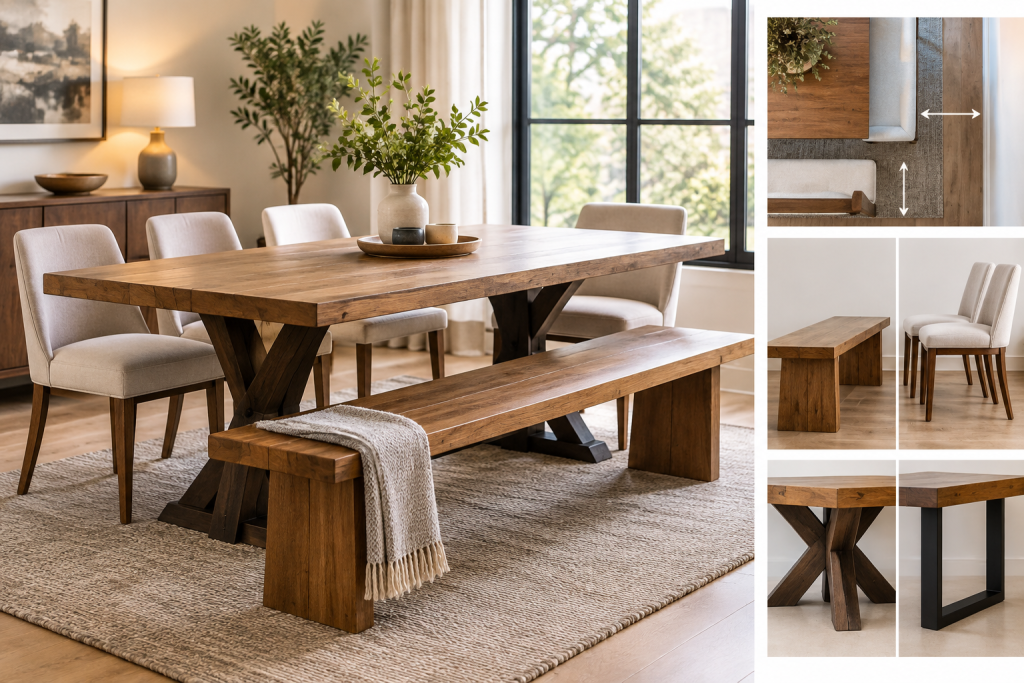
A custom dining table with bench seating can make a gathering space feel relaxed, practical and ready for one more guest. But a bench is not automatically the better choice. In some rooms, it tucks neatly against a wall and creates useful flexibility. In others, individual chairs make everyday meals more comfortable and improve access around the table.
The right decision depends on how your room works, where the table will sit, how many people you want to seat and how the table base is designed. A bench should be planned with the table—not added as an afterthought after the tabletop is complete. Fortunately, you do not need finished furniture plans to begin. A room photo, approximate dimensions, desired seating capacity and a few design references are enough to start a useful conversation.
When bench seating makes sense
Benches are especially useful when one side of the dining table sits against a wall, banquette or built-in. Instead of pulling several chairs away from the wall, a bench can remain in place and slide under the tabletop when it is not being used. That can make the room feel less crowded.
A bench can also suit a family gathering space where seating needs change from day to day. Children may fit comfortably along one side, while adults use chairs at the ends or opposite side. For a vacation property or second home, this flexibility can be appealing when the number of guests varies.
- Wall placement: A bench can work well along a wall where chair backs would be awkward.
- Variable guest counts: It can provide flexible seating for family meals and larger gatherings.
- Visual simplicity: A bench may give a farmhouse or trestle table a more relaxed, less formal appearance.
- Storage: A bench designed to slide under the table can help preserve walking space when the room is not in use.
There is a small but important catch: people generally need to move the bench to get in and out. If the bench is against a wall, that may mean standing up or shifting along the seat before someone can leave. For a room where people come and go frequently, chairs may be the easier everyday option.
When individual chairs are the better choice
Chairs usually provide easier access because each person can pull out their own seat. That matters in an open dining area, a busy family kitchen or a room where guests are likely to get up during a meal.
Chairs also allow you to vary the seating arrangement. You might use armchairs at the table ends, slimmer chairs along the sides or a mix of materials that connects the dining area to the rest of the room. A bench offers fewer individual adjustments, both in placement and comfort.
Consider using chairs on all sides when:
- Every seat needs simple, independent access.
- The dining table is centered in the room rather than placed near a wall.
- Older guests or anyone with limited mobility may find bench access difficult.
- You want to change chair styles, spacing or seating positions over time.
- The room has enough clearance for chairs to pull back comfortably.
A mixed arrangement is often the sensible middle ground: a bench on the wall side, chairs on the opposite side and perhaps an armchair at each end. This keeps some flexibility without making every seat dependent on a shared bench.
Measure the room before choosing the seating
The key measurement is not only the tabletop length. You also need to account for the bench depth, chair depth, movement behind each seat and the location of doors, stairs, cabinets or walkways.
Start by measuring the room’s usable footprint. Mark the proposed table position with painter’s tape or temporary furniture. Then place additional tape where the outside edge of the bench or chairs would sit when occupied. Walk around the arrangement. Open nearby doors and drawers. Try the route you would use to carry food to the table. A plan that looks fine on paper can feel tight once people and chairs are involved.
Share these details when requesting a table and bench:
- The room’s length and width.
- The intended table location and which side, if any, will sit against a wall.
- Doorways, stairways, elevators, narrow halls and other access restrictions.
- The number of people you want to seat for ordinary meals and larger gatherings.
- The approximate width of any chairs you already own.
- Whether the bench should slide beneath the tabletop or remain visible as part of the room design.
For a mountain home, access planning deserves attention early. A large tabletop may need to pass through a particular door, around a landing or up a stairway. Park City Tables can plan large furniture around door widths, stairways, elevators and related access restrictions. Delivery and setup may include bringing the table into the intended room, assembling or attaching the base when needed, leveling and completing final placement.
More details about table delivery and setup can help you prepare the route before construction begins.
Coordinate the bench with the table base
The base affects both the look of the table and how comfortably people can sit. A trestle base can create a strong farmhouse silhouette, but its supports need to be positioned so feet and legs are not competing with them. Pedestal-style or other centrally placed bases may leave more open space along the sides, while some modern bases introduce a stronger architectural element.
With bench seating, the base should be considered from several positions. Check where the bench legs will land, whether the bench can slide in far enough and whether someone sitting near the end will encounter a support. The table’s apron can matter too, particularly if the bench is intended to tuck underneath.
This is one reason a coordinated custom bench is useful. The bench length, height, depth and leg placement can be developed alongside the tabletop and base rather than forced to fit later. The goal is not simply to make the bench the same length as the table. It should be proportionate, stable and practical within the room.
Match the bench to the table’s design language
A bench does not have to look rustic. A substantial farmhouse table with a trestle base may pair naturally with a simple wood bench, while a modern hardwood table may call for cleaner lines and a more restrained base. The wood species and finish can match the tabletop exactly, coordinate with it or provide a deliberate contrast.
Park City Tables’ Standard Collection includes Douglas fir, alder, maple, white oak and black walnut, along with established farmhouse, trestle and modern hardwood designs. Each wood brings a different color, grain pattern and overall feel, so the practical choice depends on the room, the desired appearance and the rest of the furnishings. You can review the available custom table wood options before narrowing the bench design.
For a more distinctive centerpiece, a live-edge or epoxy river tabletop may call for a simpler bench base that does not compete with the slab’s character. Specialty projects can involve unusual dimensions, distinctive slab character, unusual bases and more individualized material sourcing. In that situation, the bench should be discussed at the beginning so its proportions support the tabletop rather than distract from it.
Think about comfort, not just capacity
A bench can technically fit several people, but the usable capacity depends on how much shoulder room guests need and whether anyone is sitting at the corners. Children may share a bench easily; several adults may prefer more personal space. A table’s stated seating capacity should therefore be treated as a planning starting point, not a promise that every person will feel equally comfortable.
Also consider how long people typically sit. A backless bench is visually clean and easy to tuck away, but a chair with back support may be preferable for long dinners. Cushions can change the feel, though they also affect the bench’s usable height and may require additional care. If you are combining a bench with existing chairs, bring their approximate seat height and width into the design discussion.
Is a custom bench worth adding?
A coordinated bench can be worthwhile when it solves a specific room problem or supports the way your household gathers. It may help a narrow dining area, create a flexible family seating plan or complete the look of a farmhouse table. It is less compelling when the room already has easy chair access on every side and the bench would merely add another piece to move.
The cost depends on the bench’s dimensions, wood, finish, base design and relationship to the table. If the bench uses a specialty slab, unusual construction or additional options, those details affect the quote. It is best to price the complete seating plan rather than choosing a table first and trying to match a bench later. You can review the factors that influence custom table pricing as part of that planning.
A practical decision checklist
Before ordering, ask yourself:
- Will one side of the table sit against a wall?
- Do people need to enter and leave the seating area often?
- How many people should fit comfortably on an ordinary day?
- How many guests might you host for a larger gathering?
- Will children, adults or a mixture use the bench most often?
- Does the proposed table base leave clear legroom?
- Can the complete table and bench fit through the home’s access route?
- Should the bench match the tabletop or contrast with it?
If you can answer those questions, you are ready for a productive design conversation. Park City Tables creates built-to-order and specialty dining tables for Park City and Utah mountain homes, with options for table size, wood, finish, base style and custom details. A coordinated custom dining bench can be considered alongside the table as part of that plan.
Start with your room and seating plan
The best first step is straightforward: send a photo of the room, approximate dimensions, the number of people you would like to seat and examples of tables you like. Park City Tables can help narrow the size, wood, style, base, finish and options—including whether a bench makes sense for your layout.
Request a custom quote through Park City Tables or call 435-200-4982. A few measurements now can prevent a lot of furniture shuffling later—and save your guests from performing an awkward bench escape during dinner.