
How to Choose a Dining Table Base: Trestle, Pedestal or Four Legs?
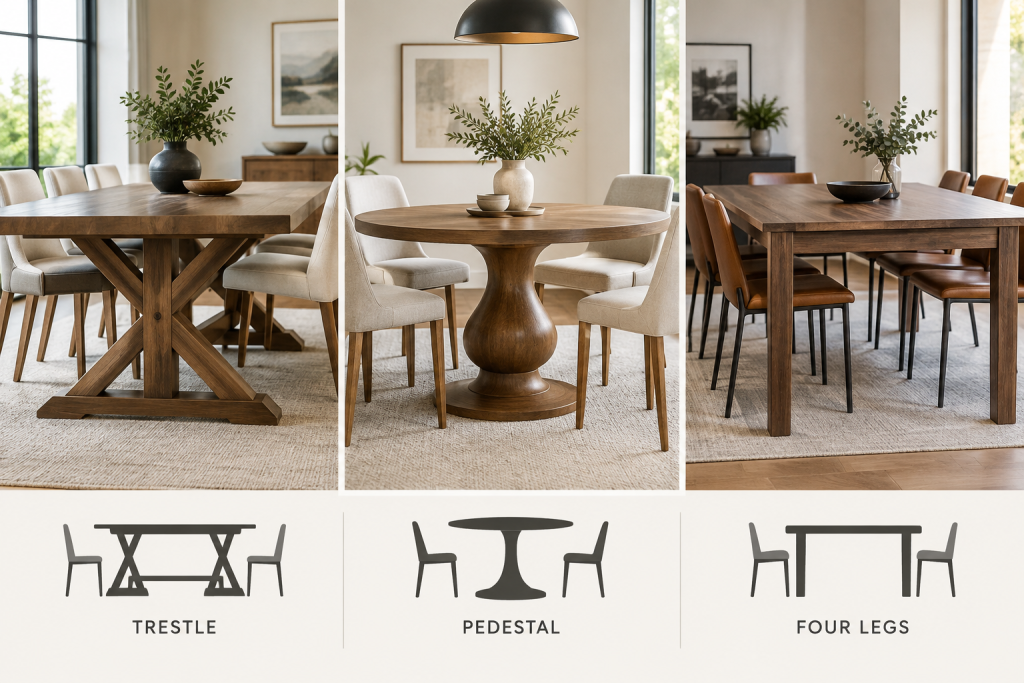
Learning how to choose a dining table base is less about picking the most fashionable shape and more about matching the base to the way your room works. The base affects where chairs can go, how easily people get in and out, how heavy the table looks and how well the furniture fits your seating plan.
For a Park City or Wasatch Back home, that decision may also involve a substantial hardwood top, a mountain-home interior, occasional large gatherings or a second-home layout that needs to work for both family and guests. Trestle, pedestal and four-leg bases can all be successful choices. None is universally best.
Start with your chairs, room dimensions and preferred seating arrangement. Then choose the base that supports those priorities.
What a dining table base needs to do
A table base has a practical job: it supports the top and keeps the table comfortable to use. But its placement creates the table’s usable seating area. A base that looks excellent in a photograph may be awkward if it lands where a chair needs to go or limits legroom for someone sitting at the end.
Before choosing a style, consider:
- How many people you want to seat regularly and occasionally
- Whether chairs, benches or a combination will be used
- How wide your chairs are, including arms
- Whether diners need seating at both ends
- How much clearance is available around the table
- Whether the room needs to feel visually light or substantial
- How the base will be brought through doors, stairways or other access points
A custom table can be sized around these details rather than forcing your room to accommodate a standard arrangement. Park City Tables can work from a room photo, approximate measurements, desired seating capacity and examples of tables you like. You do not need completed furniture plans to begin.
Trestle dining table bases
A trestle base typically uses substantial supports positioned in from the ends of the tabletop and connected by a stretcher or related structure. It is a familiar choice for farmhouse tables and large gathering tables, but the same basic idea can be interpreted in a more modern way.
Where a trestle base works well
Trestle designs can suit long rectangular tables because their supports run with the table’s length rather than placing four separate legs near the corners. Depending on the design and dimensions, this can make the ends and long sides feel more open than a conventional four-leg arrangement.
The strong horizontal and vertical lines also give a table a grounded appearance. That can work nicely in a mountain home where the dining table is meant to feel like a substantial gathering point rather than a lightweight accent.
Trestles are also a natural fit if you like farmhouse styling, visible structure or a more architectural base. A built-to-order design can adjust the trestle position, proportions and material to suit the tabletop and your chair layout.
Questions to ask about a trestle
Look carefully at where the supports sit in relation to your chairs. A trestle may offer useful clearance in some positions, but the shape of the supports and stretcher can still affect feet, chair movement and seating at the ends. Benches may interact with the base differently from individual chairs.
Also consider visual weight. A broad trestle under a thick, character-rich top can look intentional and balanced. In a smaller dining area, the same combination may feel crowded. Measure the actual room, not just the empty space around a showroom photograph.
For more ideas, explore custom farmhouse tables, including gathering-friendly trestle designs.
Pedestal dining table bases
A pedestal table supports the top from one central base or a central grouping of supports. Round tables commonly use pedestals, but a pedestal can also be designed for a rectangular or oval top.
Why choose a pedestal?
The main appeal is flexible chair placement. Without four legs occupying the corners, chairs can often be moved around the perimeter with fewer conflicts. This can be especially useful when seating needs change between everyday meals and larger gatherings.
A pedestal also creates a cleaner visual silhouette. The tabletop appears to float above one central element, which can complement a modern hardwood design or a distinctive top where you want the wood to remain the main focus.
For round or oval tables, a pedestal can make the arrangement feel naturally social because there is no obvious “head” of the table. For a rectangular table, the base still needs careful design so it provides appropriate support without becoming an obstacle beneath the center.
What to check before choosing a pedestal
Do not judge a pedestal only by how much open space it appears to create. The base’s footprint, shape and position matter. A central support can affect where diners place their feet, particularly if the table is shallow or the base is broad.
Ask how the pedestal will relate to your chair widths, table dimensions and preferred seating positions. If you plan to place chairs at the ends, confirm that the tabletop and support design work comfortably together. The final balance of the top and base should also be considered; a very large or heavy-looking top may need a base with enough visual and structural presence.
Four-leg dining tables
The four-leg base is the familiar option: one leg near each corner or end of the tabletop. It works across many design styles, from simple modern hardwood tables to more traditional forms.
Strengths of a four-leg base
A four-leg table is straightforward to understand and easy to coordinate with many chairs. Its structure can look visually quiet, allowing the wood species, grain and finish to lead the design. This can be useful when you want a versatile table for a home that may change furnishings over time.
Four legs can also make the table feel visually balanced from every direction. That matters when the table is not pushed against a wall or when it can be seen from an adjoining living area.
Limitations to consider
Corner legs can compete with chair legs and may restrict where a chair can be placed. This is more noticeable when you use wide dining chairs, armchairs or a bench that needs to slide beneath the top.
At longer lengths, the relationship between leg placement and seating becomes increasingly important. A table may technically fit the room while still feeling inconvenient if a leg lands directly beside a preferred chair position. Discuss the seating plan before finalizing the dimensions and base location.
Compare the three bases by your seating plan
Instead of asking which base is best, ask which one fits your actual pattern of use.
- Choose a trestle if you like a substantial farmhouse or architectural look and want to explore a base designed around a long gathering table.
- Choose a pedestal if flexible chair placement and a cleaner central silhouette are high priorities, especially for round, oval or adaptable dining arrangements.
- Choose four legs if you prefer a familiar, balanced design that lets the tabletop and wood character take center stage.
These are starting points, not rules. A modern table can use a trestle, a traditional room can use a pedestal, and a distinctive live-edge top can work with several base approaches. The tabletop’s dimensions, thickness, wood character and finish all change the visual result.
Think about room proportions and access
Base selection should happen alongside table sizing. Leave enough room for chairs to move and for people to pass without turning every meal into a careful navigation exercise. Include chair width and depth in your measurements, not just the tabletop footprint.
For a second home, vacation property or large mountain-home dining room, think beyond the dining room itself. A long or heavy table may need to pass through a doorway, stairway, elevator or narrow turn. The base may be assembled in the intended room, but access still needs to be planned early.
Table delivery and setup can include bringing the table into the intended room, attaching or assembling the base when needed, leveling and final placement. Sharing access details during the design conversation helps avoid surprises later.
Match the base to the tabletop
The base and top should look like one decision. A Douglas fir or alder top may support a different mood from white oak, maple or black walnut. Grain, color, finish and tabletop thickness all influence how much visual weight the base should carry.
A restrained four-leg base may suit a top with dramatic grain. A sturdy trestle can reinforce a farmhouse direction. A carefully proportioned pedestal may let a distinctive slab or clean modern top remain the focal point. For live-edge slabs, epoxy river designs or unusual dimensions, the base often needs more individualized planning. Those projects fall within the specialty custom tables category.
If you are still deciding between wood species, review the available custom table wood options alongside your preferred base. The right combination depends on the room, style and priorities—not on a single universally superior material.
A practical checklist before requesting a design
- Measure the room, nearby furniture and access route.
- List the number of people you want to seat every day and during larger gatherings.
- Measure chair widths, including arms, and note whether you want benches.
- Mark where end seating is important.
- Decide whether you prefer a grounded, open or visually quiet base.
- Collect photographs of tables, chairs and rooms you like.
- Share any unusual requirements, such as an oversized top, engraving or difficult access.
Park City Tables creates built-to-order dining tables for Park City and Utah mountain homes, with choices for size, wood, finish, base style and custom details. Built-to-order dining tables in the Standard Collection use established designs and more readily available lumber for a simpler, more predictable process. Current target turnaround is approximately four weeks for Standard Collection tables, while Specialty Collection projects are currently estimated at approximately eight weeks; material sourcing and project requirements can affect timing.
Choose the base that supports how you gather
The best dining table base is the one that makes your seating plan comfortable, suits the room’s proportions and gives the tabletop the right visual support. Trestles bring structure and gathering-table character. Pedestals can offer adaptable placement and a clean silhouette. Four legs provide a familiar, balanced foundation.
To request a custom quote, send a photo of your room, approximate dimensions, the number of people you would like to seat and examples of tables you like. Park City Tables can help narrow the size, wood, style, base, finish and options. Call 435-200-4982 or request a custom table quote through the website.