Family Name, Coordinates or Artwork? Choosing Engraving for a Custom Table
A custom dining table already has a story in its wood, proportions and place in the room. Engraving can add another layer of meaning—but the best result usually starts with a practical question: what should the detail feel like when people are gathered around the table?
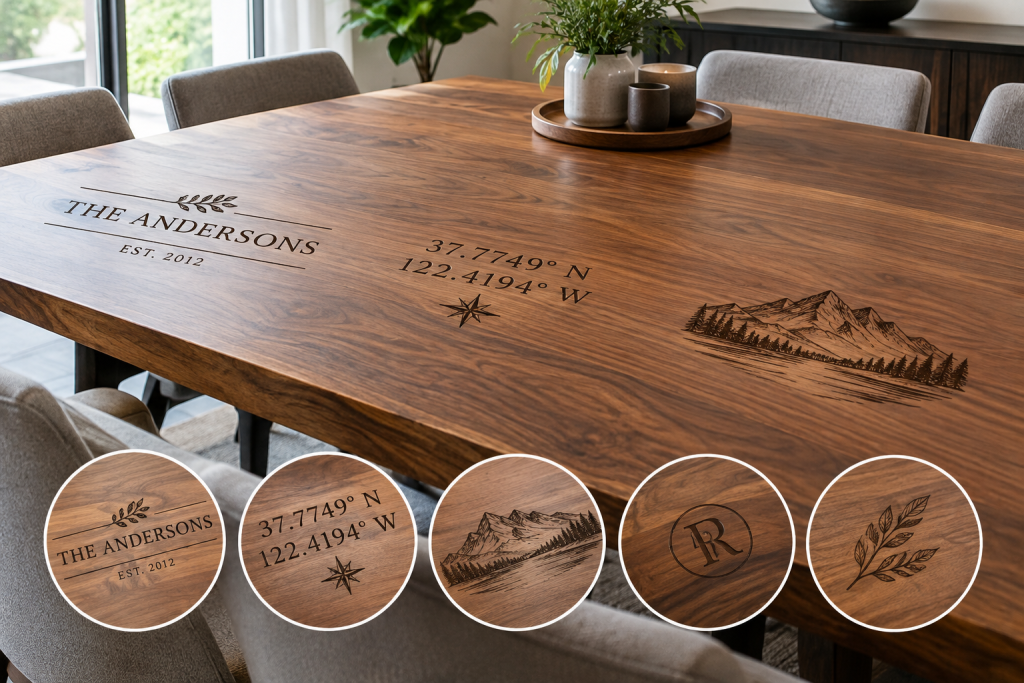
For a Park City or Wasatch Back home, that might mean a family name, the coordinates of a meaningful place, a monogram, a date or a small piece of artwork. The idea can be personal without taking over the whole design. The key is to decide what belongs on the table, where it should go and how much visual attention it deserves.
Park City Tables offers engraving on qualifying custom builds. Simple custom engraving currently starts at $195, while more complex engraving and artwork are quoted individually. Here’s how to turn a good idea into a clear engraving brief.
Start with the meaning behind the engraving
Before choosing a font or sending a file, decide what the engraving is meant to represent. That decision will guide the wording, size and placement.
Family names and dates
A family name table is a natural choice for a dining room intended for regular gatherings. You might use a surname, a household name or a short phrase. Meaningful dates can mark a wedding, anniversary, move, birth or another milestone.
Short text is generally easier to read and place gracefully than a long inscription. If you have a longer message in mind, consider whether it needs to be visible during every meal or whether a less prominent location—such as the underside or apron—would suit it better.
Coordinates and place-based details
Coordinates engraved into furniture can reference a meaningful home, meeting place, travel destination or family property. They have a clean, understated appearance and can work well when you want the detail to be personal without making the table feel heavily decorated.
Check the numbers, punctuation and formatting carefully before submitting them. A simple list of coordinates is useful, but it should also explain what the location represents so the design conversation has context.
Monograms and initials
A monogram dining table can feel more traditional, formal or restrained depending on its typeface and scale. Initials may work especially well on an apron, end or underside when you want the personalization to be discovered rather than immediately announced.
Logos and custom artwork
Logo engraving may suit a business, lodge, office, restaurant or vacation property. Custom artwork can include a symbol, line drawing or other visual mark with personal meaning. These projects need more review than a short name or date because the amount of detail in the artwork affects how it can be translated onto wood.
Not every image is ready for engraving. A file with clean lines and clear contrast is usually more useful than a small, compressed image with many subtle details. Complex artwork is quoted individually so the design, preparation and engraving requirements can be considered together.
Choose the right location on the table
Engraving placement should support both the table’s design and the way people use it. The tabletop is only one option. Depending on the build, engraving may be considered for the tabletop, apron, base, end, underside or another appropriate location.
Tabletop engraving
The tabletop gives the engraving the most visibility. It can be a good fit for a short family name, coordinates or a simple central mark. However, the tabletop is also the most active surface. Plates, serving dishes, hands and everyday use all share that space, so an elaborate design may compete with the table’s wood grain or become visually busy.
Think about the table from standing and seated positions. A detail that looks balanced in a drawing may feel too dominant once chairs, dishes and lighting are part of the room.
Apron, end or base
The apron can provide a natural band for a name, date or short inscription. An end or base may work well for a mark that you want guests to notice as they approach the table. These locations can preserve a cleaner tabletop while still making the personalization part of the furniture’s identity.
Underside engraving
The underside is a quiet choice for a commemorative message, date or private family detail. It is especially appropriate when the meaning matters more than daily visibility. It can also keep a traditional, modern or live-edge tabletop visually simple.
Placement depends on the specific table design, available surface and construction. A photo or sketch of the preferred location can help start the conversation, but the final position should be considered alongside the table’s dimensions, wood character and base.
Match the scale to the table
Scale is where a meaningful idea either settles comfortably into a design or starts to look like an afterthought. A small mark can disappear on an oversized gathering table. A large inscription can overwhelm a more compact dining table.
When describing your idea, include the approximate table length and width if known, the preferred engraving location and whether the detail should be subtle, noticeable or prominent. It’s also helpful to identify what must remain readable from across the room.
Live-edge tables require particular attention to placement because the usable surface may vary along the natural edge. A design that needs a consistent rectangular area may be better suited to an interior section of the tabletop, apron, base or underside. On a farmhouse, trestle or modern hardwood table, the base and apron geometry may suggest a more structured location.
Wood selection matters, too. Park City Tables’ Standard Collection wood choices include Douglas fir, alder, maple, white oak and black walnut. Their color, grain and overall visual character can affect how an engraved detail fits the finished piece. You can review the available custom table wood options while considering whether the engraving should contrast with or quietly follow the wood.
Prepare the right file or reference
You don’t need completed furniture plans to begin a design conversation. A room photo, approximate dimensions, desired seating capacity and examples of tables you like can be enough to get started. For engraving, add the following:
- The exact wording, including capitalization, punctuation and dates.
- The intended meaning of coordinates or symbols.
- A preferred placement and a backup placement.
- An approximate size or a reference for how prominent the mark should be.
- A logo or artwork file, if applicable.
- Examples of typefaces or visual styles you prefer.
For a logo or artwork, send the highest-quality version available. A vector file can be helpful when one is available, but don’t delay the initial conversation if you only have a clear image. The important thing is to identify the artwork early enough for its complexity to be evaluated.
Proofread every letter and number. A shop can help assess layout and suitability, but the customer should confirm that the final wording and reference details are correct before approval.
Understand simple engraving versus custom artwork
A short name, date, coordinates or basic monogram is usually a more straightforward request than a detailed illustration or logo. That distinction matters for both planning and quoting.
Simple custom engraving currently starts at $195. More complex engraving and artwork receive an individual quote because the work may involve additional design preparation, fine detail or a more involved placement. The table itself also affects the conversation: an unusual surface, distinctive slab character, special base or nonstandard dimension may require more individualized planning.
If you’re considering a live-edge slab, epoxy river design or oversized table, discuss the engraving at the same time as the broader build. Specialty projects may require project-specific material sourcing, and the engraving should be planned around the final surface rather than added as an isolated detail later. You can explore specialty custom tables if the concept includes unusual dimensions or one-of-a-kind materials.
Build the engraving into the table brief
Personalization works best when it is treated as part of the furniture design—not as a last-minute label. Include the engraving when discussing the table’s size, seating, wood, finish, base and delivery route.
This is especially useful for a second home, vacation property or ski home. Much of the initial planning can be handled remotely with room photographs, measurements and design references. If someone else will receive the delivery, a property manager, contractor or authorized contact may sometimes coordinate access and setup.
Access planning matters for the table as a whole. Door widths, stairs, elevators and turns can affect dimensions and whether the base needs to be assembled in the room. Details about delivery and final placement are available in the guide to table delivery and setup.
A practical engraving brief you can send
Before requesting a quote, gather the information below:
- Table: approximate length, width, shape and seating goal.
- Style: farmhouse, trestle, modern hardwood, live edge or another direction.
- Wood: preferred species, if known, and whether you want the grain to remain the main feature.
- Engraving: exact text, coordinates, monogram, logo or artwork.
- Placement: tabletop, apron, base, end, underside or another location.
- Scale: subtle, medium or prominent, with any size reference you have.
- File: attach the clearest logo or artwork file available.
- Room: photo, approximate dimensions, access restrictions and desired delivery location.
That brief gives the maker something concrete to evaluate while leaving room for practical recommendations. Sometimes the best answer is a smaller mark, a different surface or a placement that lets the wood do more of the talking.
Turn the idea into a custom table plan
Whether you’re planning a family name table for a Park City home, coordinates engraved furniture for a second home or logo engraving for a business space, start with the meaning and then work through the practical details. The right location, scale and file can make the personalization feel intentional for years to come.
Request a custom quote from Park City Tables by sending a room photo, approximate dimensions, the number of people you’d like to seat and examples of tables you like. The design conversation can help narrow the size, wood, style, base, finish and engraving approach. Call 435-200-4982 or request a custom table quote through the website.