
Epoxy River Table or Live-Edge Table? A Practical Design Comparison
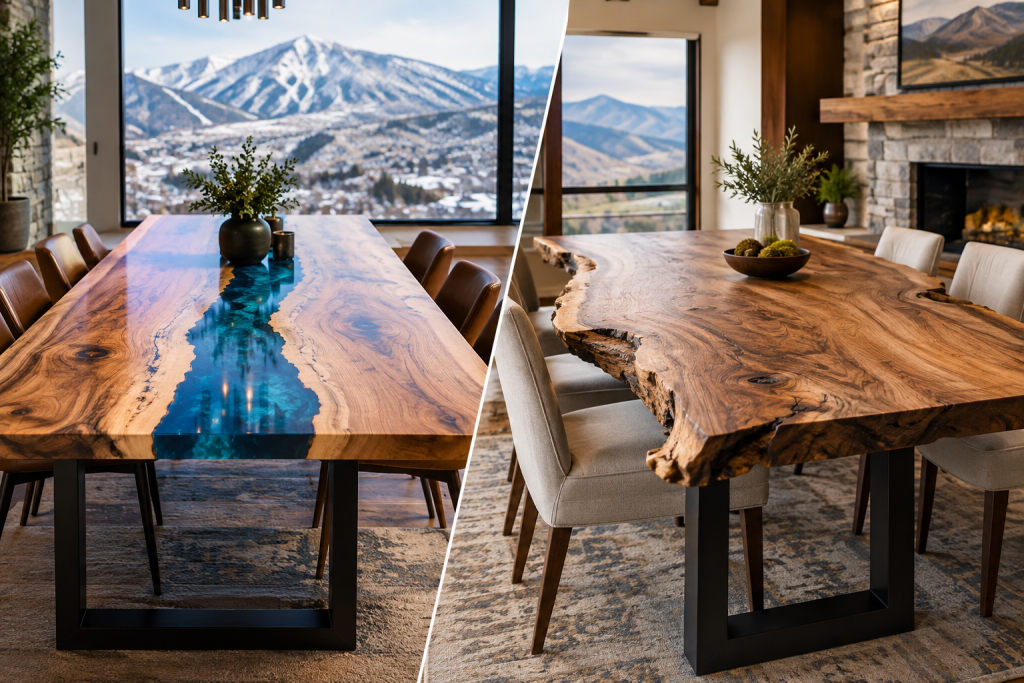
When comparing an epoxy river table vs. a live-edge table, the real question is not which style is better. It is which one gives your room the right balance of natural wood character, visual emphasis and customization.
Both are specialty dining tables built around distinctive slabs. A live-edge table lets the wood remain the main event, including its irregular outside edge, grain movement and natural variation. An epoxy river table adds clear or colored resin between or around sections of wood, creating a more deliberate design element.
That difference matters in a Park City or Wasatch Back home. A table may need to work with stone, timber, metal, upholstery, mountain views and the practical realities of a second home or gathering space. The best choice starts with the room and the way you want people to experience it—not with a style label.
What defines a live-edge dining table?
A live-edge table preserves some of the natural edge of the slab rather than cutting every side into a perfectly straight line. The result can feel organic, sculptural and closely connected to the wood itself.
The slab’s shape affects more than appearance. Its width may vary along the length, and the edge can influence where chairs fit comfortably. Knots, cracks, color shifts and grain patterns may become important parts of the design. Those details are not flaws to hide; they are often the reason to choose a live-edge table in the first place.
For a room that already has strong architectural materials or a restrained design palette, a live-edge dining table can provide interest without adding a separate color element. The wood does the talking. Sometimes it talks quite loudly, but at least it has good stories.
Park City Tables offers live-edge dining tables as specialty custom builds. Size, wood, finish, base style and the character of the selected slab all influence the final direction.
What defines an epoxy river table?
An epoxy river table typically combines two or more pieces of hardwood with epoxy resin filling the space between them or emphasizing a natural opening. The resin may be clear or colored, depending on the design.
Clear epoxy keeps more attention on the wood while adding visual depth to the gap. Colored epoxy makes the separation a stronger part of the tabletop’s identity. A restrained color may complement a room’s finishes; a more noticeable color can turn the table into a focal point.
Because the resin is part of the composition, an epoxy river table gives you another design decision beyond wood species, finish and base. The river’s width, shape, direction and color can all change the visual weight of the table. It may look calm and subtle, or it may be intentionally dramatic.
See the options for custom epoxy river tables when you want to explore clear or colored resin alongside distinctive hardwood.
Natural character versus designed contrast
The clearest distinction is where the visual emphasis comes from.
- Choose live edge when: you want the slab’s grain, outline and natural irregularity to lead the design.
- Choose epoxy when: you want the wood to interact with a visible clear or colored design element.
A live-edge table often feels more understated, even when the slab itself is highly dramatic. An epoxy river table usually reads as more intentionally composed because the resin creates contrast and directs the eye across the tabletop.
Neither style automatically belongs to a rustic room or a modern room. A live edge can be paired with a clean, architectural base and a refined finish. An epoxy table can use subdued colors and simple geometry rather than a high-contrast look. The base, finish and surrounding furniture may matter as much as the slab.
Which style offers more customization?
Both styles allow substantial customization, but the decisions are different.
For a live-edge table, the central choice is often the slab. Its length, width, edge profile, grain, color and natural features establish the starting point. You then shape the rest of the project around that material. This can make the table feel singular because the outline is not being selected from a standard rectangle.
For an epoxy river table, customization extends into the relationship between wood and resin. You may consider the river’s position, the amount of visible epoxy, whether the resin is clear or colored, and how the pattern works with the room. The slab still matters, but the composition gives you another way to guide the final look.
Customers can also select table dimensions, wood species, finish, base style and optional custom details. Custom engraving may be available on qualifying builds, including a family name, meaningful date, coordinates, monogram, logo or artwork. Engraving can be placed on the tabletop, apron, base, end, underside or another suitable location depending on the design.
How slab selection affects the project
Specialty tables may require sourcing an appropriate slab or hardwood specifically for the project. That is particularly relevant when you have an unusual table length, a wide tabletop, a distinctive edge requirement or a very specific visual direction.
With a live-edge table, the slab’s natural outline can determine the table’s proportions. You may need to be flexible about width if preserving the most compelling edge character is the priority.
With an epoxy river table, the slab must also work with the planned resin design. A natural opening, split or change in the wood may become part of the river, but the composition still needs to make sense at the intended scale. A design that looks appealing in a small sample may need a different treatment across a large dining surface.
It helps to discuss the room, seating capacity and preferred visual direction before locking in a specific piece of wood. A room photo and approximate measurements are enough to begin that conversation; completed furniture plans are not required.
Consider the room before choosing the style
Start with the dining area’s proportions and circulation. Measure the room, note door swings and walkways, and think about how chairs will be pulled out. The tabletop needs to fit the room in everyday use, not merely look right when no one is sitting down.
For a live-edge table, check whether the changing edge will interfere with chair placement or make one section of the table less practical for seating. For an epoxy river table, consider whether the color and contrast will support the room’s existing finishes or compete with them.
Also consider the property’s role. A primary residence may invite a more personal, highly specific design. A second home or vacation property may call for a strong focal point that works with a broader range of furnishings and guests. Neither approach is automatically correct. The table should suit the people and setting it is intended to serve.
Project complexity, timing and cost
Live-edge and epoxy river tables are generally part of a specialty custom process rather than a straightforward standard-table selection. Material sourcing, unusual dimensions, slab character, resin work, specialized bases and delivery planning can all affect the project.
Park City Tables currently describes approximately eight weeks as a target for Specialty Collection projects, subject to materials and project requirements. That is an estimate, not a guaranteed completion date.
Specialty Collection starting prices currently range from approximately $3,495 or more for some live-edge configurations. Epoxy tables, premium woods, rare slabs and oversized projects may be priced higher. Final pricing depends on the actual dimensions, wood, slab, base, finish, delivery requirements and options. Review the details behind custom dining table pricing before comparing styles only by their starting figures.
Access deserves attention early, too. Large furniture may need to pass through doors, turns, stairways or elevators. A table can be planned around those restrictions, and delivery and setup may include bringing it into the intended room, assembling or attaching the base when needed, leveling and final placement. The table delivery and setup process can be coordinated with a property manager, contractor or authorized contact when appropriate for a second-home owner.
A simple decision guide
Choose live edge if you want:
- The natural slab outline to be the primary design feature.
- Visible grain movement, knots and wood variation.
- A table that feels organic without adding a separate resin color.
- A design built around the character of a particular slab.
Choose epoxy river if you want:
- A clear or colored resin element within the tabletop.
- Stronger contrast between wood and another design material.
- More opportunities to shape the tabletop’s visual composition.
- A specialty dining table intended to serve as a prominent focal point.
If you like both directions, ask whether the room needs more natural irregularity or more designed contrast. That question usually narrows the field faster than trying to decide which style is more impressive.
Start with the room, not just the wood
An epoxy river table and a live-edge table can both become distinctive gathering tables for a Park City or Wasatch Back home. The right choice depends on your preferred balance of wood character, resin visibility, room style, seating needs, access and project scope.
To begin, send Park City Tables a photo of the room, approximate dimensions, the number of people you would like to seat and examples of tables you like. The design conversation can then narrow the size, wood, style, base, finish and optional details. Call 435-200-4982 or request a quote through ParkCityTables.com.