
Standard or Specialty Collection? Choosing the Right Custom Table Path
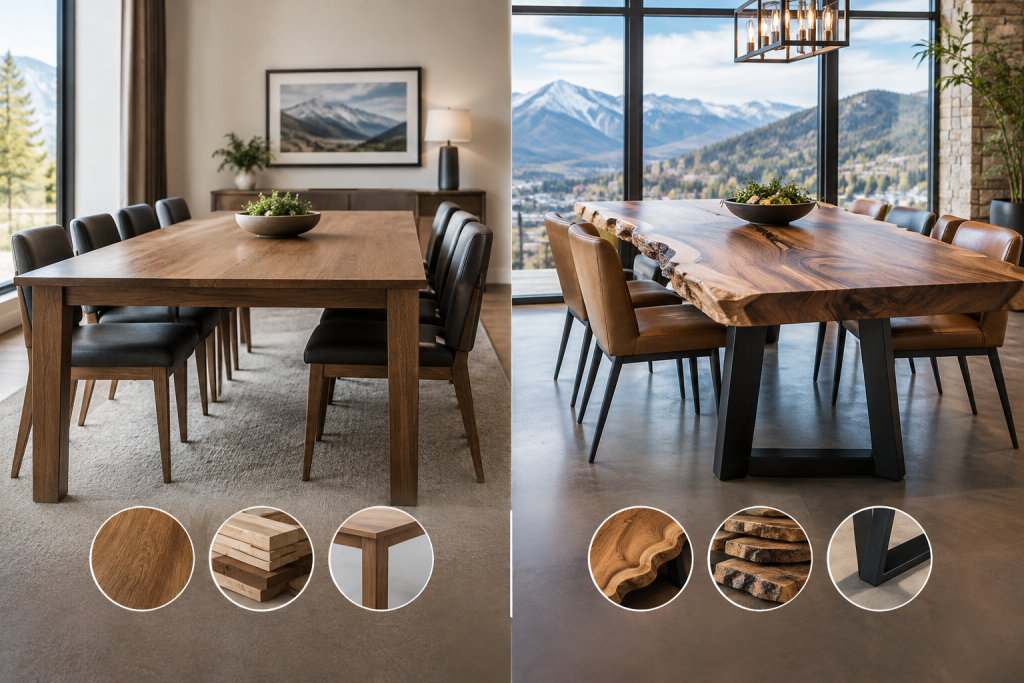
When comparing Standard vs Specialty custom tables in Park City, the choice usually comes down to how much of the table you already know—and how much you want to develop around a particular room, slab or design idea.
Park City Tables’ Standard Collection offers established designs, more readily available lumber and a simpler planning process. The Specialty Collection is intended for projects with more variables: live-edge slabs, epoxy river designs, oversized dimensions, unusual bases or a distinctive piece of wood that needs to be sourced specifically for the table.
Neither path is automatically better. The sensible starting point depends on your room, seating needs, preferred look, timing and willingness to make more detailed decisions. Here’s how to tell which collection fits your project.
Start with the room, not the collection name
Before choosing a table style, consider the practical job the table needs to do. How many people should it seat comfortably? Is it for everyday meals, occasional large gatherings, a second home or a vacation property? Will chairs need to pass behind seated guests? Does the table have to travel through a narrow doorway, stairway or elevator?
A room photo, approximate dimensions, desired seating capacity and examples of tables you like are enough to begin a design conversation. You do not need completed furniture plans. The planning process can then account for table size, chair width, room clearance and base placement.
This first step can quickly clarify the collection choice. A straightforward rectangular table sized for a familiar dining area may be a good Standard Collection candidate. A table designed around an unusually wide room, a specific gathering capacity or challenging access route may need Specialty planning—even if the finished design looks fairly simple.
What the Standard Collection is designed to do
The Standard Collection uses established designs and more readily available lumber to provide a simpler and more predictable custom-table process. It is still built to order, so customers can select important details rather than choosing a one-size-fits-all piece.
Standard options can include:
- Farmhouse, trestle and modern hardwood designs
- Douglas fir, alder, maple, white oak and black walnut
- Custom table length and other dimensions within the published range
- Base style, finish and selected design details
- Optional custom engraving on qualifying builds
Published Standard Collection sizes generally range from 6 feet through 10 feet. A 6-foot Douglas fir configuration currently begins around $2,195, but that is a starting point rather than a final quote. Size, wood, width, base, finish, delivery requirements and options all affect the final price. For a closer look at those variables, review the custom table pricing information.
The current advertised target turnaround for Standard Collection tables is approximately four weeks. That should be treated as an estimate, not a guaranteed completion date, because project requirements and material availability can affect timing.
When Standard is probably the practical starting point
Standard is often a sensible place to begin when you want a custom-sized dining table without making the project revolve around a rare slab or unusual construction detail. It may suit a homeowner who has a clear preference for a farmhouse, trestle or modern hardwood look and wants to choose the wood, finish and base from established options.
It can also make sense for a second-home owner or property manager who wants a substantial, coordinated table but prefers a more direct decision process. A Standard table can still be personalized through sizing, finish, base selection and qualifying engraving. “Standard” describes the collection’s established design path—not a lack of customization.
What makes a Specialty Collection project different?
The Specialty Collection is for tables with more individualized material or design requirements. These projects may include:
- Live-edge slabs with distinctive natural character
- Epoxy river tables using clear or colored epoxy
- Oversized gathering tables
- Unusual lengths, widths or other dimensions
- Unusual or highly individualized bases
- Wood that must be sourced specifically for the project
A specialty table may begin with the room’s measurements, but it may also begin with a design direction: a live edge, a particular slab character, a river-table concept or a base that needs to work around the proportions of the top. The more specific the idea, the more useful it is to share reference images early.
Specialty projects can involve more material decisions. With a live-edge table, the slab’s width, edge shape, grain and natural features influence the usable surface and final silhouette. With an epoxy river table, the placement and color of the epoxy become part of the design rather than a small finishing choice. You can explore examples and planning considerations on the page for specialty custom tables.
The current advertised target turnaround for Specialty Collection tables is approximately eight weeks. Again, that is an estimate. Sourcing an appropriate slab or hardwood, confirming dimensions and coordinating more individualized construction can affect the schedule.
Material sourcing: readily available wood versus project-specific selection
Material sourcing is one of the clearest differences between the two paths. Standard designs use the core wood choices of Douglas fir, alder, maple, white oak and black walnut, with lumber that is more readily available for the established process.
That does not mean the choice is automatic. Wood species change the visual direction of the table. Douglas fir can support a more relaxed, rustic feel; maple may read lighter and cleaner; white oak can bridge traditional and modern interiors; black walnut brings a darker, more pronounced presence. Alder is another option to compare based on color, grain and the look you want after finishing. There is no universal “best” wood—only a better fit for the room and design brief.
Specialty projects may require finding an appropriate slab or hardwood specifically for the table. That adds another layer of selection. Instead of choosing only a species and finish, you may be evaluating the actual character of the material: natural edges, width, grain movement and features that will remain visible in the finished top.
How dimensions and seating affect the decision
A table should fit both the room and the people using it. Start with the number of diners you want to seat, then consider chair width, clearance around the table and where the legs or base will land. A longer top is not automatically more comfortable if the room becomes difficult to move through.
Specialty becomes more likely when the required dimensions fall outside the established Standard approach—for example, an unusually wide top, an oversized gathering table or a design that must work around a specific architectural condition. Large tables also need access planning. Door widths, turns, stairs and elevators should be considered before construction, not when the table is already ready to deliver.
For either collection, a simple room photo and approximate measurements are useful. If the home is a second property, much of the early planning can be handled remotely. A property manager, contractor or authorized contact may also help coordinate delivery and setup when the owner is away.
Personal details: engraving and related options
Custom engraving can add meaning without requiring the whole table to become a Specialty project. On qualifying builds, options may include a family name, meaningful date, coordinates, monogram, company logo, short inscription or custom artwork.
Simple custom engraving currently starts at $195. More complex engraving and artwork are quoted individually. Placement may be on the tabletop, apron, base, end, underside or another suitable location depending on the design.
This can be a useful distinction when comparing collections. If your main goal is a family-name table or a subtle mark for a second home, a Standard design with an engraving option may provide the right balance. If the engraving is part of a larger one-of-a-kind concept involving unusual artwork, a custom base or a distinctive slab, it may belong in a Specialty discussion. Details are outlined on the page for custom table engraving.
Think about delivery before choosing a large or unusual table
Custom furniture has to get into the room, not merely look good in a drawing. For large or specialty tables, identify door widths, stairways, elevators, tight turns and the final room access early in the process.
Delivery and setup can include bringing the table into the intended room, attaching or assembling the base when needed, leveling and completing final placement. Service is available in Park City, Deer Valley, Heber City, Midway and surrounding Wasatch Back communities. More access-planning information is available through table delivery and setup.
A simple way to choose
Use this quick guide:
- Choose Standard as your starting point if you want an established farmhouse, trestle or modern hardwood design; a familiar wood choice; predictable planning; and custom sizing within the collection’s general range.
- Discuss Specialty if you want a live edge, epoxy river design, oversized top, unusual dimensions, distinctive slab character or an unusual base.
- Ask about either collection if your key requirement is engraving, remote coordination, difficult access or a table for a second home or managed property.
The best answer may become clear once the room, seating plan and material preferences are on the same page. A table does not need to be complicated to be personal, and a dramatic design does not help if it cannot fit through the front door. Furniture is allowed to have a little drama; delivery day should have less.
Ready to compare your options?
Request a custom quote from Park City Tables. Send a photo of your room, approximate dimensions, the number of people you would like to seat and examples of tables you like. The team can help narrow the size, wood, style, base, finish and available options for a Standard or Specialty project.
Call 435-200-4982 or request a quote through ParkCityTables.com.