Douglas Fir Dining Tables: A Natural Fit for Mountain Homes?
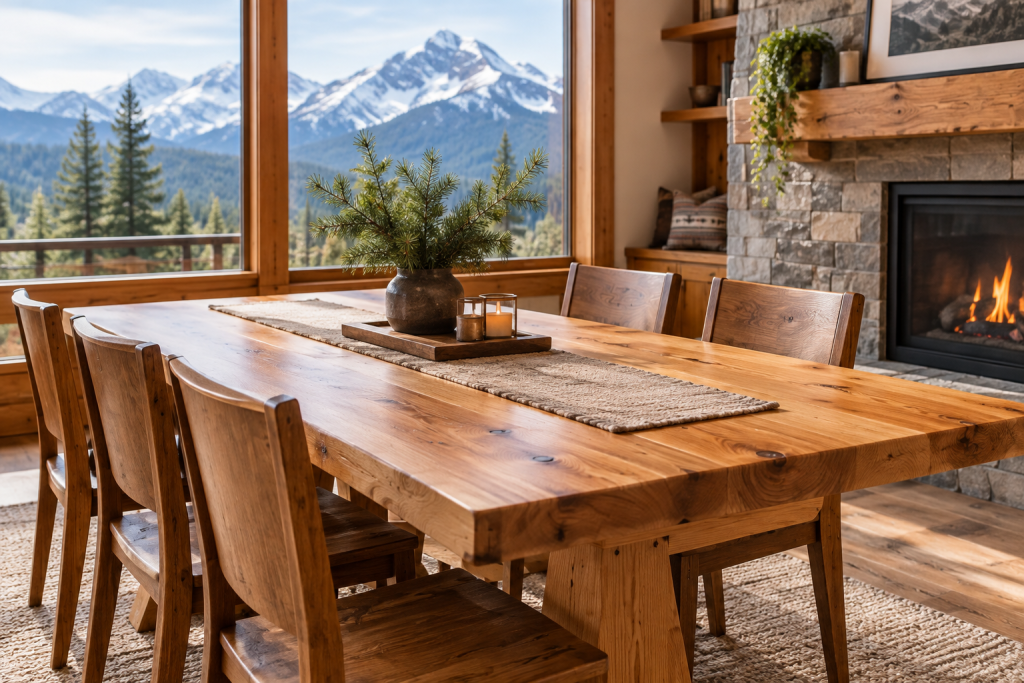
A Douglas fir dining table can make sense in a mountain home when you want the dining area to feel warm, substantial and connected to natural materials. Its visible grain character can support a rustic wood dining table, but it can also work in a cleaner design when the base, proportions and finish are carefully selected.
That doesn’t mean Douglas fir is automatically the right choice for every room. Wood species, dimensions, finish, seating needs and budget all affect the result. The useful question is not “Is Douglas fir the best dining-table wood?” It is: “Does its appearance and design flexibility fit the room I’m planning?”
What gives Douglas fir its mountain-home character?
Douglas fir is one of the core wood choices in Park City Tables’ Standard Collection, alongside alder, maple, white oak and black walnut. The appeal is largely visual. Douglas fir can show noticeable grain movement and a warm, natural presence rather than looking perfectly uniform.
That character can sit comfortably in interiors with timber details, stone, leather, wool textiles or other natural finishes. It may also suit a second home or vacation property where the dining table is expected to feel relaxed and welcoming rather than overly formal.
Still, “rustic” doesn’t have to mean rough or old-fashioned. A Douglas fir top with a simpler silhouette and a restrained base can feel more contemporary. A farmhouse or trestle base, on the other hand, can emphasize a traditional cabin or lodge direction. The wood is only one part of the design conversation.
When Douglas fir may be a good shortlist candidate
Consider including Douglas fir if several of these statements describe your room:
- You want visible wood grain and a warm, natural color direction.
- You like a table with individual character rather than a highly uniform appearance.
- The room already includes other natural materials, such as stone, timber details or textured fabrics.
- You are considering a farmhouse, trestle or straightforward modern hardwood design.
- You need a custom size for a dining room, great room or larger gathering area.
- You want to compare a readily available Standard Collection option with more individualized specialty materials.
The last point matters because a standard built-to-order table and a specialty project solve different design problems. Standard Collection tables use established designs and more readily available lumber, supporting a simpler and more predictable process. Specialty projects may involve live-edge slabs, unusual dimensions, distinctive slab character, unusual bases or more individualized material sourcing.
If your priority is a very specific slab or a one-of-a-kind edge, Douglas fir may still be part of the discussion, but the project may need to be evaluated as a specialty build rather than a straightforward standard configuration.
Douglas fir in rustic and modern dining rooms
For a rustic or lodge-influenced room
A Douglas fir top can reinforce a comfortable, gathering-focused look when paired with a substantial farmhouse or trestle base. This direction can work well when the table is meant to feel like the center of meals, games and long conversations—not a piece that needs to disappear into the room.
Benches can be considered alongside the table when you want flexible seating or a more informal feel. The right choice depends on the room, chair widths and how much clearance is available around the table.
For a cleaner modern interior
Douglas fir doesn’t have to be paired with a heavy base. A simpler base profile, carefully chosen dimensions and a finish that supports the desired color can create a more edited look. In this setting, the wood grain becomes the visual feature while the rest of the table stays relatively quiet.
It helps to look at the complete table rather than judging a wood sample by itself. Compare the top, base, edge treatment and finish together. The same species can feel very different when the proportions change.
Appearance is only one part of wood selection
When comparing Douglas fir with alder, maple, white oak or black walnut, focus on the differences you can actually live with every day:
- Color direction: Do you want a lighter, warmer or darker visual foundation?
- Grain character: Should the top have noticeable movement, or would you prefer a calmer appearance?
- Overall style: Does the wood support farmhouse, trestle, modern, live-edge or another direction?
- Room scale: Will the grain and tabletop size feel balanced in the space?
- Finish: How should the finish affect the color, sheen and visibility of the grain?
- Quote requirements: How do the selected wood, size, base and options change the project?
No single species wins every comparison. A buyer who loves Douglas fir’s grain may prefer it over a more uniform wood, while another buyer may decide that white oak, maple, alder or walnut better suits the room’s palette. Reviewing the available custom table wood options can help narrow the conversation.
Size the table before falling in love with the wood
A beautiful top still needs to function in the room. Start with the approximate number of people you want to seat, then consider chair width, walkways, door swings and the clearance needed to pull chairs out comfortably. Base placement matters, too: a pedestal, trestle or other base can affect where people sit and how easily chairs tuck in.
For a mountain home, this planning can be especially useful when a dining area connects to a great room or sits along a busy path. The largest table that fits on paper may not be the most comfortable table for everyday movement.
Park City Tables’ published Standard Collection sizes generally range from 6 feet through 10 feet. A 6-foot Douglas fir configuration currently begins around $2,195, but that is a starting point rather than a final quote. Price changes with dimensions, wood, width, base, finish, delivery requirements and other options.
For an unusual length, extra width, oversized gathering table or distinctive slab, the project may fall within the Specialty Collection. Those builds can require sourcing an appropriate slab or hardwood specifically for the design.
Finish and wood grain character
Finish is not a minor afterthought. It influences how the wood’s color and grain read in the room, so it should be considered alongside flooring, cabinetry, beams, stone and upholstery. A finish discussion is also a good opportunity to clarify how much variation you want to see across the top.
Bring room photographs or material samples to the design conversation when possible. The goal is not to force the table to match every surface. It is to make sure the wood’s visual character feels intentional rather than accidental.
Standard or specialty: which path fits?
A Douglas fir table in an established farmhouse, trestle or modern hardwood design may be a practical starting point when you want a custom size without developing every detail from scratch. The current advertised target turnaround for Standard Collection tables is approximately four weeks, subject to materials and project requirements.
A specialty project may be a better fit when you want live edge, epoxy, an unusual base, a very large table or distinctive slab character. Specialty projects currently have an advertised target of approximately eight weeks, also subject to the specific materials and requirements. These are estimates, not guaranteed completion dates.
You can begin without completed furniture plans. A room photo, approximate dimensions, desired seating capacity and examples of tables you like are enough to start a design conversation. The process can often begin remotely, which may be useful for second-home owners coordinating from elsewhere.
Plan delivery before the table is finished
Large furniture needs a route into the room. Before finalizing dimensions, think through door widths, turns, stairways, elevators and any narrow transitions. A table that fits the dining room may still be difficult to move through the home if access is overlooked.
Delivery and setup can include bringing the table into the intended room, attaching or assembling the base when needed, leveling and placing it. Delivery and setup are available in Park City, Deer Valley, Heber City, Midway and surrounding Wasatch Back communities. Second-home owners may also coordinate with a property manager, contractor or authorized contact when appropriate.
For more detail, review the table delivery and setup information before committing to a large or oversized design.
Questions to bring to a Douglas fir table consultation
- What table length and width suit the room and desired seating?
- Would a farmhouse, trestle or modern base support the room’s style?
- How much grain variation and natural character do I want?
- Which finish direction works with the existing materials?
- Would a Standard Collection design meet the need, or is a specialty build more appropriate?
- Are there stairs, elevators, tight turns or other access details to plan around?
- Would a bench, engraving or another custom detail add useful value?
Park City Tables also offers custom engraving on qualifying builds. Options may include family names, meaningful dates, coordinates, monograms, company logos, short inscriptions or artwork, with placement depending on the design.
How to decide whether Douglas fir belongs on your shortlist
Choose Douglas fir because its grain, color and overall feel support the room—not simply because it is associated with mountain interiors. Compare it with the other available woods, look at the complete table design, and confirm the dimensions, finish and access plan before requesting a quote.
To begin, send a photo of your room, approximate dimensions, the number of people you want to seat and examples of tables you like. Park City Tables can help narrow the size, wood, style, base, finish and options. Request a custom quote or call 435-200-4982.