
How to Choose a Finish for a Live-Edge Dining Table
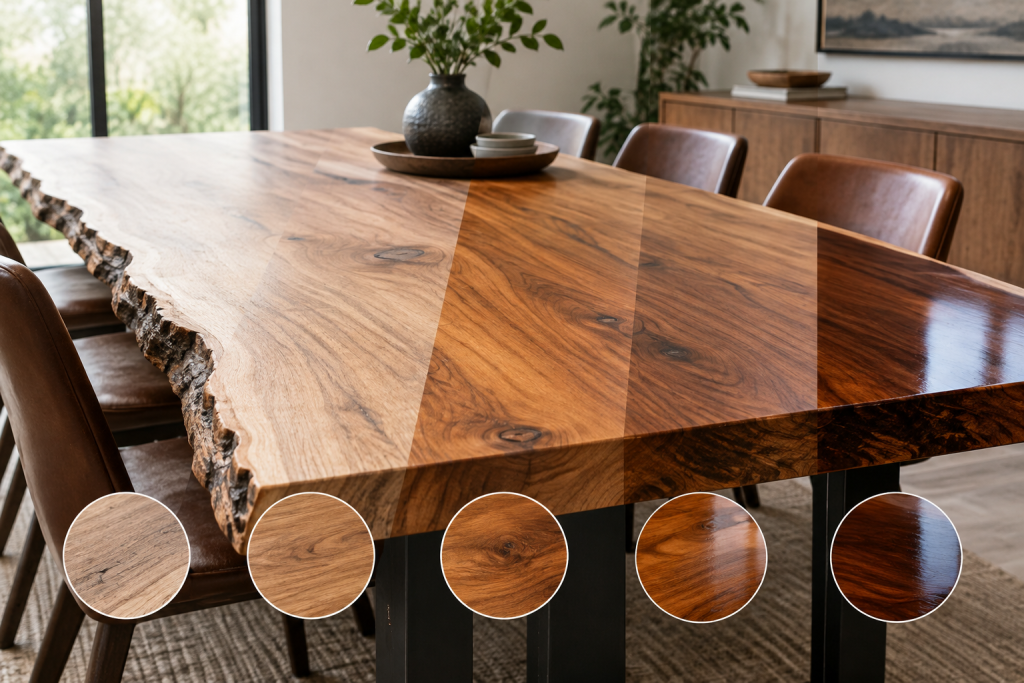
A live-edge slab usually gets the attention first. The sweeping edge, knots, grain movement and changing width make the table feel like something more distinctive than a standard rectangular top. But the finish matters almost as much as the slab itself. It can make the wood look lighter or deeper, quiet down visual variation or emphasize it, and shift the overall feel from relaxed and rustic to clean and refined.
This live-edge dining table finish guide is designed to help you think through that decision before a specialty-table consultation. The goal isn’t to identify one universally correct finish. It’s to match the finish to the slab’s character, the room around it and the design direction you want the finished table to take.
Start with the slab, not a finish sample
With a live-edge table, the material usually leads the design. A finish should support what is already interesting in the slab rather than compete with it.
Before discussing color or sheen, look closely at the wood’s:
- Grain movement: Is the grain relatively calm, or does it have bold changes in direction and figure?
- Natural color: Does the slab lean pale, warm, honey-toned, reddish or deep brown?
- Edge character: Is the edge gently irregular, heavily contoured, bark-influenced or marked by knots and voids?
- Width variation: Does the slab stay fairly consistent, or does it expand and narrow noticeably along its length?
- Distinctive details: Are there checks, knots, mineral streaks or other features that should remain visually prominent?
Two slabs made from the same general wood category can take a finish very differently. The species, cut, figure and individual character all matter. That’s one reason a live-edge project belongs in the Specialty Collection, where the appropriate slab or hardwood may need to be sourced specifically for the project.
Park City Tables’ specialty custom tables can include live-edge slabs, epoxy river designs, unusual dimensions, distinctive slab character and more individualized material sourcing. The finish conversation should happen alongside those decisions, not after everything else has already been locked in.
Decide whether you want to reveal or quiet the grain
The central finish question is often simple: do you want the wood’s natural variation to be the star, or would you rather create a calmer background for the room?
When to emphasize the wood
A finish direction that keeps the grain visually active may suit a room built around natural materials, strong texture and an unmistakable mountain-home character. It can help knots, transitions in color and changes in the grain remain part of the table’s identity.
This direction often makes sense when the slab is the main focal point. You might pair it with a restrained base, uncomplicated chairs or a room where stone, wool, leather and other natural textures already have a place. The table doesn’t need to look quiet if the rest of the room gives it breathing room.
When to create a calmer appearance
A more restrained finish direction may be appropriate when the slab already has plenty of movement or when the dining room includes several strong materials. If the room has bold lighting, patterned upholstery, pronounced flooring or substantial architectural details, a calmer tabletop can keep the space from feeling visually crowded.
“Calmer” doesn’t mean plain. A live edge, unusual outline or carefully selected slab can still provide plenty of character without every detail competing for attention.
Think about color direction early
Finish selection can influence how the wood’s color reads. That makes it important to consider the room’s existing direction before choosing a live-edge table finish.
Ask yourself:
- Do you want the finished table to feel light and airy, warm and rustic, or deep and dramatic?
- Should it relate closely to the floor, cabinetry or ceiling materials?
- Would contrast help the table stand out, or would a closer color relationship make the room feel more cohesive?
- Are the chairs and base already visually substantial?
- Will the table be used in a bright, open room or a more intimate dining area?
For example, a darker color direction can give a large slab a more formal or weighty presence. A lighter direction may make the same general shape feel more casual and open. Neither is automatically better. The right choice depends on the room and the role you want the table to play.
It’s also worth looking at the wood and finish together. Park City Tables offers Douglas fir, alder, maple, white oak and black walnut among its Standard Collection choices, while live-edge slabs and more unusual material requirements fall within specialty work. If you’re still comparing species, the guide to custom table wood options can help you organize the broader wood-selection decision before narrowing the finish.
Match the finish to the design feel
A live-edge dining table doesn’t have to fit one narrow style category. The slab can work with a rustic, modern, transitional or more collected interior, but the finish, base and surrounding furniture need to point in a compatible direction.
Rustic and relaxed
A rustic direction generally benefits from allowing visible wood character to remain part of the design. Grain changes, natural irregularity and a warm visual presence can support a room that feels comfortable rather than overly polished.
That doesn’t mean every rustic table needs to look rough. A carefully considered finish can preserve the slab’s personality while giving the overall piece a deliberate, finished appearance.
Modern and restrained
For a modern room, the finish may be used to keep the tabletop visually controlled. A more consistent color direction, a simpler base and clear attention to proportion can help the live edge feel intentional rather than accidental.
Modern design doesn’t require a perfectly uniform slab. In fact, the contrast between a clean base and a natural edge can be the most interesting part of the table.
Warm and transitional
A transitional room often calls for balance. The finish can connect the organic slab to more tailored chairs, refined lighting or traditional architectural details. In this setting, the table’s natural character remains visible, but it doesn’t have to dominate the entire room.
Don’t overlook sheen and visual texture
Color gets most of the attention, but sheen also changes how a tabletop is perceived. A more reflective appearance can make the surface feel polished and formal. A quieter appearance may feel softer and allow the grain and edge to do more of the visual work.
Consider how light enters the room throughout the day, where overhead fixtures will reflect and whether you want the surface to look crisp or understated. It can help to evaluate finish samples in the room where the table will live, alongside the actual flooring, cabinetry and upholstery. A sample viewed online or under different lighting may give you a different impression than it does in the finished space.
For a one-of-a-kind slab, ask to review the finish direction with the actual material whenever possible. The same color idea can appear different on a quiet-grained board than on a slab with knots, sweeping grain or strong tonal variation.
Consider the edge and the base as part of one design
A natural edge is not a decorative strip added to an otherwise ordinary tabletop. It affects the table’s outline, the way chairs approach the table and the amount of visual weight on each side. The finish should be considered with those practical and design effects in mind.
The base matters too. A substantial live edge paired with a heavy base can create a bold, grounded piece. A more visually open base may put greater emphasis on the slab and leave the room feeling lighter. Chair placement, legroom and the table’s overall proportions should be discussed at the same time.
This is particularly important for custom-sized tables, oversized gathering tables and rooms with unusual dimensions. A finish decision made without considering the table’s scale can miss the larger design picture.
Questions to bring to a specialty-table consultation
You don’t need completed furniture plans to start the conversation. A room photo, approximate dimensions, desired seating capacity and a few examples of tables you like can provide a useful starting point.
For the finish discussion, bring questions such as:
- Which finish direction best supports this slab’s grain and edge character?
- Would a lighter, warmer or deeper color direction suit the room?
- Should the finish emphasize the live edge or let the outline remain quieter?
- How will the finish work with the proposed base and chair placement?
- Would epoxy, if included, be better treated as a subtle accent or a major visual element?
- Are there access limitations that affect the table’s dimensions, assembly or delivery plan?
- Would a custom bench change the visual balance or seating arrangement?
If the table is for a second home or vacation property, much of the early planning can be handled remotely using photographs, measurements and design references. Delivery and setup can also be coordinated with a property manager, contractor or authorized contact when appropriate.
Finish is part of the quote, not an afterthought
The final cost of a specialty table depends on the actual dimensions, wood or slab, base, finish, delivery requirements and selected options. A live-edge project may also require sourcing a particular slab, and epoxy, unusual dimensions or oversized construction can affect the scope.
You can review the factors that shape a project through the page on custom table pricing. The page is useful for setting expectations, but a final quote still depends on the specific table being planned.
Current advertised targets are approximately four weeks for Standard Collection tables and approximately eight weeks for Specialty Collection projects. Those are estimates rather than guaranteed completion dates, and material sourcing and project requirements can affect the schedule.
Make the finish decision after the slab, but before the details are final
The best finish choice usually becomes clearer once the slab, room, base and intended design feel are considered together. Look at the grain. Pay attention to the edge. Decide whether the room needs contrast or calm. Then discuss how color and sheen can support the material instead of treating finish as a last-minute coating.
If you’re planning a live-edge dining table in Park City, Deer Valley, Heber City, Midway or another Wasatch Back community, request a custom quote from Park City Tables. Send a photo of the room, approximate dimensions, the number of people you’d like to seat and examples of tables you like. The design conversation can help narrow the size, wood, style, base, finish and optional details. Call 435-200-4982 or request a quote through ParkCityTables.com.