What Affects the Price of a Custom Table Beyond Its Length?
When people start researching a custom dining table, length is usually the first number they consider. A six-foot table sounds like a six-foot table—until two tables with that same length receive very different quotes.
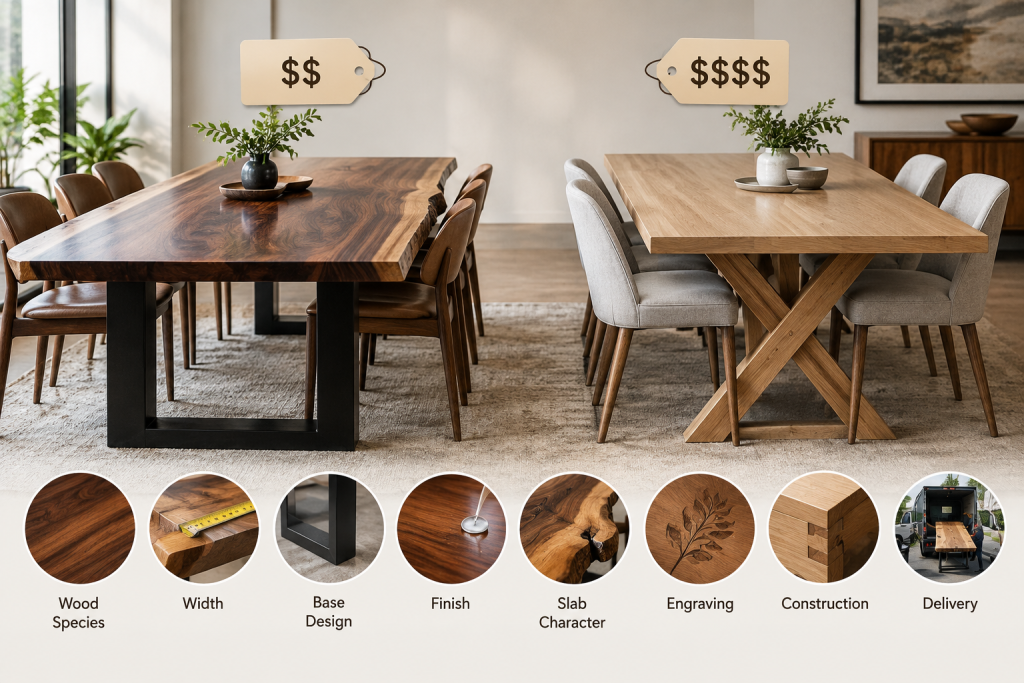
The difference may come from the table’s width, wood, base, finish, slab character, engraving, construction requirements or delivery plan. In other words, custom table price factors beyond size can be just as important as the number of feet on the tape measure.
Park City Tables offers both built-to-order Standard Collection tables and more individualized Specialty Collection projects for Park City and Wasatch Back homes. Understanding the choices behind each path can help you prepare a more useful project brief and compare quotes fairly.
1. Width changes the amount of material
A table’s length is only one part of its surface area. A wider tabletop requires more lumber, more edge preparation and, depending on the design, additional support. That can affect the quote even when the length stays the same.
Width also has a practical purpose. It influences place settings, serving dishes, centerpieces and how comfortably people can share the table. For a large gathering table, the right width should be considered alongside seating capacity and room clearance—not treated as an afterthought.
When requesting a quote, provide the approximate width you want, not just “around eight feet long.” If you’re unsure, a room photo, approximate dimensions and the number of people you’d like to seat are enough to begin the design conversation.
2. Wood species can move the starting point
Wood affects both appearance and material cost. The Standard Collection includes Douglas fir, alder, maple, white oak and black walnut. These established choices and more readily available lumber support a simpler, more predictable custom-table process.
Each species brings a different visual direction. Douglas fir and alder can suit a warmer, more relaxed setting. Maple offers a lighter appearance, while white oak and black walnut create different grain, color and contrast options. None is universally “best”; the right choice depends on the room, design, desired character and budget.
Premium woods, unusual sourcing and distinctive grain can move a project into a higher pricing range. If a design calls for a particular slab or a specific kind of character, the material may need to be sourced specifically for that table. You can compare the available choices in the guide to custom table wood options.
3. Live-edge character and slab sourcing add variables
A straightforward hardwood tabletop and a one-of-a-kind live-edge slab are not priced in exactly the same way. A live-edge project may involve finding an appropriate slab, evaluating its shape and character, and designing the table around the material.
That individuality is part of the appeal, but it also makes the quote less predictable than a table built around an established design and readily available lumber. A slab with unusual width, dramatic edges or distinctive natural character may require more individualized planning and preparation.
Specialty projects include live-edge slabs, epoxy river tables, oversized tables, unusual dimensions, unusual bases and more individualized material sourcing. Some live-edge configurations currently begin around $3,495+, with higher pricing possible for premium woods, rare slabs, epoxy work and oversized designs. These are starting points, not guaranteed final prices.
4. The base is more than a decorative detail
Table legs and bases affect the look, stability, usable legroom and construction of the finished piece. A simple established base may follow a more predictable process. A more unusual base can require additional design work, different materials or more complicated fabrication.
Farmhouse and trestle designs create a substantial, traditional look. Modern hardwood tables may use cleaner lines and a different base arrangement. For a wide or oversized tabletop, the base also needs to work with the dimensions and intended use of the table.
Base placement matters to the people sitting at the table. It can affect where chairs fit, whether someone’s knees meet an obstruction and how easily guests can move around the room. That is why a quote should consider the base together with tabletop dimensions, chair width and room clearance.
5. Finish affects the final appearance and work involved
Finish is not simply a color choice. It influences how the wood’s grain and tone appear and helps establish whether the table feels rustic, refined, traditional or modern.
A custom finish may involve additional discussion about color, sheen, texture and how the selected wood should look in the room. A finish that highlights natural character may lead to a different process than one intended to create a more uniform appearance.
It helps to bring examples of tables, rooms or finishes you like. A photograph can communicate the desired direction more clearly than a vague request for something “dark” or “natural.” The final quote depends on the selected wood, finish and overall design rather than on the finish label alone.
6. Engraving adds design and production work
Personalized details can turn a dining table into a meaningful piece for a family, second home, vacation property or business. Custom engraving is available on qualifying builds and may include family names, meaningful dates, coordinates, monograms, company logos, short inscriptions or custom artwork.
Simple custom engraving currently starts at $195. More complex engraving and artwork are quoted individually because the design, scale, placement and preparation can vary.
Engraving may be placed on the tabletop, apron, base, end, underside or another suitable location depending on the design. A small inscription and a detailed logo should not be treated as the same option when planning a budget. If personalization matters to you, share the wording or artwork early in the conversation. More examples are available on the page about custom table engraving.
7. Unusual dimensions can change the construction plan
A table made to fit a specific room may need dimensions that do not match a standard design. That is one of the benefits of ordering custom furniture, but unusual proportions can also affect material selection, support, base placement and delivery planning.
Oversized gathering tables are a good example. Adding length is not always the only consideration. Width, thickness, slab availability, base design, room scale and the route into the home all matter. A very large table may be treated as a Specialty Collection project rather than a straightforward Standard Collection build.
For comparison, Standard Collection pricing currently begins around $2,195 for a six-foot Douglas fir configuration, with published sizes generally ranging from six to ten feet. Pricing increases depending on size, wood, width, base, finish and options. Specialty Collection projects have different starting points because they involve more individualized materials and construction.
8. Delivery and access requirements belong in the quote
A table’s price is not only about what happens in the shop. Getting a substantial piece into its intended room can require planning around door widths, tight turns, stairways, elevators and other access restrictions.
Delivery and setup can include bringing the table into the room, attaching or assembling the base when needed, leveling and completing final placement. If access is difficult, the design may need to account for how the table will be carried or assembled.
This is especially important for mountain homes, second homes and vacation properties where the owner may not be present. Delivery and setup are available in Park City, Deer Valley, Heber City, Midway and surrounding Wasatch Back communities, and coordination can sometimes happen through a property manager, contractor or authorized contact.
Before requesting a quote, note the entry door, route to the dining room, stairs or elevator, and any unusually tight turns. The guide to table delivery and setup can help you think through those details.
How to prepare a more useful custom table brief
You do not need completed furniture plans to get started. A concise brief can include:
- Room photographs and approximate room dimensions
- The table length and width you are considering
- The number of people you want to seat
- Your preferred wood species or general color direction
- A style reference, such as farmhouse, trestle, modern, live-edge or epoxy river
- Your preferred base style and finish direction
- Any engraving, artwork or personalization ideas
- Delivery details, including stairs, elevators, door widths and tight access points
This information helps narrow the design before the quote is finalized. It also makes it easier to understand why one option costs more than another.
Standard or Specialty: which pricing path fits?
The Standard Collection may be a useful starting point if you want an established design, more readily available lumber and a simpler custom process. Current advertised target turnaround is approximately four weeks, subject to materials and project requirements.
The Specialty Collection is intended for more individualized projects, including live-edge slabs, epoxy river tables, oversized dimensions, unusual bases and distinctive material character. Its current advertised target turnaround is approximately eight weeks, again as an estimate rather than a guaranteed completion date.
For a closer look at the difference, review Standard and Specialty custom tables before deciding which direction fits your room and priorities.
Request a quote with the details that matter
The most useful custom furniture quote starts with more than a length. Share the room, approximate dimensions, seating goal, wood preferences, style references and any access or personalization requirements.
Park City Tables can help narrow the size, wood, style, base, finish and options for a built-to-order dining table in Park City or the Wasatch Back. Call 435-200-4982 or request a custom table quote through ParkCityTables.com.