
6-Foot, 8-Foot or 10-Foot Table? How to Choose Before the Holidays
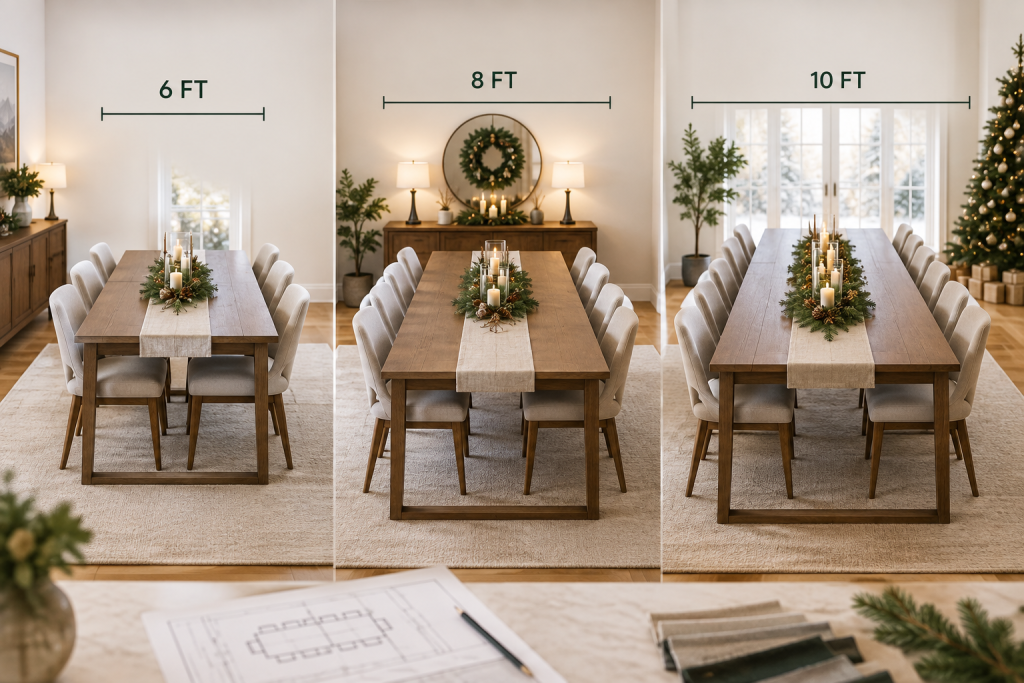
When you’re comparing a 6 foot vs 8 foot vs 10 foot dining table, the biggest question isn’t simply, “How many people can I fit?” It’s whether the table will feel comfortable in the room on an ordinary evening as well as during the holidays.
Length affects seating, serving space, visual proportion, chair movement and even whether the table can make it through the front door. A longer table can be wonderful for a large gathering, but bigger isn’t automatically better. The right choice balances your usual guest count with the way people actually use the room.
For a custom table in Park City or the Wasatch Back, it also helps to think through wood, base style, finish and access before requesting a quote. Here’s a practical way to narrow the decision.
Start with the seating goal—not the table length
Table dimensions offer a useful starting point, but seating capacity depends on more than the number printed in a product description. Chair width, armrests, the table base and how much elbow room you prefer all matter.
- 6-foot table: Often a practical fit for everyday dining and smaller gatherings. Depending on chair width and the base design, it may seat people along the sides with additional seating at the ends.
- 8-foot table: A flexible middle ground for homeowners who regularly host guests but don’t want the table to dominate the dining room. It offers more room for place settings and serving dishes than a 6-foot table.
- 10-foot table: Better suited to a generous dining area and a household that expects larger gatherings. It can provide substantial seating, but only if the surrounding room supports it.
These are planning ranges, not promises of a fixed number of seats. A wide upholstered chair needs more room than a narrow side chair. A trestle or pedestal-style base may affect where chairs can go, while a different base may give you more flexibility at the ends.
6-foot dining tables: compact, useful and easier to place
A 6-foot table is often the easiest length to live with when the dining room also serves other purposes. It leaves more room for walking, pulling out chairs and opening nearby doors or cabinets. That can be especially helpful in a second home, cabin or vacation property where the dining area needs to work without elaborate rearranging.
Choose this length when your priority is a comfortable everyday table with occasional extra seating. It may also make sense when the room is narrow, the access route is complicated or you want to preserve space for a sideboard, bench or serving area.
The tradeoff is obvious: six feet gives you less room for a large holiday spread. If guests are likely to linger over multiple courses, consider whether platters, drinks and serving bowls will share the tabletop with place settings. A custom width or a coordinated bench can sometimes improve flexibility, but the room still needs to support the overall footprint.
8-foot dining tables: the adaptable middle choice
An 8-foot table is a common compromise for buyers who want a substantial dining table without committing to an oversized piece. It can provide room for a larger group while remaining easier to proportion in many dining rooms than a 10-foot table.
This length is worth considering if you host holiday meals several times a year, have a dedicated dining area or want enough tabletop space for food in the center. It can also be a good fit for a mountain home where the table is meant to feel like a gathering point rather than a formal showpiece.
Before choosing eight feet, mark the proposed footprint on the floor with painter’s tape or folded cardboard. Place a few chairs around the outline and physically walk through the room. This simple test reveals problems that a tape measure alone can miss: a chair colliding with a wall, a walkway that feels pinched or an end seat blocking a doorway.
10-foot dining tables: generous gathering space with bigger planning demands
A 10-foot table can make a strong visual statement and create room for a large family gathering. It may suit an expansive dining room, lodge-style space or home where hosting is central to how the room is used.
However, a long table needs more than an empty rectangle on the floor. You’ll need to consider the table’s width, the amount of room behind occupied chairs and the locations of doors, windows, fireplaces, islands and other furniture. A 10-foot table placed in a room that is merely “large enough” can feel crowded once people sit down.
Longer tables can also require more careful support underneath. Base placement affects legroom and where end or side chairs can sit. If you’re considering an oversized gathering table, discuss the intended seating plan rather than choosing length in isolation. Specialty projects may involve unusual dimensions, distinctive slab character, unusual bases and more individualized material sourcing.
Room clearance matters as much as seating capacity
A dining table needs breathing room on every side. Leave enough space for someone to pull out a chair, sit down and move behind it without turning the meal into a furniture obstacle course.
As a planning exercise, measure from the proposed tabletop edge to the nearest wall or furniture. Then account for the depth of the chairs—not just the chair legs. If a main walkway runs beside the table, test that route with the chairs pulled out. The most useful measurement is the room’s working clearance, not the empty space before the room is furnished.
Also consider what happens during the holidays. A room that feels comfortable for four people may feel much tighter with every chair occupied, coats nearby and serving dishes on the table. If you regularly use a bench, measure its full depth and allow room for people to enter and leave.
Don’t overlook access routes
A table can fit beautifully in the dining room and still be difficult to bring there. Before settling on a length, measure door widths, hallways, stairways, elevators and tight turns. Include the path from the delivery vehicle to the intended room, particularly if the home has multiple levels or an indirect entrance.
Large tables can be planned around access restrictions. Depending on the design, the base may be attached or assembled after the top reaches the room. Delivery and setup can include bringing the table into place, assembling the base when needed, leveling and completing the final placement. Still, accurate measurements early in the process make the conversation much easier.
For a second home or vacation property, an authorized contact such as a property manager or contractor may sometimes coordinate delivery and setup. Share access details before the table is built, not when the delivery vehicle is already on the way.
How style and material change the decision
Length is only one part of the table’s presence. A wide white oak or black walnut top can read differently from a narrower Douglas fir or alder design, even at the same length. The core Standard Collection includes Douglas fir, alder, maple, white oak and black walnut, with established farmhouse, trestle and modern hardwood designs.
If you prefer a more distinctive look, a Specialty Collection project may include a live-edge slab, clear or colored epoxy, an unusual base or an oversized dimension. Those choices can make the table feel more visually substantial, so the room may need additional breathing space.
Think about the visual balance between the tabletop and the base, too. A heavy trestle base can reinforce a rustic or farmhouse direction. A more open base may help a longer table feel lighter. The right choice depends on the room, chairs and overall design—not on one universally correct style.
Compare the three lengths by asking these questions
- How many people do you seat on a normal weeknight?
- How many people do you want to seat during the holidays?
- Will serving dishes stay on the table, or will food be served elsewhere?
- What are the actual widths of your chairs, including arms?
- Can people walk behind occupied chairs?
- Where are the doors, stairs, elevators and tight turns?
- Will the table share the room with a bench, sideboard or other furniture?
- Do you want a standard design or a specialty table with unusual dimensions?
If your answers point in two directions, consider the table’s everyday use first. A table that works comfortably most of the year is often more useful than one sized only for the largest meal on the calendar. Temporary extra seating can be handled with carefully planned end chairs or additional seating, provided the room has the clearance to support it.
Plan the quote around real measurements
For a custom table, bring more than a preferred length to the design conversation. A room photo, approximate dimensions, desired seating capacity and examples of tables you like are enough to begin. The planning process can then account for chair width, clearance, base placement, wood, finish and access.
Published Standard Collection pricing currently begins around $2,195 for a 6-foot Douglas fir configuration, with final pricing changing according to dimensions, wood, width, base, finish and options. You can review custom table pricing before requesting a quote. Standard Collection tables are currently targeted at approximately four weeks, while Specialty Collection projects are targeted at approximately eight weeks; materials and project requirements can affect the schedule.
If you’re considering a live-edge or epoxy design, review the specialty custom tables available as a design direction. For a more conventional build, the built-to-order dining tables offer established designs and more readily available lumber.
Make the decision before the holiday rush
The best table length is the one that fits your room, your access route and the way your household actually gathers. A 6-foot table favors flexibility and easier placement. An 8-foot table offers a useful balance of capacity and proportion. A 10-foot table creates generous gathering space, but it demands careful planning on all four sides—and during delivery.
To request a custom quote from Park City Tables, send a photo of your room, approximate dimensions, the number of people you’d like to seat and examples of tables you like. The team can help narrow the size, wood, style, base, finish and options for a Park City or Wasatch Back home. Call 435-200-4982 or use the custom table quote form.