
Custom Dining Table Finishes: Choosing the Right Look for a Mountain Home
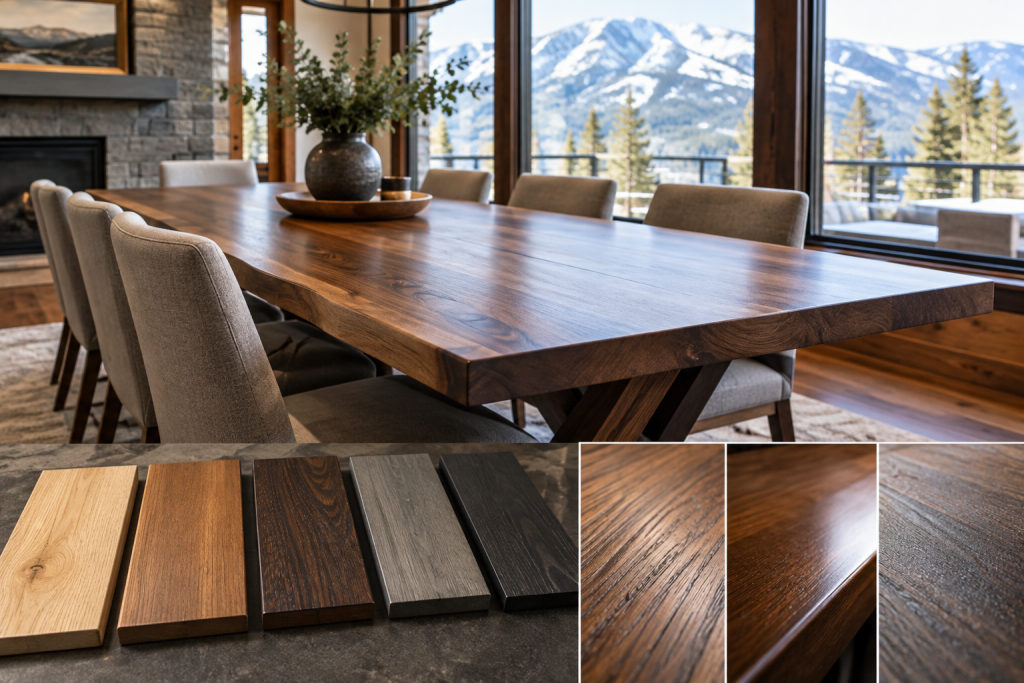
A dining table’s finish does more than protect the surface. It influences how the wood looks, how strongly the grain stands out, how the table feels beneath your hand and how comfortably it fits with the rest of the room. That makes finish selection an important part of designing a custom table—not a detail to leave until the very end.
For a Park City or Wasatch Back mountain home, the right finish can help a table work with stone, flooring, cabinetry, upholstery and surrounding woodwork without making the room feel overly coordinated. Whether you are considering a farmhouse table, modern hardwood design, live-edge slab or epoxy river table, it helps to understand the questions behind the finish decision.
What a dining table finish changes
When comparing custom dining table finishes, look at four related factors: appearance, sheen, tactile feel and the way the finish relates to the selected wood.
Color and visual warmth
A finish may leave the wood close to its natural appearance, add warmth, deepen contrast or shift the overall impression of the tabletop. The same species can look quite different depending on how much color is introduced and how the finish interacts with its grain.
This is especially worth considering in a mountain home, where a dining room may already include timber beams, flooring, cabinetry, stone fireplaces or darker metal accents. A warmer finish may complement an inviting, rustic interior. A more restrained treatment may suit a modern room where the wood’s natural variation is intended to provide the visual interest.
Grain and character
Finish can make grain lines, knots and other natural variation appear more or less prominent. If you want the wood character to be a central feature, discuss how the finish will affect the selected board or slab rather than choosing a color from a small sample alone.
Species matters here. Douglas fir, alder, maple, white oak and black walnut each bring different color and grain qualities to a built-to-order table. You can review more detail in this guide to custom table wood options before narrowing down the finish.
Sheen and reflection
Sheen describes how much light the surface reflects. A lower-sheen appearance generally reads as quieter and more natural, while a higher-sheen surface can look more formal or polished. Neither is automatically better. The practical choice depends on the room’s lighting, the desired style and how prominent you want the tabletop to be.
Consider the table at different times of day. Strong sunlight, pendant lights and warm evening lamps can all change how a finish appears. If your table will sit beneath a statement light fixture, a very reflective surface may draw more attention to that relationship than a subdued finish would.
Texture and touch
A dining table is a hands-on piece of furniture. People rest their arms on it, move plates across it and notice its surface while gathering around it. Ask how smooth or tactile you want the tabletop to feel, especially if the design includes pronounced grain, a live edge or other natural character.
Match the finish to the wood, not just the room
It is tempting to choose a finish based only on paint colors or a nearby cabinet sample. Those references are useful, but the wood itself should lead the conversation. A finish that looks balanced on white oak may produce a different result on walnut, maple or Douglas fir.
Start by deciding what you want to preserve:
- Natural variation: Choose an approach that lets the species’ color and grain remain central.
- More visual consistency: Discuss whether a controlled color treatment can bring boards closer together in appearance.
- Rustic character: Consider how knots, grain movement and visible variation should contribute to the design.
- A cleaner modern look: Focus on straightforward proportions, a restrained finish and a wood choice that supports the room’s palette.
There is no universal “best” finish. The right choice involves tradeoffs among wood color, grain, room style, desired texture and the overall design of the table.
Think about the table’s design language
Finish should support the table’s shape and base rather than compete with them. A farmhouse or trestle table may suit a finish that emphasizes warmth and substantial wood character. A modern hardwood table may call for a quieter surface treatment that keeps the lines and proportions clear.
Live-edge tables require a slightly different conversation. The edge itself is part of the design, so the finish needs to work with the slab’s natural outline and distinctive character. With an epoxy river table, the wood finish also has to relate to the clear or colored epoxy. The goal is to make the combination feel intentional rather than like separate materials placed together.
For more unusual slab character, oversized dimensions or individualized sourcing, a project may fall within the Specialty Collection. You can explore examples of specialty custom tables while gathering ideas, remembering that gallery images are design inspiration rather than a list of available inventory.
Use the surrounding materials as reference points
Before selecting a finish, gather photographs of the room and note the materials that will remain in place. Useful references include:
- Flooring and ceiling wood tones
- Kitchen or bar cabinetry
- Fireplace stone or other masonry
- Wall color and window-trim color
- Dining chairs, benches and nearby upholstery
- Metal finishes on lighting, hardware and table bases
You do not need every material to match. In fact, a table can feel more natural when it relates to the room without repeating every color exactly. A finish might echo the warmth of the floor while allowing the tabletop to remain visibly distinct. Or it might provide contrast against darker cabinetry and stone.
Questions to ask before choosing a finish
A productive finish discussion is specific. Bring questions such as:
- How will this finish affect the selected wood species?
- Will it make the grain more prominent or more subdued?
- How warm, neutral or dark should the tabletop appear?
- What sheen best suits the room’s lighting and design style?
- How should the tabletop relate to the base, chairs and surrounding materials?
- Should the live edge or slab character remain the visual focus?
- How will a finish work with clear or colored epoxy, if applicable?
- Are there finish choices that work better with the intended table size or design?
Ask how the proposed finish will be evaluated on the actual wood type being considered. A small color reference can be helpful, but it should not replace a conversation about grain, board variation and the complete table design.
Prepare useful references for a custom table consultation
You do not need completed furniture plans to begin. A room photo, approximate dimensions, desired seating capacity and a few examples of tables you like are enough to start the design conversation.
When collecting inspiration, save examples for the right reasons. One image may show a finish you like, another may have the right base, and a third may demonstrate a comfortable size or seating arrangement. Identifying those separate preferences makes it easier to create a table that fits your room instead of copying one image piece by piece.
For a second home, vacation property or project involving an interior designer, builder or property manager, include the people who need to approve material decisions. It is also useful to discuss access early. Door widths, stairs, elevators and the intended dining-room location can affect how a large table is planned and delivered.
Finish is one part of the complete specification
A finish cannot be selected in isolation from the rest of the table. The final design may include the length and width, seating capacity, wood species, base style, edge treatment, optional engraving and delivery requirements.
That is why a finish conversation often becomes more productive after the table’s proportions and wood direction are clearer. A six-foot table for everyday meals may call for a different visual balance than an oversized gathering table intended for a larger room. Likewise, a family name, meaningful date, coordinates, monogram or artwork may be placed on the tabletop, apron, base, end or underside depending on the design. Learn more about custom table engraving if personalization is part of your plan.
Park City Tables creates built-to-order and specialty custom dining tables for Park City and Utah mountain homes. Customers can select the table size, wood species, finish, base style and optional custom details. Standard Collection choices include Douglas fir, alder, maple, white oak and black walnut, while Specialty Collection projects can include live-edge slabs, epoxy river designs, oversized dimensions and more individualized material sourcing.
How to move from inspiration to a finish decision
- Photograph the room. Include floors, cabinetry, lighting and nearby seating.
- Measure the available area. Note approximate length, width and clearance around the table.
- Decide how many people you want to seat. This helps establish the table’s proportions before finish details distract you.
- Choose a wood direction. Compare species based on color, grain and character rather than name alone.
- Collect finish references. Mark what you like about each example: sheen, warmth, grain visibility or overall mood.
- Discuss the complete build. Review the base, edge, engraving, access route and delivery plan together.
For a starting point, review how custom table ordering works. The initial planning process can often be handled remotely with photographs, measurements and design references.
Request a custom finish conversation
The best finish decision is the one that makes sense for your wood, room and way of gathering—not simply the one with the most impressive sample. If you are planning a mountain-home dining table in Park City, Deer Valley, Heber City, Midway, Kamas, Hideout or another Wasatch Back community, send a room photo, approximate dimensions, the number of people you would like to seat and examples of tables you like.
Park City Tables can help narrow the size, wood, style, base, finish and optional details for your build. Call 435-200-4982 or request a custom table quote through the website.