What Makes an Oversized Dining Table a Specialty Project?
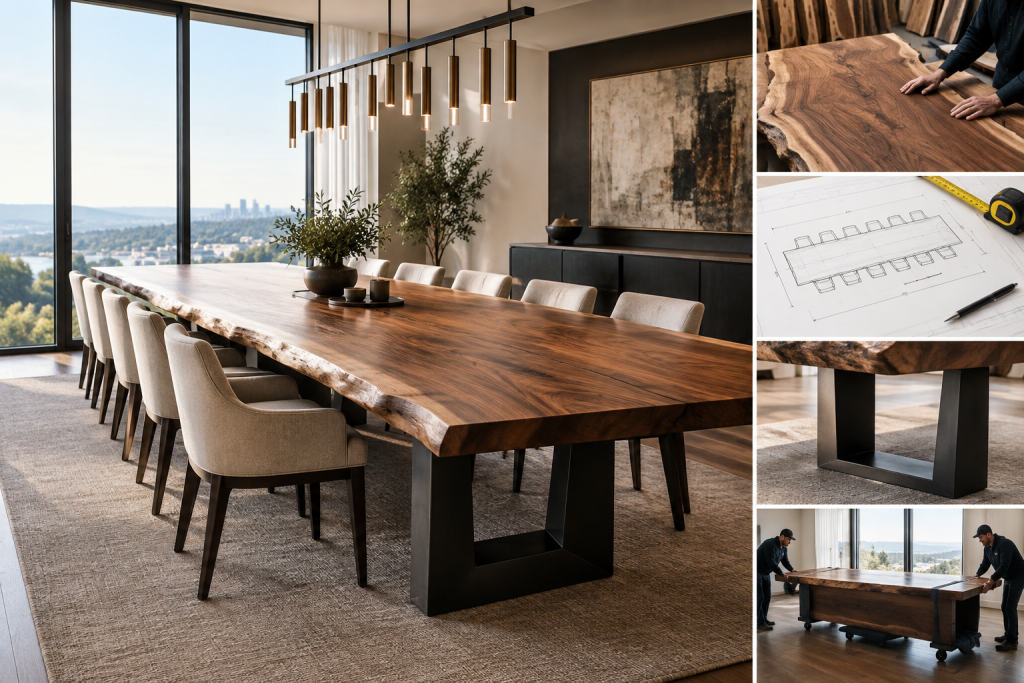
An oversized custom dining table can become the visual and practical center of a Park City ski home, lodge-style property or large gathering space. But when a table grows beyond common dimensions, the project involves more than simply adding a few feet to a standard design.
Very large dimensions can affect the available wood, tabletop construction, base design, room proportions, delivery route and final quote. That is why an oversized table may be a better fit for a Specialty Collection conversation than a typical built-to-order order.
The good news is that you do not need finished architectural plans to begin. A room photo, approximate measurements, desired seating capacity and a few examples of tables you like can provide a useful starting point.
What separates an oversized table from a standard custom table?
A standard built-to-order table still offers meaningful customization. Customers can choose the size, wood species, finish, base style and certain details while working from established designs and more readily available lumber. The Standard Collection includes Douglas fir, alder, maple, white oak and black walnut, along with farmhouse, trestle and modern hardwood styles.
That approach can make the process simpler and more predictable. Published Standard Collection sizes generally range from 6 feet through 10 feet, although the final design still depends on the requested dimensions and specifications. You can learn more about built-to-order dining tables if your project fits within a familiar size and design direction.
A specialty project may involve one or more less predictable requirements, such as:
- An unusually long, wide or thick tabletop
- A live-edge slab with distinctive character
- Two or more pieces of wood selected for a specific design
- An epoxy river detail with clear or colored resin
- An unusual base or support arrangement
- A difficult room, access route or installation plan
- A highly individualized combination of wood, finish, shape and details
In other words, “oversized” is not determined by length alone. The complete design and the materials needed to achieve it matter just as much.
Dimensions affect more than seating
Many homeowners begin with a simple goal: seat a large family or accommodate guests at a vacation property. That is the right place to start, but seating capacity is only one part of the planning process.
Table length, width, chair dimensions and the location of the legs or supports all affect how comfortably people can sit. A table that looks impressive on paper may feel awkward if chairs cannot pull out properly or if the base occupies the exact space where someone wants to sit.
Room clearance matters, too. People need space to walk around the table, pull chairs back and serve food. The intended table location should be considered alongside walls, islands, fireplaces, door swings and nearby furniture. For a large gathering table, it is often useful to think about everyday use as well as holiday meals: Will people pass behind seated guests? Is there room for serving dishes? Will the table overpower the room or give it the substantial presence you want?
These questions are especially important in large mountain homes, where an open great-room layout may connect the dining area with a kitchen, living space or entry route. The ideal table should feel generous without turning movement through the room into an obstacle course.
Slab availability can shape the design
Standard lumber and a specialty slab create different design conversations. A standard table can begin with an established design and available material. A live-edge or unusually wide tabletop may require sourcing an appropriate slab specifically for the project.
That sourcing process can influence the final dimensions, edge character, grain direction and overall appearance. A desired length may be possible, but the available slab may suggest a different proportion. In some cases, the most interesting design comes from allowing the wood’s natural character to guide the tabletop rather than forcing it into a predetermined shape.
Live-edge tables are a common specialty direction because every slab has its own outline and visual movement. Epoxy river tables add another layer of choice: clear or colored epoxy can be incorporated into a design, but the color, placement and amount of resin become part of the overall composition.
For a more detailed look at specialty materials and one-of-a-kind designs, explore these specialty custom tables.
Choosing wood for a large gathering table
Wood selection should support the room, the desired character and the table’s proportions. Douglas fir can suit a more relaxed or rustic direction. Alder, maple, white oak and black walnut each create different visual effects through color, grain and contrast.
There is no universally correct wood for an oversized dining table. A lighter species may help a large tabletop feel more open, while a darker wood can create a stronger focal point. Grain character and finish also affect whether the result feels rustic, refined, modern or somewhere in between.
For a mountain home, the best choice often depends on the existing floors, cabinetry, stone, lighting and furniture. A substantial table does not have to match every element in the room, but it should feel intentional within the larger design. You can compare the available materials in the guide to custom table wood options.
The base becomes a structural and design decision
On a small table, the base is easy to treat as a style detail. On an oversized table, it also has to support the dimensions and work with seating.
Trestles, legs, pedestal-style arrangements and other custom bases can create very different experiences around the table. The placement of supports affects legroom, chair positions and how easily guests can sit at the ends. It can also affect how the table looks from the adjoining living areas, which matters in an open-plan ski home.
A long tabletop with a visually heavy base may feel grounded and substantial. A simpler base may allow the wood to remain the focus. The right answer depends on the tabletop, the room and how the table will be used. A base should not be selected in isolation after the top has already been designed.
Access planning is part of oversized table planning
A table can fit beautifully in the dining room and still be difficult to get there. Before finalizing a large design, consider the route from the delivery vehicle to the intended room.
Relevant details may include exterior doors, interior door widths, stairways, tight turns, elevators and changes in floor level. A second home or vacation property may also require coordination with a property manager, contractor or another authorized contact if the owner is not present.
Delivery and setup can include bringing the table into the intended room, attaching or assembling the base when needed, leveling it and completing final placement. Sharing access information early gives the design conversation a practical foundation. More information is available on table delivery and setup.
What affects the quote?
The quote for an oversized custom dining table is based on the actual project rather than a single size label. Factors can include:
- Overall length, width and thickness
- Wood species and the amount of material required
- Whether a specialty slab needs to be sourced
- Live-edge characteristics or epoxy work
- Base style and construction requirements
- Finish and other design options
- Engraving or custom artwork
- Delivery, access and setup requirements
Published Standard Collection pricing currently begins around $2,195 for a 6-foot Douglas fir configuration, while some Specialty Collection live-edge configurations currently begin around $3,495+. Those are starting points, not guaranteed prices. Larger dimensions, premium woods, rare slabs, epoxy and unusual construction can increase the final quote. See the guide to custom table pricing for more context.
Current advertised targets are approximately 4 weeks for Standard Collection tables and approximately 8 weeks for Specialty Collection tables. These are estimates, not guaranteed completion dates, and material sourcing and project requirements can affect the schedule.
When should you start a Specialty Collection conversation?
Start with the real-world brief: the room, the number of people you want to seat, the table’s approximate dimensions and the look you prefer. If the table is unusually large, requires a particular slab, includes epoxy, needs a distinctive base or has a complicated access route, mention those details at the beginning.
That information helps narrow the possibilities before the design becomes too specific. It also makes it easier to decide whether an established Standard Collection design or a more individualized specialty build is the better fit.
Custom engraving can be considered as well. Qualifying builds may include a family name, meaningful date, coordinates, monogram, company logo, short inscription or custom artwork. Placement may be on the tabletop, apron, base, end, underside or another suitable location, depending on the design.
Request a quote for your oversized table
If you are planning a dining room for a Park City, Deer Valley, Heber City, Midway or surrounding Wasatch Back property, send a photo of the room, approximate dimensions, the number of people you would like to seat and examples of tables you like.
Park City Tables can help narrow the size, wood, style, base, finish and options, then determine whether your project belongs in a standard built-to-order conversation or the Specialty Collection. Call 435-200-4982 or request a custom table quote through ParkCityTables.com.