
When Does a Custom Dining Table Need a Project-Specific Slab?
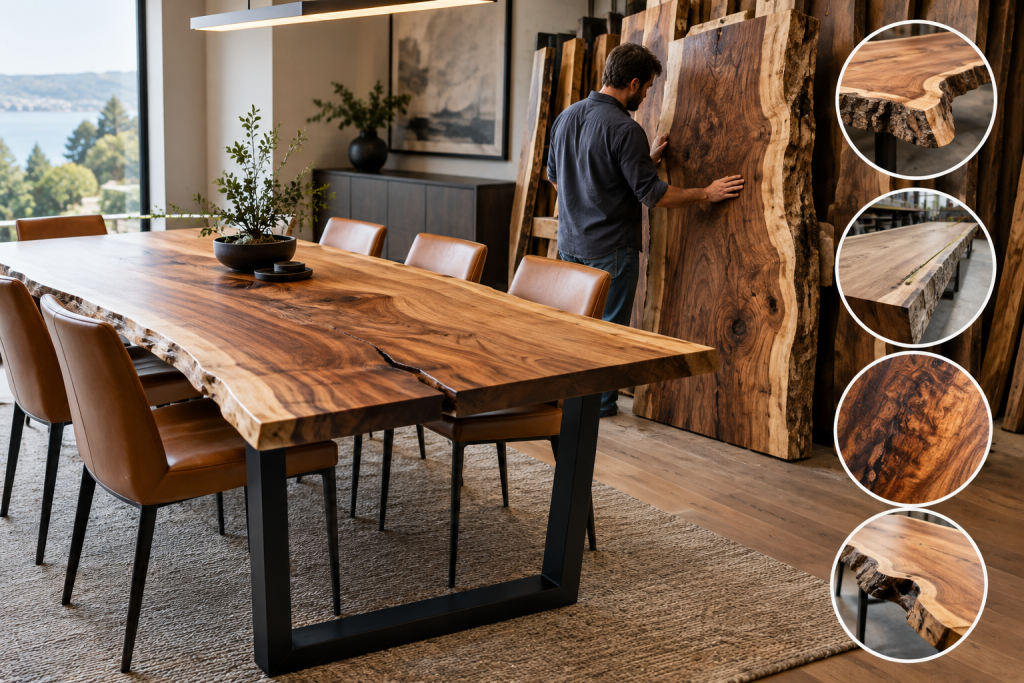
A custom dining table doesn’t always require a slab sourced specifically for the project. Many tables can be built from the more readily available lumber used for established designs in the Standard Collection. But when the table depends on an unusual width, a dramatic natural edge, a rare wood choice or a very specific overall shape, material selection becomes part of the design itself.
That’s where custom dining table slab sourcing may enter the conversation. Instead of choosing a table design first and fitting available boards to it, the project may require finding an appropriate slab or hardwood for the intended room, dimensions and visual character.
For homeowners, second-home owners, designers and builders in Park City and the Wasatch Back, understanding this distinction can make the planning process much easier. It also helps explain why a one-of-a-kind table may have a different scope, price and estimated turnaround than a more straightforward built-to-order design.
What makes a table a slab-sourcing project?
A project may need specialty material sourcing when the requested result cannot be achieved easily with the established sizes and wood choices used for a Standard Collection table. That can happen for several reasons:
- The tabletop needs an unusual width or length.
- The design depends on a particular live edge or natural outline.
- The customer wants distinctive grain, knots, color variation or other slab character.
- The table calls for a specialty hardwood outside the core Standard Collection choices.
- The design includes an epoxy river, unusual base or other individualized feature.
- The tabletop must work around a specific room layout, seating plan or architectural setting.
The core Standard Collection wood choices are Douglas fir, alder, maple, white oak and black walnut. Those options, combined with established farmhouse, trestle and modern hardwood designs, allow for a simpler and more predictable custom-table process.
The Specialty Collection is different. It includes live-edge slabs, epoxy river tables, oversized tables, unusual dimensions, distinctive slab character, unusual bases and more individualized material sourcing. In these projects, the material is not merely a surface finish. It can determine the table’s proportions, edge treatment and overall personality.
Unusual dimensions are often the first clue
A table that is longer than a commonly available configuration may require additional planning, but length alone doesn’t automatically mean that a specialty slab is necessary. The more important question is whether the requested length and width can be achieved while maintaining the intended construction, appearance and seating arrangement.
Width is often especially important. A buyer may want a broad gathering table that feels substantial in a mountain home, ski property or large dining room. If the design calls for a wide, visually continuous surface, the available material may need to be sourced around that goal rather than selected from standard stock.
Room planning still comes first. A beautiful oversized tabletop is not useful if it leaves too little clearance for chairs and movement. Before material is sourced, it helps to consider the room’s dimensions, chair width, desired seating capacity and base placement. Doorways, stairways, elevators and tight turns may also affect the practical size of the finished table.
For more detailed preparation, see this guide to measuring a dining room for a custom table.
Live-edge character cannot be chosen from a measurement alone
With a conventional tabletop, the design can usually be described through dimensions, wood species, finish and base style. A live-edge table adds another variable: the natural outline of the slab.
Two slabs of the same species may have very different edge movement, grain patterns, knots and changes in width. One may suit a long, formal dining room. Another may work better in a narrower space or in a room where the natural edge is intended to be the main visual feature.
This is why live-edge slab selection is part of the design process rather than a final shopping step. The slab needs to be considered alongside:
- The desired finished dimensions.
- Where diners will sit and how chairs will align.
- Whether the natural edge should face the room, the chairs or both sides.
- The visual relationship between the top and the table base.
- The amount of grain movement and natural character that feels right for the space.
- The finish and overall style of the home.
For a buyer who wants a table no one else has, those variations are often the appeal. The tradeoff is that the final design may need to adapt to a suitable slab, rather than treating the slab as an interchangeable part.
When specialty wood sourcing may be worthwhile
Some buyers begin with a specific species in mind. Others begin with a color, grain pattern or design mood. The Standard Collection provides a practical starting point with Douglas fir, alder, maple, white oak and black walnut. Each can support a different visual direction, from rustic and relaxed to cleaner and more refined.
A specialty project may be appropriate when the desired species, board width or character is not readily available for the requested design. That does not mean a specialty wood is automatically better. The useful choice depends on the room, the preferred appearance, the design, the finish and the project’s scope.
It is worth discussing tradeoffs openly. A distinctive wood or rare slab may change the appearance and sourcing process, while a more readily available species may make the project simpler and more predictable. The right decision is the one that supports the table’s purpose without adding complexity that the room or design does not need.
Park City Tables’ guide to custom table wood options can help narrow the conversation before a quote is prepared.
Epoxy and unusual designs add another layer
Epoxy river tables are a clear example of a design that may require project-specific material planning. The slab’s natural voids, edges and grain direction influence where clear or colored epoxy can be incorporated. The color, shape and amount of epoxy also affect the visual balance of the tabletop.
Other specialty details can create similar considerations. An unusual base may change how the top needs to be supported. A large table may require a different approach to access and assembly. Custom engraving may need to be placed on the tabletop, apron, base, end, underside or another appropriate location depending on the design.
These decisions are connected. Choosing a slab, base, finish and engraving location separately can lead to an awkward result. Planning them together gives the project a better chance of feeling intentional from every side.
How slab sourcing can affect scope and pricing
Project-specific sourcing adds work before construction begins. The material must be matched to the required dimensions and design, and the final quote depends on the actual table specifications. Size, wood, slab, base, finish, delivery requirements and options all affect pricing.
Published Specialty Collection starting prices currently range from approximately $3,495+ for some live-edge configurations. Premium woods, rare slabs, epoxy tables and oversized projects may be higher. These are starting points, not guaranteed final prices. For a clearer explanation of the variables, review the guide to custom table pricing.
Specialty sourcing can also affect the schedule. The current advertised target turnaround is approximately eight weeks for Specialty Collection tables, subject to materials and project requirements. By comparison, the current target for Standard Collection tables is approximately four weeks. Neither is a guaranteed completion date, particularly when the project depends on specific material availability or unusual construction requirements.
What to send when starting the design conversation
You don’t need completed furniture plans to begin. A useful first message can include:
- A photo of the dining room or intended space.
- Approximate room dimensions.
- The number of people you would like to seat.
- Your preferred table length and width, if known.
- Examples of tables, slabs or bases you like.
- The wood colors, edge character and finish direction you prefer.
- Any access concerns involving doors, stairs, elevators or tight turns.
- Ideas for benches, epoxy or custom engraving.
This information helps determine whether a Standard Collection configuration is likely to fit the project or whether a specialty slab or hardwood should be considered. Much of the initial planning can be handled remotely, which can be useful for second-home and vacation-property owners coordinating from another location.
Is project-specific sourcing right for your table?
It may be worth exploring if the table is intended to be a one-of-a-kind centerpiece and the design depends on material character, unusual dimensions or a distinctive natural edge. It may be unnecessary if an established design and readily available wood can meet the room’s needs comfortably.
The goal isn’t to make every table a specialty project. It’s to match the sourcing approach to the table you actually want. A Standard Collection table may offer a more straightforward path, while a Specialty Collection table gives more room for unusual proportions, live-edge character, epoxy and individualized details.
Park City Tables creates built-to-order and specialty custom dining tables for Park City and Utah mountain homes, with delivery and setup available in Park City, Deer Valley, Heber City, Midway and surrounding Wasatch Back communities.
To request a custom quote, send a room photo, approximate dimensions, the number of people you want to seat and examples of tables you like. Park City Tables can help narrow the size, wood, style, base, finish and options. Call 435-200-4982 or request a quote online.