Custom Dining Tables for Park City Cabins: Rustic, Refined and Built to Fit
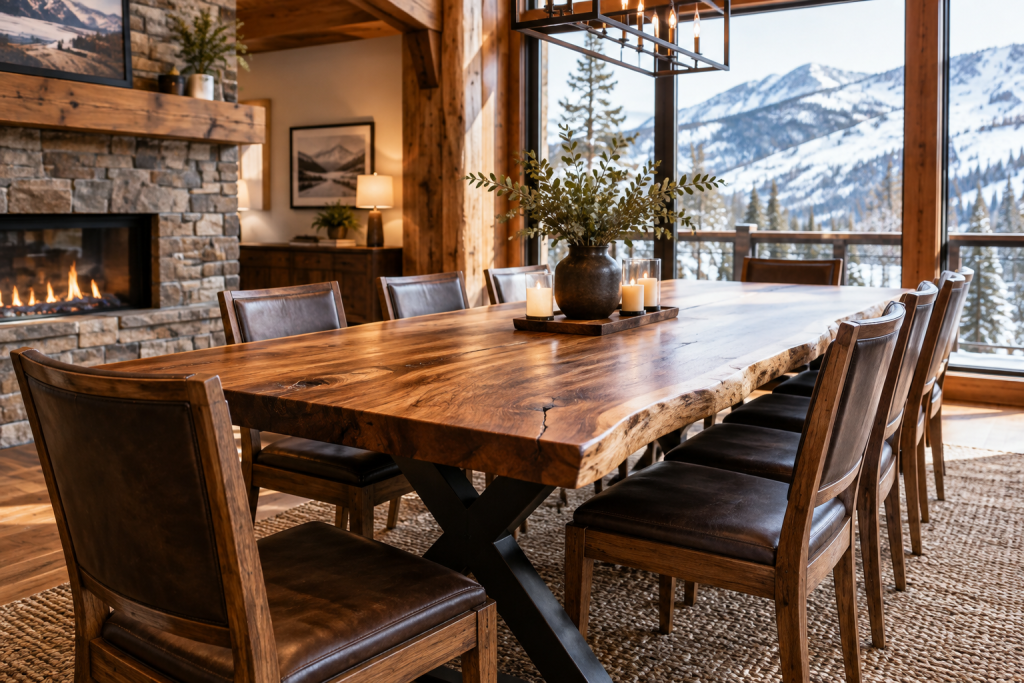
A cabin dining table has a big job. It may host a quiet breakfast, a holiday meal, a board game that lasts too long, or a full gathering after a day outside. The right table needs to suit the room, but it also needs to support the way people actually use the home.
For owners comparing custom dining tables for Park City cabins, the useful starting point is not a wood species or a trendy finish. It is the combination of architecture, seating, circulation and character you want in the room. Once those decisions are clearer, choosing between a farmhouse, trestle, modern hardwood, live-edge or epoxy design becomes much easier.
Start with the cabin’s proportions and seating plan
A beautiful table that overwhelms the room—or leaves everyone squeezing past chairs—is not a successful custom piece. Before choosing a style, note the dining area’s length and width, the location of doors and walkways, and where chairs need to move.
Also consider how the table will be used. A second home may need comfortable everyday seating for four to six people, with flexibility for larger visits. A vacation property or lodge-style home may be planned around larger family gatherings. The number of people you want to seat affects the table length, width, base placement and whether benches make sense.
Leave practical clearance around the table for chairs and movement. Exact needs depend on the room, chair size and surrounding furniture, so approximate dimensions and a room photograph are valuable at the beginning of the design conversation. If you are still measuring, this guide to measuring a dining room for a custom table can help organize the information.
Choose a style that matches the architecture
“Rustic” can mean several different things. It might refer to visible grain and natural variation, a substantial top, a traditional base, or simply a warm, relaxed room. A custom table lets you decide how much of that character belongs in the finished design instead of accepting an all-or-nothing look.
Farmhouse tables: familiar and gathering-friendly
Farmhouse tables work well when you want a welcoming, substantial silhouette. A broad wood top paired with a trestle base can suit a cabin with traditional details, stone, exposed wood or a relaxed family-room atmosphere. The design can be rustic without looking unfinished, especially when the wood selection and finish are kept intentional.
Trestles can also create a strong visual foundation while keeping the table’s overall shape straightforward. Chair placement still needs attention, since the location and width of the trestle affect legroom. A bench on one side may reinforce the farmhouse character and make flexible seating easier.
For more inspiration, explore these custom farmhouse dining tables for Park City homes and cabins.
Modern hardwood tables: clean lines with natural warmth
A modern hardwood table does not have to feel cold or out of place in a mountain home. A simpler base, restrained finish and carefully proportioned top can create a refined look while keeping the grain visible. This direction may suit a cabin with contemporary architecture, quieter millwork or a mix of modern and natural materials.
The difference between rustic and modern often comes down to proportion and restraint rather than the wood alone. The same species can read differently depending on the edge profile, base, finish and overall thickness. If the room already has strong architectural features, a cleaner table may give the space room to breathe.
Live-edge and epoxy designs: a one-of-a-kind focal point
Live-edge tables emphasize the individual shape and character of a slab. That can make the table a natural centerpiece, but it also means the usable width and seating positions may vary along the length. Chair placement needs to be considered from the actual slab rather than from a perfect rectangle on paper.
Epoxy river tables add another layer of customization. Clear or colored epoxy can be incorporated into specialty designs, allowing the material contrast to become part of the room’s visual identity. These projects may require sourcing an appropriate slab or hardwood specifically for the build, and unusual dimensions or distinctive slab character can affect both planning and price.
See the specialty custom tables collection if you are considering live edge, epoxy, oversized or unusually configured furniture.
Compare the main wood choices
Park City Tables’ Standard Collection includes Douglas fir, alder, maple, white oak and black walnut. Each creates a different starting point for a cabin dining table.
- Douglas fir: A warm, characterful option for a more relaxed mountain-home feel.
- Alder: A versatile choice that can support a range of finishes and styles.
- Maple: A lighter-looking hardwood option for a cleaner, brighter presentation.
- White oak: A strong visual fit for both traditional and modern designs, with distinctive grain character.
- Black walnut: A deeper-toned choice when you want the table to bring richer color and contrast to the room.
There is no universal “best” wood. Consider the room’s existing floors, cabinetry and furniture, along with the mood you want. Grain, color, width, finish and the chosen base all work together. If you are deciding between species, review the guide to custom table wood options before settling on a finish or silhouette.
Think carefully about the base
The base is not just a decorative detail. It affects legroom, chair placement and how visually heavy the table feels. Four legs can give a familiar furniture look and make the construction easy to read. A trestle base can reinforce a farmhouse or traditional cabin style, though its position should be checked against chair locations. A pedestal-style approach may help keep the underside visually open, depending on the design.
Share the chairs you plan to use—or at least their approximate width—with the table maker. A table can be correctly sized on paper and still feel awkward if the base conflicts with where people sit. Custom benches can be considered at the same time, particularly for a family gathering table or a cabin where seating needs change from one visit to the next.
Account for access before the table is built
Mountain homes can present practical delivery questions. The table may need to pass through exterior doors, interior turns, stairways or elevators before reaching the dining room. Large or oversized tables should be planned around those restrictions early, not after the piece is complete.
Park City Tables can discuss delivery and setup for Park City, Deer Valley, Heber City, Midway and surrounding Wasatch Back communities. Setup may include bringing the table into the intended room, attaching or assembling the base when needed, leveling and final placement. For a second home, delivery can sometimes be coordinated through a property manager, contractor or authorized contact. Review the details of table delivery and setup as part of the planning process.
Understand Standard and Specialty options
The Standard Collection uses established designs and more readily available lumber, creating a simpler and more predictable custom-table process. It can include farmhouse, trestle and modern hardwood designs, with published sizes generally ranging from 6 to 10 feet. The current advertised target turnaround is approximately four weeks, although timing remains an estimate and depends on project requirements and materials.
The Specialty Collection is suited to live-edge slabs, epoxy river tables, oversized tables, unusual dimensions, distinctive slab character, unusual bases and more individualized sourcing. The current target turnaround is approximately eight weeks, but it is not a guaranteed completion date.
Published Standard Collection pricing currently begins around $2,195 for a 6-foot Douglas fir configuration. Some Specialty Collection live-edge configurations currently begin around $3,495 or more. Final pricing depends on dimensions, wood, slab, base, finish, delivery requirements and options. Custom table pricing is easier to evaluate once those specifications are defined.
Add personal meaning without overdoing it
Engraving can make a table feel connected to the people who use the home. Depending on the design, qualifying builds may include a family name, meaningful date, coordinates, monogram, short inscription, company logo or custom artwork. Placement may be on the tabletop, apron, base, end, underside or another suitable area.
Simple custom engraving currently starts at $195, while more complex engraving and artwork are quoted individually. An underside or end placement can keep the personal detail discreet; a tabletop engraving makes it more visible. The best location depends on the design and how prominent you want the detail to be. See the options for custom table engraving before choosing artwork.
How to begin your custom table conversation
You do not need completed furniture plans to get started. Send a room photo, approximate dimensions, the number of people you would like to seat and examples of tables you like. Those details provide a practical basis for discussing size, wood, style, base, finish and optional features.
Park City Tables creates built-to-order and specialty custom dining tables for Park City and Utah mountain homes, including homes and cabins throughout the Wasatch Back. Whether your preference is a straightforward farmhouse table, a refined modern hardwood design or a distinctive live-edge centerpiece, the goal is to match the table to the room and the way you gather there.
Ready to narrow down the options? Request a custom quote from Park City Tables through the quote request page, or call 435-200-4982. Include your room photo, approximate dimensions, desired seating capacity and a few design references. That is enough to start—no blueprint roller required.