Custom Dining Tables for Interior Designers, Builders and Architects in Park City
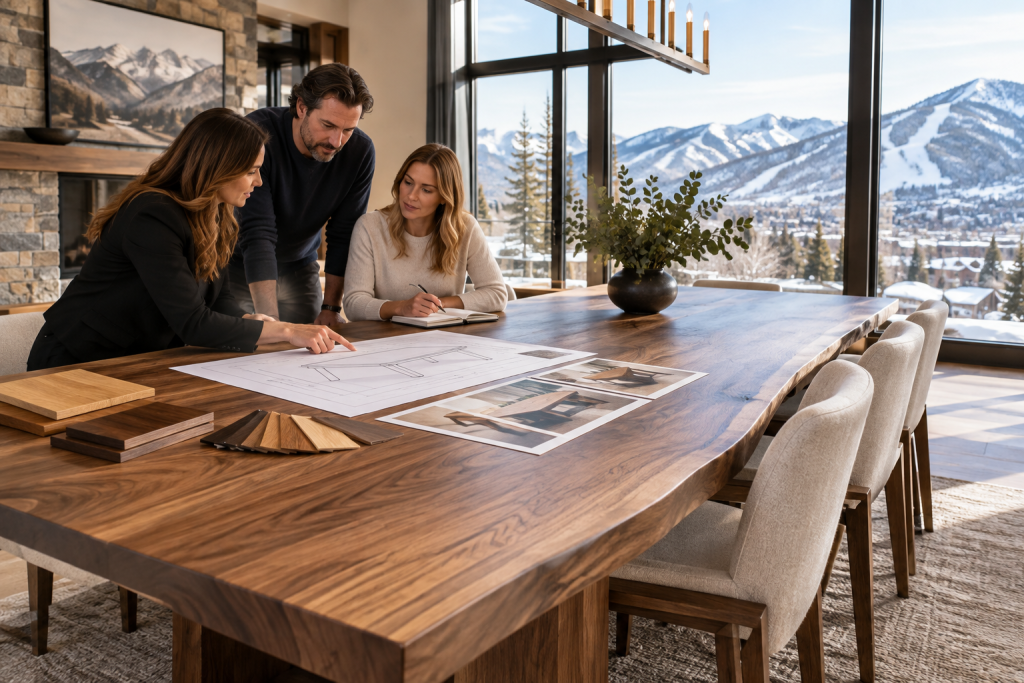
When a dining table is part of a larger mountain-home project, the table conversation needs to begin with more than a finish color. Room dimensions, seating goals, chair widths, base placement, access routes and delivery contacts all affect the final specification.
For interior designers, architects, builders and project managers looking for custom dining tables for interior designers in Park City, a clear information package makes the process easier for everyone involved. Park City Tables creates built-to-order and specialty custom dining tables for Park City and Utah mountain homes, with options for wood, size, finish, base style and personalized details.
Start with the room and the people using it
The first useful question is not “Which wood do you want?” It is “How will this table work in the room?” A dining table for a primary residence may need to support everyday meals, while a second home or vacation property may be planned around larger gatherings and changing guest counts.
Before requesting a quote, gather:
- The room’s approximate length and width
- The desired table location and orientation
- The number of people the client would like to seat regularly and occasionally
- Chair widths, if the chairs have already been selected
- Whether benches are being considered
- Nearby walls, islands, fireplaces, doors or circulation paths
- Photos of the room and examples of tables the client likes
Completed furniture plans aren’t required to begin the design conversation. A room photo, approximate measurements, seating goal and a few visual references can be enough to identify the next decisions.
Confirm the table dimensions before choosing the look
Table length is only one part of a usable specification. Width affects place settings, serving dishes and the visual weight of the table. The base affects legroom and chair placement. Room clearance affects whether people can move comfortably around occupied chairs.
For a design or construction team, it helps to separate the dimensions into three categories:
Table dimensions
Record the target length, width and height, along with any required thickness or edge treatment. If the table must fit between architectural elements, note the maximum dimensions as well as the preferred dimensions.
Seating requirements
List the expected number of diners and identify whether seating is intended for daily use, occasional entertaining or large family gatherings. Chair width matters. So does the way chairs sit near corners, legs and bases. A client’s preferred seating count should be reviewed alongside the actual furniture selected for the room.
Clearance and circulation
Measure the space around the proposed table, not just the open floor area. Include the distance needed to pull chairs out, pass behind seated guests and reach nearby doors or cabinetry. A beautiful oversized table can become an awkward obstacle if the surrounding clearances are treated as an afterthought.
For additional planning ideas, see this guide to choosing between 6-foot, 8-foot and 10-foot tables.
Choose the appropriate design collection
Park City Tables’ Standard Collection uses established designs and more readily available lumber for a simpler, more predictable custom-table process. It may include farmhouse, trestle and modern hardwood designs. Published sizes generally range from 6 feet through 10 feet.
The Specialty Collection is intended for projects with more individualized material or construction requirements. That can include live-edge slabs, epoxy river designs, unusual dimensions, oversized tables, distinctive slab character, unusual bases or a more specific sourcing process.
This distinction is useful when coordinating a project schedule. The current advertised target turnaround is approximately four weeks for Standard Collection tables and approximately eight weeks for Specialty Collection projects. These are estimates, not guaranteed completion dates, and material availability and project requirements can affect timing.
Reviewing how custom table ordering works can help the project team understand what information is needed before design details are finalized.
Discuss wood as a design and specification decision
The core Standard Collection wood choices are Douglas fir, alder, maple, white oak and black walnut. Each can create a different visual direction, so the decision should be tied to the surrounding architecture, cabinetry, flooring, upholstery and the amount of visible grain the client wants.
- Douglas fir: A useful option when the design calls for a more relaxed, substantial or rustic character.
- Alder: Worth considering for projects seeking a warm hardwood appearance that can support several design directions.
- Maple: A possible fit for a lighter, cleaner-looking table specification.
- White oak: Often considered when the project needs noticeable grain and a versatile natural hardwood appearance.
- Black walnut: A darker, richer choice that can become a strong focal point in a dining room.
These are design tradeoffs, not a ranking of one wood as universally best. Grain, color, finish, table size, budget and the desired relationship with the rest of the room should all be discussed. The custom table wood options page provides a useful starting point for that conversation.
Specify the base, edge and finish together
A tabletop and base should be considered as one piece of furniture. A trestle base may support a farmhouse direction, while a different base can give the same general table size a more modern feel. Base placement also affects where chairs can go, particularly at the ends and corners.
Ask the project team to decide:
- Whether the base should be visually prominent or visually restrained
- How much end seating is required
- Whether the client prefers a farmhouse, trestle or modern hardwood direction
- How the table edge should relate to the chair profile
- Whether the finish should emphasize natural character or create a more controlled color
- Whether a matching bench would improve flexibility in the room
Finish samples or reference images can help align expectations, especially when several wood elements in the room need to feel coordinated without matching exactly.
Decide whether specialty features belong in the brief
Live-edge slabs and epoxy river designs can make a table highly distinctive, but they also introduce additional decisions. The team may need to discuss slab character, usable width, natural edge placement, epoxy color and the relationship between the tabletop and base.
Specialty projects may require sourcing an appropriate slab or hardwood specifically for the project. That makes early planning particularly important when the table has an unusual length, width or visual requirement.
Engraving can also be included on qualifying builds. Options may include a family name, meaningful date, coordinates, monogram, company logo, short inscription or custom artwork. Placement may be on the tabletop, apron, base, end, underside or another suitable location depending on the design. Simple custom engraving currently starts at $195, while more complex engraving and artwork are quoted individually. Explore custom table engraving before the design is locked.
Plan access before fabrication is complete
A large table has to reach the room, not merely fit inside it on paper. For mountain homes, access planning should be part of the initial specification rather than a final-week discovery.
Ask for measurements or photos of the route through:
- Exterior doors and interior doorways
- Hallways and tight turns
- Stairways and landings
- Elevators, where applicable
- Garage or loading areas
- The final room entrance
If the table will be delivered to a second home or vacation property, identify who can provide access and make decisions on site. Delivery can sometimes be coordinated through a property manager, contractor or other authorized contact.
Park City Tables offers delivery and setup in Park City, Deer Valley, Heber City, Midway and surrounding Wasatch Back communities. Depending on the table, setup can include bringing it into the intended room, attaching or assembling the base when needed, leveling and completing final placement. Review the details for table delivery and setup as part of the project schedule.
Prepare one clear handoff for the quote
A concise specification package can prevent scattered revisions. Include the room photos, dimensions, seating goal, chair information, preferred wood, style direction, base preference, finish references, engraving ideas and access notes. Add the target installation window, delivery address and the name of the person authorized to coordinate delivery.
Final pricing depends on the actual dimensions, wood, slab or lumber, base, finish, delivery requirements and options. Published Standard Collection pricing currently begins around $2,195 for a 6-foot Douglas fir configuration, while some Specialty Collection live-edge configurations currently begin around $3,495+. These are starting points, not guaranteed quotes; oversized projects, premium woods, epoxy and unusual requirements can change the final price. More detail is available in the guide to custom table pricing.
Make the next conversation straightforward
The best custom-table brief gives the maker enough information to ask useful questions without pretending every decision has already been made. Start with the room, seating and access. Then narrow the wood, finish, base, specialty features and delivery plan.
To request a custom quote from Park City Tables, send a photo of the room, approximate dimensions, the number of people the client would like to seat and examples of tables they like. The team can help narrow the size, wood, style, base, finish and options. Call 435-200-4982 or request a quote online.