Douglas Fir, Alder or Maple? A Practical Dining Table Comparison
Choosing between Douglas fir, alder and maple can be a little like choosing between three good jacket styles for a mountain weekend: the right answer depends on the look you want, how the piece fits the setting and how much visual character you want to see every day.
For a custom dining table, the question is not simply which wood is “best.” Douglas fir, alder and maple each create a different impression through color, grain and overall design feel. The most useful comparison is the one that helps you explain what you want before discussing dimensions, finish, base style and options.
This guide focuses on those three Standard Collection choices from Park City Tables. It is intended for homeowners, second-home owners and designers planning a dining table for a Park City or Utah mountain home.
Quick comparison: Douglas fir, alder and maple
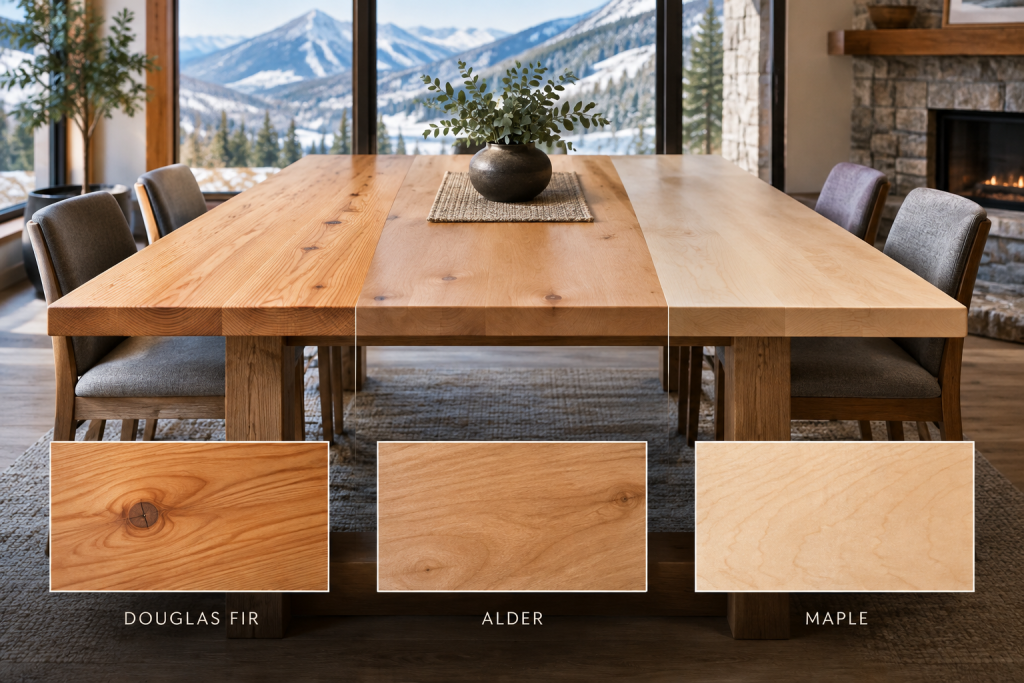
- Douglas fir: A more visibly rustic and expressive choice, with noticeable grain character and a warm, relaxed presence.
- Alder: A comparatively calm, adaptable option when you want warmth without making the grain the loudest feature in the room.
- Maple: A lighter, cleaner-looking option that can support a more refined, modern or quiet design direction.
Those descriptions are starting points, not rules. Board selection, stain or finish, tabletop dimensions, edge details and the base can all change the final impression. A Douglas fir table can be designed with a cleaner silhouette, while a maple table can still feel welcoming and substantial.
Douglas fir: warm, relaxed and full of grain character
Douglas fir is often the first of these three woods to read as rustic. Its grain tends to be visually active, giving the tabletop a more noticeable pattern and a naturally informal feel. That can work especially well in a cabin-inspired dining room, farmhouse setting or mountain interior where the table is meant to feel connected to the surrounding materials.
The appeal is not just “rustic.” Douglas fir can also work in a straightforward modern design when the shape, base and finish are kept simple. The wood itself provides enough interest that the rest of the table does not need to do all the talking. Sometimes the tabletop can show up, do its job and avoid wearing a tiny tuxedo.
Douglas fir may suit you if:
- You want visible grain and a relaxed, natural appearance.
- Your room includes stone, timber, leather or other textured materials.
- You like farmhouse, trestle or substantial gathering-table proportions.
- You want the wood character to be part of the room’s visual identity.
The tradeoff is that a more expressive grain pattern may not be the right fit for a room built around very quiet surfaces and minimal visual contrast. If you are trying to create a restrained, contemporary look, alder or maple may be easier starting points.
Alder: warm and versatile without overwhelming the room
Alder is a useful middle ground in this comparison. It can bring warmth to a dining room while generally allowing the overall table design, finish and base to share attention with the wood. For a homeowner who wants a natural hardwood table but does not want a highly dramatic grain pattern, alder is worth serious consideration.
An alder dining table can fit several design directions. With a farmhouse or trestle base, it can feel comfortable and gathering-friendly. With a simpler base and a cleaner finish, it can move toward a more transitional or contemporary appearance. That flexibility makes it a practical candidate when the room already contains several strong design elements.
Alder may suit you if:
- You want a warm wood appearance with a relatively balanced visual presence.
- You are still deciding between rustic, transitional and modern design cues.
- You want the base style and room furnishings to remain prominent.
- You prefer a table that feels substantial without making the grain the centerpiece.
The tradeoff is that alder may feel less distinctive than a strongly figured or highly characterful material. If your goal is a table with an immediately dramatic surface, Douglas fir or a Specialty Collection slab may be a better direction. If you want a very light and clean appearance, maple may be the stronger shortlist candidate.
Maple: light, clean and design-friendly
Maple is commonly considered when the goal is a lighter-looking table with a cleaner visual character. Its relatively restrained appearance can support modern hardwood designs, simple silhouettes and rooms where natural light or pale finishes are part of the design plan.
A maple dining table does not have to feel formal or cold. The final mood depends on the dimensions, edge profile, finish, base and the chairs around it. A substantial top, a warm finish or a more traditional base can give maple a comfortable gathering-table presence. A streamlined base and simpler detailing can push it toward a modern look.
Maple may suit you if:
- You prefer a lighter visual starting point.
- You want the table to feel clean and adaptable rather than heavily rustic.
- Your room already has darker flooring, cabinetry or furnishings.
- You are considering a modern hardwood table with a straightforward silhouette.
The tradeoff is that maple may not provide the same visibly rugged or rustic effect that attracts people to Douglas fir. If you want a tabletop with pronounced character and a more relaxed cabin feel, compare actual finish samples or images carefully rather than relying on the species name alone.
Color and grain: what should you compare first?
Start with the visual atmosphere you want. Ask whether the table should blend quietly into the room, balance several existing materials or act as a major focal point.
- For a more rustic focal point: Begin with Douglas fir and explore how the finish affects its warmth and grain.
- For a balanced, adaptable look: Put alder on the shortlist.
- For a lighter, cleaner direction: Compare maple with your flooring, cabinetry and wall colors.
Also consider the table at its actual intended scale. A small sample may look subtle, while a large dining surface can make grain direction and color variation much more noticeable. This matters in oversized dining rooms and ski homes where the table may be eight or ten feet long.
Park City Tables’ custom table wood options can help you compare the broader Standard Collection, which also includes white oak and black walnut.
How the design style changes the wood decision
Wood species and table architecture should be considered together. A farmhouse table, trestle table and modern hardwood table can create very different results even when they use the same material.
Farmhouse and trestle tables
These designs often emphasize a generous top and a welcoming gathering feel. Douglas fir can reinforce a relaxed, rustic direction, while alder can soften the look. Maple can work when you want a farmhouse outline with a cleaner or lighter visual treatment.
Modern hardwood tables
Modern designs usually give more attention to proportion, simple lines and base placement. Maple is a natural starting point for a lighter modern direction, but alder and Douglas fir can also work when the finish and base are selected with restraint.
Specialty tables
If you are drawn to a live-edge slab, unusual dimensions, a distinctive piece of wood or an epoxy river design, you may be moving beyond this three-wood comparison. Those projects are part of the Specialty Collection and may require sourcing material specifically for the design. Explore specialty custom tables if the material itself is meant to be the main event.
Practical questions to answer before choosing
Before requesting a quote, gather a few details. You do not need completed furniture plans. A room photo, approximate dimensions, desired seating capacity and examples of tables you like are enough to begin the design conversation.
- How many people should sit at the table during a normal meal?
- Will the table also serve large family gatherings or vacation-property guests?
- How much clearance is available around the table for chairs and movement?
- Should the table feel rustic, modern, transitional or deliberately substantial?
- Do the room’s floor, fireplace, cabinetry or beams already provide strong visual texture?
- Will a bench be useful on one side?
- Are stairs, narrow doorways, elevators or other access restrictions part of the delivery route?
These questions can change the recommendation. A wood that looks perfect in a photograph may not be the best fit once the tabletop size, seating plan and room clearance are considered.
Standard Collection planning and next steps
Douglas fir, alder and maple are part of the Standard Collection, which uses established designs and more readily available lumber for a simpler, more predictable custom-table process. Standard Collection tables may include farmhouse, trestle and modern hardwood designs. The current advertised target turnaround is approximately four weeks, but it remains an estimate and can depend on project requirements and materials.
Customers can select the table size, wood species, finish, base style and qualifying custom details. Engraving may also be available, including a family name, meaningful date, monogram, coordinates, short inscription or artwork, depending on the build.
For a broader look at the process, read about how custom table ordering works. You can also review custom table pricing; published starting prices are not guarantees, and the final quote depends on dimensions, wood, base, finish, delivery requirements and options.
Which wood should make your shortlist?
Choose Douglas fir if visible grain and a relaxed mountain or farmhouse character are central to your vision. Choose alder if you want warmth and flexibility without an especially assertive surface. Choose maple if a lighter, cleaner and more modern-friendly appearance is the priority.
Then test the decision against the room, not just the sample: the chairs, flooring, lighting, base, seating capacity and delivery route all matter. If you are still between two choices, that is a useful place to be. A design conversation can narrow the options without locking you into a species too early.
To request a custom quote from Park City Tables, send a photo of your room, approximate dimensions, the number of people you would like to seat and examples of tables you like. The team can help narrow the size, wood, style, base, finish and available options. Call 435-200-4982 or request a quote online.