
Custom Dining Tables for Park City Holiday Gatherings: What to Decide Before You Order
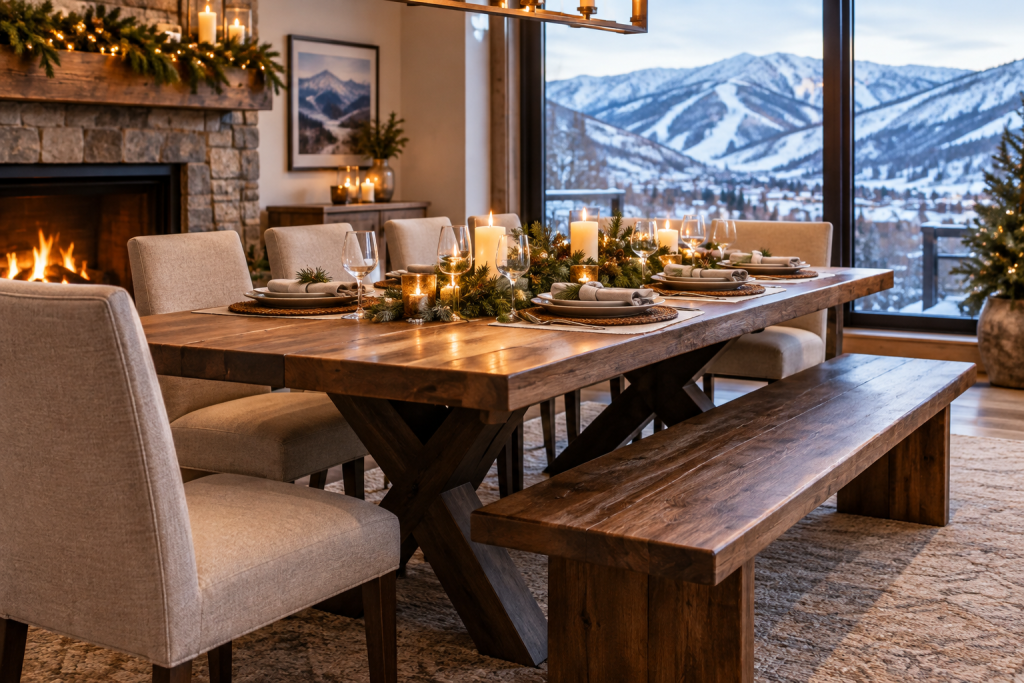
Holiday meals have a way of revealing what a dining room can—and cannot—handle. A table that works for a quiet dinner may feel cramped when family, friends, serving dishes and one more unexpected guest arrive. If you’re considering custom dining tables for Park City holiday gatherings, the most useful place to begin isn’t with a wood species or a finish. It’s with how you want the room to function.
A clear project brief can make the design conversation much easier. You don’t need completed furniture plans. A room photo, approximate dimensions, desired seating capacity and a few examples of tables you like are enough to start narrowing the options with Park City Tables.
Start with the gathering, not just the table length
Think through the meals you actually expect to host. Will the table mainly serve a household of four, with occasional holiday gatherings? Is it intended for a second home, ski property or vacation home where larger groups may arrive at once? Do you want comfortable everyday seating, maximum capacity for special occasions, or a balance between the two?
Write down the number of people you’d like to seat and whether you picture chairs, benches or a combination. Chair width matters, as does the location of table legs or trestles. A long tabletop doesn’t automatically provide comfortable seating if the base interferes with knees or chair placement.
Serving style matters, too. If platters and side dishes will sit on the table, plan for more than shoulder-to-shoulder seating. If food will be served elsewhere, you may be able to prioritize a more generous personal space around each place setting.
Measure the room and protect the walking space
Before choosing a large gathering table, measure the room—not just the open area where the tabletop will sit. Note the locations of walls, doors, windows, fireplaces, built-ins and nearby furniture. Include the approximate width of the chairs you plan to use.
Then consider the space needed to pull out a chair and walk behind someone who is seated. Exact clearance depends on the room and furniture, so the best design process looks at the whole layout rather than applying one number blindly. A room photo and rough measurements can help identify whether the preferred size is realistic or whether the base, seating plan or table shape needs adjusting.
For a long table, also measure the path from the entry to the dining room. Door widths, stairways, elevators and tight turns can affect how a large piece should be designed and delivered. It’s much better to discover an access issue during planning than when a substantial tabletop is waiting in the hallway, looking innocent.
For a practical planning reference, see this guide to table sizes for 8, 10 or 12 guests. Use guest count as a starting point, then account for chairs, serving space and room clearance.
Choose between a simpler build and a more individualized design
Park City Tables organizes custom dining tables into two broad paths: the Standard Collection and the Specialty Collection. Both allow design decisions, but they suit different priorities.
Standard Collection tables
The Standard Collection uses established designs and more readily available lumber for a simpler, more predictable custom-table process. Options may include farmhouse, trestle and modern hardwood designs. Core wood choices include Douglas fir, alder, maple, white oak and black walnut.
This route can be useful when you have a clear size and style in mind and want to keep the project relatively straightforward. The current advertised target turnaround is approximately four weeks for Standard Collection tables, although timing remains an estimate and can depend on project requirements and materials.
Specialty Collection tables
The Specialty Collection is intended for more individualized builds, including live-edge slabs, epoxy river tables, oversized tables, unusual dimensions, distinctive slab character and unusual bases. A suitable slab or hardwood may need to be sourced specifically for the project. Clear or colored epoxy can also be incorporated into river-table designs.
These details can create a strong focal point for a mountain-home dining room, but they also add decisions. You may need to discuss slab shape, natural edges, knots, grain movement, epoxy color, tabletop width and the way the base supports the piece. The current advertised target turnaround is approximately eight weeks for Specialty Collection tables; it is not a guaranteed completion date.
You can compare the two approaches through the custom table ordering process before deciding how much customization your project needs.
Think through wood, grain and finish
Wood selection is both a visual and practical decision. Douglas fir can suit a relaxed farmhouse direction, while alder, maple, white oak and black walnut offer different grain patterns, colors and design impressions. No single species is the universal best choice. The right option depends on the look you want, the table’s dimensions, the base style, the finish and the overall character of the room.
For a lighter, cleaner direction, you might compare maple, alder or white oak. For deeper color and a more dramatic appearance, black walnut may be worth considering. Douglas fir can support a warmer, more casual mountain-home feel. These are starting points, not rules; finish can significantly influence how the wood reads.
Bring photos of your flooring, cabinetry, dining chairs and nearby furniture if you have them. A tabletop should relate to the room without matching every surface exactly. Grain character is part of the appeal of natural wood, so discuss how much variation you want rather than expecting a completely uniform appearance.
More information about custom table wood options can help you prepare questions about appearance, grain and finish.
Decide on the base before the tabletop is finalized
The base affects comfort, style and seating flexibility. Farmhouse and trestle bases can reinforce a traditional or rustic direction. A more streamlined base may fit a modern dining room. The important point is to consider base placement alongside chair positions, not as an afterthought.
If you expect guests to sit at the ends of the table, check how the base will affect legroom. If you’re planning benches, think about how far they need to slide beneath the top and whether their length should match the tabletop or stop short of the ends. A custom bench can help create a relaxed gathering arrangement, but it still needs to fit the room and the seating plan.
Consider engraving and meaningful details
A holiday table can also carry a personal detail without becoming overly decorative. Custom engraving may include a family name, meaningful date, coordinates, monogram, short inscription, company logo or custom artwork, depending on the build.
Placement may be on the tabletop, apron, base, end, underside or another suitable location. An underside engraving is more private, while an end or tabletop detail is easier to see. Simple custom engraving currently starts at $195; more complex engraving and artwork are quoted individually. If you’re considering a family-name table or a wedding or anniversary detail, include the idea in your initial brief so placement can be evaluated with the design.
See the options for custom table engraving before choosing artwork or wording.
Plan delivery for the home, not just the driveway
A substantial table may need to travel through doors, hallways, stairs or elevators before it reaches the dining room. Share access restrictions early, especially if the home is a second property and you won’t be present for every step.
Delivery and setup can include bringing the table into the intended room, attaching or assembling the base when needed, leveling and placing the table. Delivery and setup are available in Park City, Deer Valley, Heber City, Midway and surrounding Wasatch Back communities. For second-home owners, coordination may sometimes be possible through a property manager, contractor or authorized contact.
Review table delivery and setup as part of the design process, particularly when the table is oversized or the access route is complicated.
Prepare a concise project brief
Before requesting a quote, gather these details:
- A photo or several photos of the dining room
- Approximate room dimensions and the intended table area
- The number of people you’d like to seat comfortably
- Whether you prefer chairs, benches or both
- Examples of farmhouse, trestle, modern, live-edge or epoxy tables you like
- Preferred wood direction, such as lighter, warmer or darker tones
- Ideas for the base, finish and any engraving
- Known access concerns, including narrow doors, stairs or elevators
- Your desired holiday timing, understanding that turnaround is an estimate
Pricing depends on the actual dimensions, wood, slab, base, finish, delivery requirements and options. Current advertised Standard Collection pricing begins around $2,195 for a 6-foot Douglas fir configuration, while some Specialty Collection live-edge configurations begin around $3,495 or more. These are starting points, not guaranteed quotes. You can review custom table pricing for more context.
Make the next step simple
The best holiday dining table is not necessarily the biggest or most unusual one. It’s the table that fits the room, supports the way you gather and feels intentional in the home.
To begin, request a custom quote from Park City Tables. Send a room photo, approximate dimensions, the number of people you’d like to seat and examples of tables you like. The design conversation can then focus on size, wood, style, base, finish and options. Call 435-200-4982 or request a quote online.