
A New Dining Table for Christmas: What Park City Homeowners Should Order Now
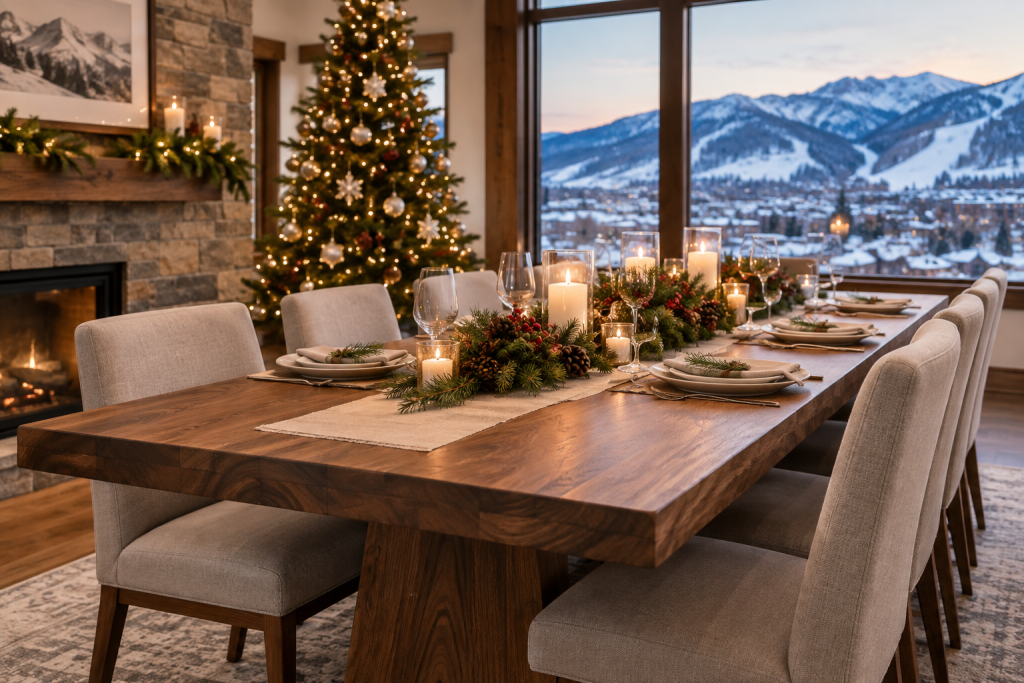
If you’re hoping to gather family and friends around a new dining table at Christmas, now is the time to move from vague ideas to a workable plan. A custom table doesn’t require finished furniture drawings or a perfectly measured room. A photo, approximate dimensions, desired seating capacity and a few examples of tables you like are enough to begin the conversation.
For a Christmas dining table in Park City, the important decisions are not just about appearance. Table category, dimensions, wood, base style, engraving, access and setup all affect what can be designed and how much planning may be needed. Here’s a practical checklist to help you get started—even if some details are still undecided.
1. Decide which table category fits the room
Start with the overall character you want the table to bring to the dining room. Park City Tables offers built-to-order tables through a Standard Collection as well as more individualized Specialty Collection projects.
Standard Collection tables
The Standard Collection uses established designs and more readily available lumber for a simpler, more predictable custom-table process. Options may include farmhouse, trestle and modern hardwood designs. The core wood choices are Douglas fir, alder, maple, white oak and black walnut.
This category may be a sensible place to begin when you know the approximate size and style you want but don’t need an unusual slab or highly individualized base. The current advertised target turnaround is approximately four weeks for Standard Collection tables. That is an estimate, not a guaranteed Christmas completion date, and material availability and project requirements can affect timing.
You can review the built-to-order dining tables available through the Standard Collection before deciding whether a more specialized design is necessary.
Specialty Collection tables
The Specialty Collection is intended for projects involving live-edge slabs, epoxy river designs, oversized dimensions, unusual bases, distinctive slab character or more individualized material sourcing. A suitable slab or hardwood may need to be sourced specifically for the project. Clear or colored epoxy can also be incorporated into specialty river-table designs.
The current target turnaround for Specialty Collection projects is approximately eight weeks. Because specialty work can involve material sourcing and more design decisions, it’s particularly important to start early if Christmas is the goal.
2. Choose the table size from seating and clearance—not wishful thinking
It’s tempting to choose the longest table that will fit on paper. The trouble starts when chairs, people and serving dishes enter the room. Before settling on a length, consider:
- How many people you want to seat for an ordinary meal
- How many guests you expect for Christmas
- The width of your chairs
- Clearance around the table for pulling chairs out and walking behind seated guests
- Whether you’ll use benches on one or both sides
- Where table legs or trestles will sit in relation to chairs
- Whether serving dishes will remain on the tabletop
Published Standard Collection pricing generally covers table sizes from 6 feet through 10 feet, while custom sizing can be considered according to the design and requirements. A larger table is not automatically a better table if it makes the room feel crowded or blocks a pathway.
If your plans are still rough, take a room photo from each end of the dining area and measure the approximate length and width available for the table and chairs. Even an estimate gives the design conversation a useful starting point. You can also compare proportions in this guide to choosing between 6-foot, 8-foot and 10-foot tables.
3. Select wood based on appearance and design direction
Wood choice affects the table’s color, grain, character and overall visual weight. There isn’t one universally correct species; the right choice depends on the room, finish and style you’re after.
- Douglas fir: A fitting option for a more relaxed, rustic or farmhouse direction.
- Alder: A versatile choice to discuss when you want a comparatively understated hardwood appearance.
- Maple: Worth considering for a lighter look and a cleaner grain direction.
- White oak: A natural fit for many traditional, modern or mountain-home interiors, depending on the finish.
- Black walnut: An option when you want deeper, richer color and a stronger visual presence.
Grain variation and natural character are part of choosing real wood. For a specialty live-edge table, the slab itself becomes a major part of the design. Its shape, width, edge and distinctive features may guide the final dimensions rather than the other way around.
Bring photos of your flooring, cabinetry, chairs or nearby furnishings if you have them. They can make it easier to discuss whether you’re leaning rustic, modern, refined, or somewhere in between. You can also review the available custom table wood options before requesting a quote.
4. Think through the base and everyday seating
The base is more than a decorative choice. Its placement affects legroom, chair positions and how comfortably people can sit around the table. Farmhouse and trestle bases create a different look and seating experience from a modern hardwood table with another base arrangement.
When you share your approximate dimensions, include the chair widths if you know them. If you’re considering a bench, mention that too. Custom benches can be designed as part of the broader seating plan, but the table and base still need to work with the room’s clearances.
This is also the point to mention whether the table will serve a primary residence, second home, vacation property, lodge-style room or another setting. The intended use can help focus the conversation around size, seating and finish without requiring you to have every answer on day one.
5. Decide whether engraving belongs in the Christmas plan
Engraving can turn a dining table into a more personal piece without requiring an elaborate design. Available options may include a family name, meaningful date, coordinates, monogram, company logo, short inscription or custom artwork.
Placement may include the tabletop, apron, base, end, underside or another appropriate location, depending on the table design. A subtle underside engraving may be preferable if you want the personalization to remain private, while a visible family name or artwork can become part of the room’s character.
Simple custom engraving currently starts at $195. More complex engraving and artwork are quoted individually. If you want engraving completed for Christmas, bring the exact wording, artwork or file as early as possible. Spelling and dates are worth checking twice—woodworking has many virtues, but it is not famous for having an undo button.
Read more about custom table engraving, including possible placements and personalization ideas.
6. Plan the route into the home
A table can fit beautifully in the dining room and still be difficult to get there. Large furniture delivery should be planned around door widths, stairways, elevators, tight turns and other access restrictions.
Before ordering, take a few quick measurements along the route:
- Exterior and interior door openings
- Hallway widths and tight corners
- Stairway width and ceiling clearance
- Elevator dimensions, if applicable
- The final dining-room doorway and available turning space
Photos of these areas are helpful, especially for a large or oversized table. If the home is a second residence, delivery can sometimes be coordinated through a property manager, contractor or other authorized contact. Sharing that information early can make the final arrangements clearer.
7. Coordinate delivery and in-home setup
Delivery and setup may include bringing the table into the intended room, attaching or assembling the base when needed, leveling the table and completing final placement. Delivery and setup are available in Park City, Deer Valley, Heber City, Midway and surrounding Wasatch Back communities.
Ask about the delivery plan while the table is being designed, not after it is finished. The table’s size, base construction and access route can all affect how setup is handled. For a property that won’t be occupied before Christmas, confirm who can provide access and who should approve the final placement.
The table delivery and setup information can help you think through these details before placing the order.
8. Leave room for the quote to reflect real specifications
Custom pricing depends on the actual dimensions, wood, width, base, finish, delivery requirements and selected options. Standard Collection pricing currently begins around $2,195 for a 6-foot Douglas fir configuration, while some Specialty Collection live-edge configurations currently begin around $3,495 or more. Premium woods, epoxy, rare slabs and oversized projects can increase the final price.
Those figures are starting points rather than promises of a final total. A useful quote request includes the approximate length and width, preferred seating capacity, wood or style preferences, engraving ideas and any access concerns.
Start with what you know
You don’t need a finished plan to begin ordering a Christmas dining table in Park City. Send a room photo, approximate dimensions, the number of people you’d like to seat and examples of tables you like. Park City Tables can help narrow the size, wood, style, base, finish and options.
To request a custom quote, call 435-200-4982 or contact Park City Tables through the custom table quote page. Starting now gives you time to make the important choices carefully—and leaves fewer decisions to battle while the holiday music is already playing.