
Park City Ski Home Dining Room Christmas: Design for the Gathering
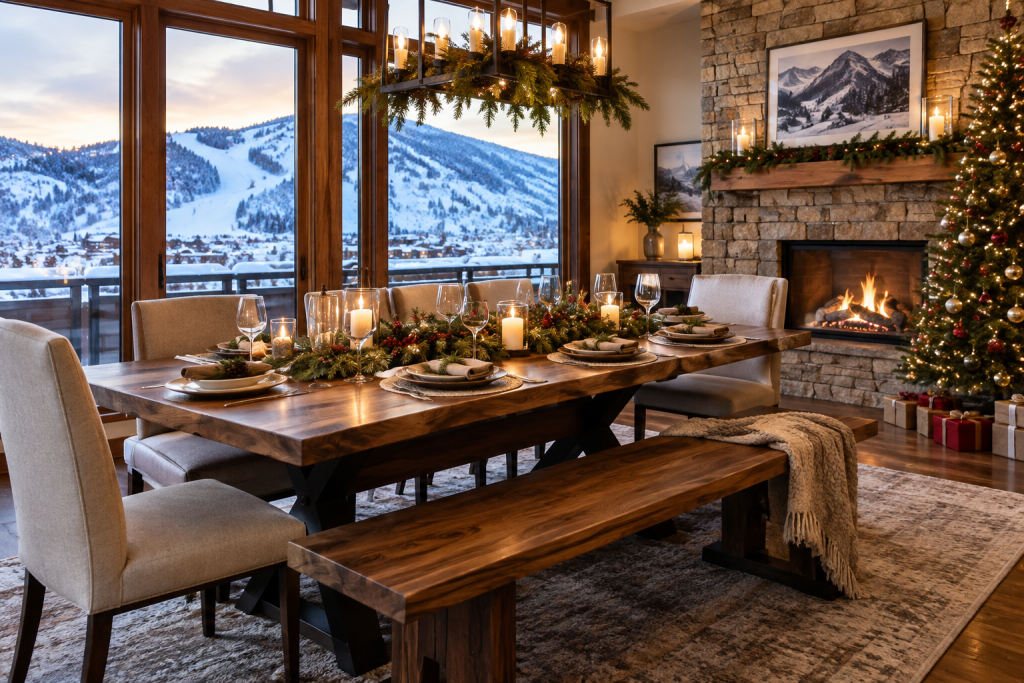
Christmas in a ski home has a particular rhythm. Coats collect by the door, boots need somewhere sensible to land, someone is always looking for more coffee, and the dining room may need to handle far more than a quiet weeknight meal. If you’re planning a Park City ski home dining room Christmas gathering, the table should be designed around that reality.
That doesn’t mean starting with a favorite wood photo or an impressive table length. Start with the gathering itself: who will sit down, how the room needs to move, and whether the table must serve a second home, vacation property or family retreat for years to come. Once those decisions are clear, size, base style, wood, finish and optional details become much easier to narrow down.
Park City Tables creates built-to-order and specialty custom dining tables for Park City and Utah mountain homes. The process can begin with a room photo, approximate dimensions, desired seating capacity and examples of tables you like—no completed furniture plans required.
1. Picture the Christmas gathering before choosing the table
First, describe the gathering in practical terms. Is the table mainly for a household of six, with occasional holiday guests? Does it need to seat a larger extended family? Will people use it for puzzles, cards, homework and après-ski snacks when dinner is over?
Write down the number of people you would like to seat comfortably, then consider how often you expect that number. A table built only for the usual weeknight group may feel undersized at Christmas. On the other hand, choosing an oversized table without enough room around it can make everyday meals feel awkward.
Think about the shape and width of the gathering, too. A long rectangular table supports a traditional family-style meal and can make a long dining room feel intentional. A wider tabletop gives serving dishes and centerpieces more breathing room, but it also affects chair clearance and circulation. The right proportion is the one that supports conversation without turning the room into an obstacle course.
For a useful starting point, compare the room and seating questions in this guide to large dining tables for Park City ski homes.
2. Measure the dining room as a working space
A dining table is not an island in a showroom. Chairs need to pull out. People need to walk behind them. A serving dish may need to travel from the kitchen to the tabletop without bumping into someone’s chair.
Measure the room’s length and width, but also note the fixed elements that influence the layout:
- Doorways and the direction doors swing
- Stairs, hallways and nearby circulation paths
- Windows, fireplaces, built-ins and heating features
- Existing furniture that will remain in the room
- The location of kitchen or serving access
Then measure the route the table must take to reach the room. Door widths, stairways, elevators and tight turns can affect the design, particularly for a large or specialty table. A beautiful tabletop that cannot make the final turn is a rather expensive conversation piece.
For a second home, a room photo and approximate measurements can be especially helpful when planning remotely. Delivery and setup may also be coordinated through a property manager, contractor or authorized contact when the owner is away.
3. Let seating goals determine proportions
Guest count is a starting point, not a complete seating plan. Chair width, armrests, table legs and the amount of elbow room people prefer all influence how many guests fit comfortably.
Rather than asking only, “How long should the table be?” ask:
- How many people should sit along each long side?
- Will anyone regularly sit at the ends?
- Do the chairs have arms or unusually wide backs?
- Will benches be used on one or both sides?
- Does the table need space for serving dishes and place settings?
A six-foot table may suit one household’s needs, while another may need eight or ten feet for holiday hosting. Published Standard Collection sizes generally range from six through ten feet, but custom sizing allows the dimensions to respond to the room rather than forcing the room to respond to a catalog size.
Benches can be useful in a ski-home dining room because they provide flexible seating and can tuck beneath the tabletop when not needed. They also change how people enter and leave the table, so their depth, placement and relationship to the base should be considered at the same time as the tabletop.
4. Choose a base that works with the seating plan
The base is more than a visual detail. Its position affects legroom, where chairs can go and whether a bench slides comfortably beneath the table.
Trestle bases can support a farmhouse or mountain-home look, while a more modern base may suit a cleaner interior. The important question is not simply which base looks attractive in a photograph. Ask where guests’ knees will be, whether end seating is important and how the base interacts with the room’s circulation.
For a large gathering table, base placement deserves particular attention. A central or carefully spaced design may make it easier to seat people along the length, but the best solution depends on the table dimensions and the selected construction. A custom consultation can connect the base design to chair width, seating capacity and clearance.
5. Select wood for the room’s character—not a universal “best”
Mountain-home interiors can accommodate many directions, from rustic and relaxed to restrained and contemporary. The wood should support the atmosphere you want without competing with every other strong material in the room.
Park City Tables’ Standard Collection includes Douglas fir, alder, maple, white oak and black walnut. These woods offer different visual starting points in color, grain and character. Douglas fir can support a more casual farmhouse direction. White oak may fit a lighter, structured look. Black walnut brings deeper color and contrast. Alder and maple offer other paths depending on the finish and overall design.
None of those choices is automatically right for every room. Consider the floor, cabinetry, fireplace stone, wall color and chairs together. Also think about whether you want the tabletop to blend into the room or act as a focal point.
The custom table wood options page can help you compare the available direction before discussing dimensions and finish.
6. Decide between a straightforward build and a specialty table
For many Christmas updates, an established farmhouse, trestle or modern hardwood design provides a clear path. The Standard Collection uses established designs and more readily available lumber, creating a simpler and more predictable custom-table process.
A Specialty Collection project may be a better fit when the table itself is intended to be the room’s main piece. Specialty work can include live-edge slabs, epoxy river designs, oversized dimensions, unusual bases, distinctive slab character or more individualized material sourcing. Clear or colored epoxy can be incorporated into river-table designs.
Specialty construction may require finding an appropriate slab or hardwood specifically for the project. That additional material selection can affect both the design conversation and the estimated schedule. For a closer look, browse specialty custom tables as design inspiration—not as a list of guaranteed available inventory.
7. Add personal details only where they feel meaningful
Christmas can make a dining table feel especially personal, but engraving should serve the room and the people who will use it. Possible options include a family name, meaningful date, monogram, short inscription, coordinates, company logo or custom artwork, depending on the build.
Placement may be on the tabletop, apron, base, end, underside or another suitable location. An underside engraving, for example, can remain private while still giving the table a sense of occasion. A visible family name can make the table feel more commemorative, but it also becomes a stronger part of the room’s design.
Qualifying builds can include custom engraving. Simple custom engraving currently starts at $195, while more complex engraving and artwork are quoted individually. See the options for custom table engraving before deciding how prominent the detail should be.
8. Plan the order, access and setup together
Holiday timing matters, but a custom table should not be rushed past the practical questions. The current advertised target turnaround is approximately four weeks for Standard Collection tables and approximately eight weeks for Specialty Collection projects. These are estimates, not guaranteed completion dates, and material selection, dimensions and project requirements can affect timing.
Access should be part of the conversation from the beginning. Share the route into the home, not only the finished room. Delivery and setup can include bringing the table into the intended room, attaching or assembling the base when needed, leveling and completing final placement. Service is available in Park City, Deer Valley, Heber City, Midway and surrounding Wasatch Back communities.
For current timing and planning details, review how custom table ordering works before submitting your information.
Turn the Christmas wish list into a table specification
The most useful design brief is simple: room dimensions, access restrictions, preferred seating capacity, chair or bench plans, style references, wood direction and any personalization. Those details connect the warm visual idea—Christmas dinner in a welcoming mountain home—to the specifications that make the room function.
When you’re ready, request a custom quote from Park City Tables. Send a photo of the room, approximate dimensions, the number of people you’d like to seat and examples of tables you like. The team can help narrow the size, wood, style, base, finish and options. Call 435-200-4982 or request a quote through ParkCityTables.com.