
Live-Edge Dining Tables for Mountain Homes: Are They Right for Your Space?
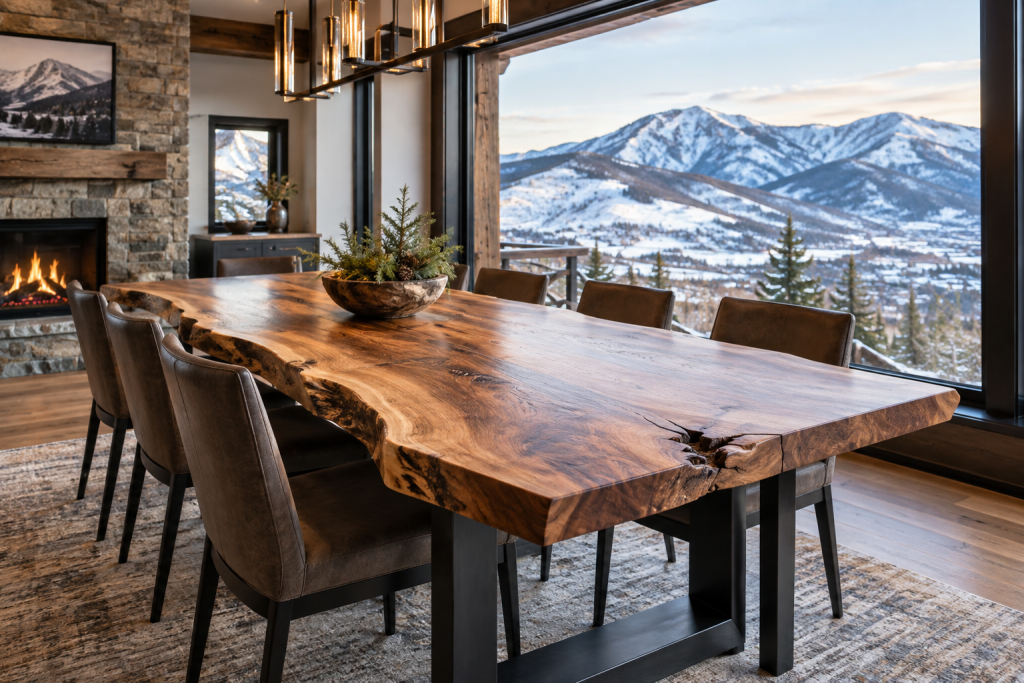
A live-edge dining table can become the visual anchor of a Park City mountain home, but its natural edge affects more than appearance. The slab’s shape, size, seating pattern, base, finish, and delivery route all need to work with the room.
This guide explains how to decide whether a live-edge table fits your space, how to plan around an irregular tabletop, and what to consider before discussing a specialty custom design.
That character is the appeal. It’s also the part that deserves the most planning.
For homeowners in Park City and the Wasatch Back, the right question isn’t simply whether a live-edge slab looks beautiful. It’s whether the slab’s shape, scale and personality work with the room, the seating plan and the way the home is used. A specialty table should feel intentional—not like a very large piece of wood that arrived with its own agenda.
What makes a live-edge table different?
A conventional dining table usually begins with predictable dimensions and straight edges. A live-edge slab table starts with the material itself. The slab may determine the final width, the placement of natural edges and some of the most noticeable visual details.
That means two tables made from similar wood can still look completely different. One slab may have a quiet, gently irregular edge suited to a restrained modern room. Another may have more pronounced contours, knots or grain movement that fit a rustic cabin, lodge-inspired interior or relaxed vacation home.
The natural edge also changes how people sit around the table. A curved section may provide more visual softness but less usable surface in one area. A wider section may offer generous room for serving dishes. These aren’t flaws to hide; they’re planning considerations that make the table individual.
Park City Tables places live-edge slabs, epoxy river tables, oversized tables, unusual dimensions, unusual bases and distinctive material sourcing in its Specialty Collection. You can explore the options on the page for specialty custom tables.
Start with the room, not just the slab
A dramatic slab can look appropriately substantial in a large dining room, but scale still matters. Before focusing on wood color or edge shape, consider the room’s usable footprint.
- Measure the area where the table will sit, not just the full room.
- Note nearby walls, fireplaces, islands, doors and circulation paths.
- Consider the width of the chairs you expect to use.
- Identify where people will pull chairs out and walk behind seated guests.
- Think about whether the table needs to serve daily meals, occasional gatherings or both.
A live edge can make a table appear visually lighter than a straight, heavy rectangle, but it still occupies real space. Irregular edges can also affect chair placement. A chair may fit comfortably beside one section and feel crowded beside another, especially if the tabletop narrows or curves noticeably.
For a second home or vacation property, it’s useful to think beyond the largest possible dinner. Ask how the table will feel when only two or four people are using it. A large gathering table can be wonderful for holidays and ski weekends, but the proportions should still make sense during quieter stretches.
How many people should the table seat?
Guest count is a starting point, not a complete sizing formula. Chair width, the desired amount of elbow room, serving dishes and the base design all influence the practical seating capacity.
Begin by listing the number of people you want to seat comfortably on an ordinary gathering day. Then add occasional needs if the room and access route support a larger table. A table designed for eight everyday seats may be more useful than one sized only for a once-a-year crowd—or the reverse, depending on how the home is used.
With a live-edge tabletop, seating may not be perfectly symmetrical. The most comfortable arrangement might place chairs along the longer or more stable sections of the edge, with fewer seats near a pronounced curve. Benches can offer flexibility, but their length and position still need to work with the slab’s shape and the table base.
It helps to send a room photo, approximate dimensions and the number of people you hope to seat before discussing a specific slab. Those details make it easier to consider table length, width, clearance, chair spacing and base placement together.
Slab selection is a design decision
With a specialty dining table, wood selection involves more than choosing a color. The slab’s grain, width, edge profile and natural features all contribute to the finished design.
Some homeowners prefer a calmer surface that lets the room’s architecture and furnishings lead. Others want pronounced grain movement, visible knots or a more sculptural edge. Neither approach is automatically better. The useful choice is the one that matches the amount of visual attention you want the table to command.
Finish matters, too. A finish can influence how the wood’s color and grain read alongside flooring, cabinetry, stone and upholstery. If the room already includes several strong materials, a quieter slab may create balance. If the room is more restrained, distinctive wood character can provide the focal point.
Park City Tables also works with more readily available woods in its Standard Collection, including Douglas fir, alder, maple, white oak and black walnut. A live-edge project belongs to a more individualized process because an appropriate slab or hardwood may need to be sourced specifically for the design. That can affect both the available dimensions and the planning timeline.
Choosing between rustic and modern character
“Live edge” doesn’t automatically mean rustic. The overall effect depends on the slab, finish, base and surrounding room.
A rustic direction
A more rustic live-edge table may emphasize visible grain, natural irregularity, warm color and a substantial base. It can complement timber details, stone, wool textiles and other relaxed mountain-home materials.
A modern direction
A modern interpretation may use a cleaner slab, a simpler finish and a visually lighter base. The natural edge then becomes a controlled contrast against smooth cabinetry, contemporary lighting or streamlined chairs.
The base is especially important because it occupies the space below the tabletop and affects legroom. Trestles, pedestal-style arrangements and other custom bases can produce different seating patterns. A base that looks excellent in a photograph may not be the best choice for the number of chairs you need, so discuss chair positions early.
Should you add epoxy?
Clear or colored epoxy can be incorporated into specialty river-table designs. It may fill a void, create a visual “river” between sections or introduce a deliberate color element.
Epoxy changes the table’s character considerably. A clear fill keeps more attention on the wood’s natural features, while a colored option can make the tabletop more graphic and contemporary. The color should relate to the room rather than compete with every other finish in it.
Epoxy is not required to make a live-edge table distinctive. If the slab already has the shape and grain you love, a simpler treatment may be the more lasting choice. If you want a stronger statement, epoxy can become part of the design from the beginning rather than an afterthought.
Don’t overlook access and delivery
A large specialty table has to reach the room as well as fit inside it. Before finalizing dimensions, consider door widths, stairways, elevators, tight turns and any other access restrictions. This is particularly important in mountain homes, second homes and properties where the table may need to be coordinated with a property manager, contractor or authorized contact.
Delivery and setup may include bringing the table into the intended room, attaching or assembling the base when needed, leveling and completing final placement. Planning these details early can prevent an attractive design from becoming difficult to install.
What should you expect from the specialty process?
A live-edge table is more individualized than a table built from established designs and readily available lumber. The current advertised target for Specialty Collection projects is approximately eight weeks, but timing is an estimate and can depend on sourcing, dimensions, materials and project requirements.
Pricing works the same way. Published Specialty Collection starting prices currently range from approximately $3,495 and up for some live-edge configurations. The final quote depends on the actual dimensions, wood or slab, base, finish, delivery requirements and options. For a clearer breakdown, review the guide to custom table pricing.
You don’t need completed furniture plans to begin. A photo of the room, approximate measurements, desired seating capacity and examples of tables you like are enough to start narrowing the possibilities. The process can often begin remotely, which is useful when planning a second home or coordinating with a designer or builder.
So, is a live-edge table right for your mountain home?
It may be a strong fit if you want a one-of-a-kind focal point, appreciate natural variation and are comfortable making design decisions around an individual slab. It may be less suitable if you need perfectly uniform edges, highly predictable dimensions or a table that blends quietly into the background.
The best live-edge dining tables for mountain homes are not chosen by appearance alone. They’re planned around the room, the people using it, the chairs, the base, the access route and the level of natural character you want to live with every day.
To request a custom quote from Park City Tables, send a room photo, approximate dimensions, the number of people you’d like to seat and a few examples of tables you like. The design conversation can then focus on size, wood, slab character, base, finish and options. Call 435-200-4982 or use the custom table quote request page.
What makes a live-edge dining table different?
A conventional dining table usually begins with predictable dimensions and straight edges. A live-edge slab table begins with the material itself, so the final width, natural edge, knots, grain movement, and visual character may vary from one slab to another.
That individuality can suit a rustic cabin, lodge-inspired interior, relaxed vacation home, or restrained modern room. It also affects how people sit around the table. A curved or narrow section may provide visual softness while offering less usable surface, so the edge should be evaluated as part of the seating plan rather than treated as decoration alone.
For a broader look at available designs, explore the live-edge slabs and other specialty options before selecting a specific configuration.
Start with the room, not just the slab
Measure the area where the table will sit, rather than relying only on the room’s full dimensions. Note nearby walls, fireplaces, islands, doors, and circulation paths. Also consider chair width, the space needed to pull chairs out, and the route people will use to walk behind seated guests.
- Measure the usable dining footprint.
- Mark doors, stairs, fireplaces, islands, and other fixed obstacles.
- Allow room for chairs to move in and out.
- Consider how the table will feel during everyday meals as well as larger gatherings.
- Account for the slab’s changing width when planning chair positions.
An irregular edge may make a tabletop look visually lighter, but it still occupies real space. In a second home or vacation property, plan for the table’s everyday proportion rather than sizing it only for an occasional holiday gathering.
How many people should the table seat?
Guest count is a starting point, not a complete sizing formula. Chair width, elbow room, serving dishes, slab shape, and base placement all influence practical capacity. Begin with the number of people you want to seat comfortably on an ordinary gathering day, then consider occasional guests if the room and access route support a larger table.
With a live-edge tabletop, seating may not be symmetrical. Chairs may work best along the longer or more stable sections of the edge, with fewer seats near a pronounced curve. Benches can add flexibility, but their length and position still need to work with the slab and base.
For additional planning context, the article on Large Dining Tables for Park City Ski Homes and Family Gatherings can help readers think through capacity in a larger property.
Slab selection is a design decision
Wood selection involves more than choosing a color. The slab’s grain, width, edge profile, and natural features all contribute to the finished design. A calmer surface can let the room’s architecture lead, while pronounced grain, knots, or a sculptural edge can make the table the focal point.
Finish should be considered alongside flooring, cabinetry, stone, upholstery, and lighting. If the room already contains several strong materials, a quieter slab may create balance. If the room is restrained, more distinctive wood character can provide contrast.
Park City Tables also lists Douglas fir, alder, maple, white oak, and black walnut in the Standard Collection. Compare those Standard Collection options with the more individualized specialty custom tables process when deciding how much variation and customization the project requires.
Is a live-edge table right for your mountain home?
A live-edge dining table can be a striking focal point, but its irregular shape affects room planning, chair placement, circulation, and practical seating. The right choice depends on how the room is used—not only on whether the slab looks beautiful.
Plan the table around the room, seating, and slab
Start with the usable footprint, access route, number of everyday seats, and preferred visual character. Then evaluate the slab, base, finish, and any epoxy treatment as parts of one design.
What a customized live-edge table can solve
- It can make a large mountain-home dining room feel more distinctive and intentional.
- It can accommodate unusual dimensions, seating plans, slab shapes, and base arrangements.
- It can balance rustic materials or provide contrast in a more modern interior.
- It can be planned around the home’s access limitations before the design is finalized.
Set expectations before choosing a slab
The supplied process information gives readers useful planning expectations: Specialty Collection projects currently have an advertised target of approximately eight weeks, while some live-edge configurations currently start at approximately $3,495 and up. Actual timing and pricing depend on sourcing, dimensions, materials, base, finish, delivery requirements, and options.
Questions to resolve before ordering
- Will the irregular edge leave enough room for the chairs you plan to use?
- Can the tabletop reach the room through doors, stairways, elevators, and tight turns?
- Does the slab’s grain and natural character fit the rest of the room?
- Would a simpler live-edge treatment work better than adding epoxy?
- Will the table feel proportionate when only two or four people are using it?
Start with your room details
A room photo, approximate measurements, desired seating capacity, and examples of tables you like are enough to begin narrowing the possibilities. A quote discussion can then consider the table’s dimensions, slab or wood, base, finish, access, and delivery requirements.
Ready to explore a live-edge table for your room?
Share a room photo, approximate measurements, desired seating capacity, and examples of tables you like. Park City Tables can use those details to begin discussing the right dimensions, slab or wood, base, finish, access, and delivery requirements. You can also review the guide to custom table pricing before requesting a quote.