How to Budget for a Custom Dining Table: Size, Wood, Base and Delivery Factors
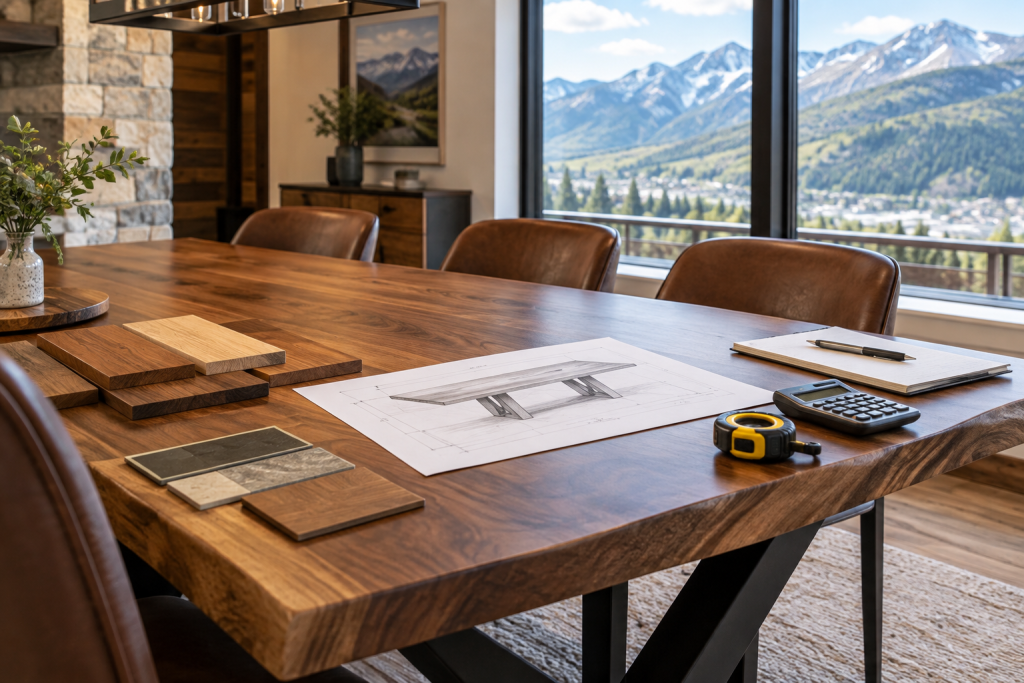
When you’re planning a custom dining table, the first number you see is useful—but it isn’t necessarily the number your finished table will cost. A table’s dimensions, wood, width, base, finish, delivery requirements and optional details all contribute to the quote.
That’s why the most helpful way to approach custom dining table budget factors is to treat published pricing as a starting point, then gather the specifications that make your project different. A six-foot Douglas fir table with an established design is a very different project from an oversized live-edge table with a distinctive slab, unusual base and custom engraving.
Park City Tables creates built-to-order and specialty custom dining tables for Park City and Utah mountain homes, including second homes, vacation properties and larger gathering spaces throughout the Wasatch Back. Here’s what to consider before requesting a custom table quote.
Start with the published starting prices
Standard Collection tables currently begin around $2,195 for a six-foot Douglas fir configuration. Published Standard Collection pricing generally covers table sizes from approximately six feet through ten feet, with the final price changing according to the actual specifications.
Specialty Collection starting prices currently range from approximately $3,495 or more for some live-edge configurations. Premium woods, epoxy river designs, rare slabs, oversized dimensions and more individualized sourcing can increase the cost.
These figures are starting points, not guaranteed prices or final quotes. For a closer estimate, the table maker needs to know what you want the table to do in the room and which materials and details matter most to you. The custom table pricing page provides the current published starting information.
1. Size and seating capacity
Dimensions are among the most obvious dining table cost factors. A longer or wider top uses more material, but size also affects construction, base design, finishing and delivery planning.
Begin with the number of people you’d like to seat regularly—not just the maximum number you might invite once a year. Then consider whether you need room for serving dishes, place settings, children’s seating or occasional extra chairs.
Length isn’t the only measurement that matters. Width changes the visual scale of the table and the amount of useful space in the center. A wider top may work beautifully in a large mountain-home dining room, while a narrower table may be more comfortable in a compact room or a space shared with a kitchen and sitting area.
You also need clearance around the table. Measure the room, then account for the depth of the chairs and the space needed to pull them out and walk behind seated guests. A table can fit on paper and still feel crowded once chairs and people enter the picture. Room photos, approximate dimensions and a desired seating capacity are enough to begin the design conversation; completed furniture plans aren’t required.
2. Wood species, width and character
Wood selection affects appearance, availability, construction and price. The Standard Collection includes Douglas fir, alder, maple, white oak and black walnut. These established choices and more readily available lumber support a simpler, more predictable custom-table process.
Each option brings a different visual direction. Douglas fir can suit a relaxed farmhouse or cabin-inspired interior. Alder, maple and white oak can work across both rustic and modern settings, depending on the design and finish. Black walnut brings a darker, richer appearance that may become a major feature in the room.
There isn’t one universally best wood. The right choice depends on the room, the look you want, the character you enjoy seeing in the top and the rest of your custom furniture budget. Grain, color, width and the amount of visual variation can all influence the result.
For a useful comparison before you decide, review the guide to custom table wood options. It can help you narrow the conversation rather than trying to choose from every possible material at once.
3. Standard designs versus specialty construction
The collection you choose is another major budget factor. Standard Collection tables use established designs and more readily available lumber. Options may include farmhouse, trestle and modern hardwood designs.
This approach is often a practical fit when you know the approximate size and style you want and prefer a more predictable path from design to quote. You can still select the table size, wood species, finish, base style and qualifying options.
The Specialty Collection is more individualized. It may include live-edge slabs, epoxy river tables, oversized tables, unusual dimensions, distinctive slab character, unusual bases and project-specific material sourcing. A suitable slab or hardwood may need to be sourced specifically for the project, which adds another layer to the planning and pricing process.
Clear or colored epoxy can be incorporated into specialty river-table designs. The color, amount of resin and relationship between the wood and epoxy are design decisions rather than simple add-ons. If that direction appeals to you, explore the options for specialty custom tables.
4. Base style and practical legroom
The base is not just a decorative choice. It affects the table’s appearance, legroom, seating arrangement and construction requirements. A farmhouse or trestle base creates a different visual weight from a modern hardwood design, while an unusual specialty base may require more individualized planning.
Think about where people will sit most often. Will chairs need to slide into the ends? Do you want flexibility for benches? Will a central base make it easier to seat guests, or would the look of separate legs suit the room better?
Large tables also need a base that makes sense for the top’s dimensions and intended use. A table that looks balanced in a photograph may feel visually heavy—or awkward for knees and chairs—if the base placement isn’t considered early.
5. Finish and optional details
Finish influences the final appearance and helps determine how the wood’s grain and character read in the room. It should be discussed alongside the wood rather than treated as an afterthought. A finish that emphasizes variation may create a different mood from one that presents a quieter, more consistent surface.
Optional details can also move the quote. Custom engraving is available on qualifying builds. Possibilities include family names, meaningful dates, coordinates, monograms, company logos, short inscriptions and custom artwork. Engraving may be placed on the tabletop, apron, base, end, underside or another appropriate location depending on the design.
Simple custom engraving currently starts at $195. More complex engraving and artwork are quoted individually. If personalization is part of your plan, mention it at the beginning rather than adding it after the table design is complete. You can see examples of the possibilities on the custom table engraving page.
6. Delivery, access and in-home setup
Delivery requirements are easy to overlook, especially when a table is being ordered for a second home or vacation property. Before requesting a quote, consider the route from the delivery vehicle to the dining room.
Important details may include exterior doors, interior door widths, stairways, elevators, tight turns and the intended room’s location. Large tables can be planned around access restrictions, but those restrictions need to be discussed before construction and delivery.
Delivery and setup can include bringing the table into the intended room, attaching or assembling the base when needed, leveling and completing final placement. Service is available in Park City, Deer Valley, Heber City, Midway and surrounding Wasatch Back communities. For a second home, delivery can sometimes be coordinated through a property manager, contractor or authorized contact.
Read about table delivery and setup before you order, particularly if the table is oversized or the property has a complicated access route. It’s much nicer to solve a staircase question on paper than while holding a very large table in a staircase.
What to send when requesting a quote
You don’t need a finished design package. A useful first message can include:
- A photo of the room or the space where the table will go
- Approximate room and access-route dimensions
- The number of people you want to seat regularly
- Your preferred table length and width, if known
- Examples of tables, bases or interiors you like
- Preferred wood, finish or design direction
- Any engraving, bench or specialty-table ideas
- The delivery location and any known stairs, elevators or narrow doorways
This information gives the design conversation somewhere solid to begin. The process can often start remotely using photographs, measurements and design references, then move toward a more specific recommendation.
Build a realistic budget before you choose details
If you’re comparing options, start by deciding which features are essential and which are flexible. Perhaps the table must seat ten people, but the wood can be selected from several suitable species. Or the live edge is the priority, while the base and engraving can remain simple.
That kind of prioritizing helps keep the project focused. It also makes it easier to compare a Standard Collection table with a Specialty Collection design without treating them as interchangeable products. A custom furniture budget works best when it reflects the way you actually plan to use the table.
When you’re ready, request a custom quote from Park City Tables. Send a room photo, approximate dimensions, the number of people you’d like to seat and examples of tables you like. The team can help narrow the size, wood, style, base, finish and options. Call 435-200-4982 or request a quote from Park City Tables.