
The Best Dining Table Woods for a Park City Mountain Home
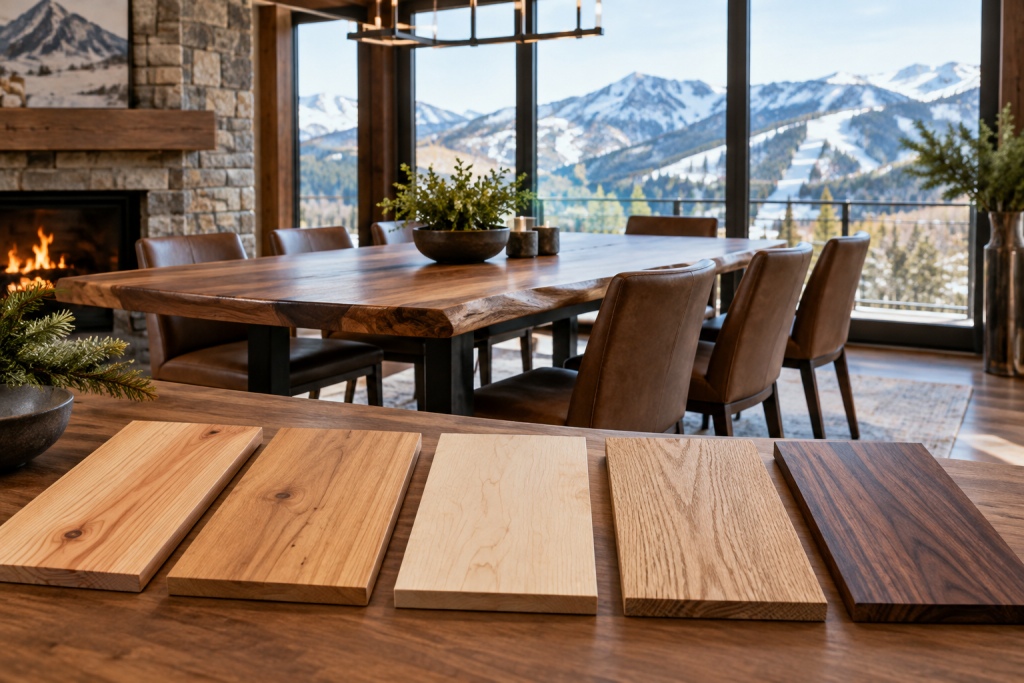
Choosing the best wood for a dining table in a Park City mountain home usually comes down to more than picking the darkest or most dramatic board. The table has to make sense with the room, the chairs, the amount of visual character you want and the way the space will be used.
Park City Tables’ Standard Collection includes five wood choices: Douglas fir, alder, maple, white oak and black walnut. Each brings a different balance of color, grain character and style. There isn’t one universal winner—and anyone who says otherwise may be trying to sell you a very enthusiastic tree.
This guide compares the options so you can create a practical shortlist before a design conversation. You can also review the full custom table wood options page for more information about selecting a species.
Start with the room, not just the wood sample
A dining table is a large visual element. In a mountain home, it may sit alongside stone, beams, flooring, painted cabinetry, metal lighting or other natural materials. The right wood should support that mix rather than compete with every other feature.
Before comparing species, consider four questions:
- Do you want a light, warm, medium or deep color?
- Should the grain be quiet and orderly or more noticeable and expressive?
- Does the room lean rustic, traditional, transitional or modern?
- Will the table need a particular size, base style, finish or access plan?
Those answers can narrow the field quickly. A long, simple tabletop may call for a different visual approach than a smaller table with a substantial trestle base. A second home or vacation property may also need a design that feels welcoming without being overly delicate or formal.
Douglas fir: warm, relaxed and naturally rustic
A Douglas fir dining table is a strong starting point for a mountain-home look. Its warm tone and visible grain generally feel comfortable, informal and connected to the natural materials often used in cabins, lodges and ski homes.
Douglas fir can suit farmhouse and trestle designs particularly well, especially when the goal is a table that feels like it belongs at the center of a gathering. It can also work in a simpler modern design when the base and finish are kept clean.
Choose Douglas fir if you want:
- A warm, approachable appearance.
- Noticeable wood character rather than a nearly uniform surface.
- A relaxed farmhouse, lodge-inspired or mountain-home style.
- A starting point within the Standard Collection.
The tradeoff is that its character is part of the design. If you prefer a very quiet, consistent tabletop, another species may be a better visual match. Park City Tables currently advertises Standard Collection pricing beginning around $2,195 for a 6-foot Douglas fir configuration, although the final price depends on dimensions, base, finish and options.
Alder: warm-toned and adaptable
Alder is a useful middle-ground choice for homeowners who want warmth without making the tabletop the loudest element in the room. Its grain is often more restrained than the highly expressive look some people seek in a specialty slab, which can make it easier to pair with a range of interiors.
An alder table can fit a transitional dining room, a comfortable second home or a mountain property that mixes rustic materials with cleaner furniture lines. It may also be a sensible choice when you want the table’s shape, base or surrounding chairs to share some of the design attention.
Choose alder if you want:
- A warm appearance with a relatively adaptable visual character.
- A table that can bridge rustic and more updated styles.
- Wood character without the strong contrast of a highly dramatic grain.
- Flexibility while you are still deciding on the base and finish.
When comparing an alder table with Douglas fir, focus less on which species is “better” and more on the mood you want. Douglas fir may read as more visibly rustic, while alder can provide a quieter backdrop for chairs, lighting and other details.
Maple: a lighter, cleaner direction
Maple is worth considering when you want the room to feel lighter and the tabletop to have a cleaner visual presence. Its generally pale appearance can work well in modern hardwood designs, brighter dining spaces and interiors where darker furniture would feel heavy.
A maple table may also be a good fit when the architecture or view already provides plenty of visual interest. A more restrained tabletop can give the room somewhere for the eye to rest.
Choose maple if you want:
- A light-colored tabletop.
- A cleaner look for a modern or transitional interior.
- Less emphasis on a rustic, lodge-style effect.
- A wood choice that keeps the room feeling open and fresh.
Maple is not automatically the right answer for every contemporary room. The base, edge detail, finish and table proportions still matter. A heavy farmhouse base can make a light wood feel more rustic, while a streamlined base can push the same species in a more modern direction.
White oak: recognizable grain with broad style range
White oak is a versatile option for homeowners who want visible grain and a balanced, established furniture look. It can move comfortably between rustic, traditional and modern settings depending on the finish and base.
A white oak dining table may be especially useful when you want the wood to show some personality without choosing the deepest color in the collection. Its grain can provide texture in a room with simpler walls, cabinetry or upholstery.
Choose white oak if you want:
- Noticeable grain character with a broadly adaptable style.
- A bridge between mountain-home warmth and contemporary design.
- A tabletop that can stand on its own without requiring a live edge or epoxy detail.
- Flexibility when coordinating with existing wood tones.
When comparing maple vs. oak, think about contrast and texture as much as color. Maple generally supports a lighter, quieter impression; white oak typically brings more visible grain presence. A finish can influence the final effect, so it is wise to discuss samples rather than judging from a species name alone.
Black walnut: deep color and strong visual presence
Black walnut is the natural candidate when you want the dining table to become a focal point. Its deeper brown color can bring richness and contrast to a light room, and it can look at home in both refined mountain interiors and clean modern spaces.
A black walnut table does not need a complicated design to make an impression. A simple top with a carefully chosen base may be enough. That can be helpful when the room already contains substantial architecture or when you want the wood to carry the personality.
Choose black walnut if you want:
- A darker, more substantial visual anchor.
- Contrast against lighter floors, walls or upholstery.
- A refined alternative to a strongly rustic table.
- The wood itself to be a central design feature.
The tradeoff is visual weight. In a smaller dining area, a dark tabletop may feel more dominant than a lighter species. It is also sensible to discuss how wood choice affects the project budget, since final pricing varies by species, size, width, base, finish and other specifications.
How style and construction change the decision
Wood species is only one part of a custom table. A Douglas fir top with a clean base can feel quite different from Douglas fir in a traditional trestle design. The same is true for white oak, maple or walnut.
Think about the complete combination:
- Farmhouse: Warm species, substantial proportions and a trestle or other traditional base can create a relaxed gathering-table feel.
- Modern hardwood: A simpler edge, cleaner base and restrained finish can make the grain and silhouette feel more contemporary.
- Live edge: A specialty slab places more emphasis on the natural outline and distinctive character of the material.
- Epoxy river: Clear or colored epoxy can become part of a more individualized specialty design.
- Oversized gathering table: Dimensions, room clearance, access and base placement deserve attention before settling on the visual details.
Live-edge slabs, epoxy river tables, unusual dimensions and distinctive slab character belong to the Specialty Collection. These projects may require sourcing an appropriate slab or hardwood specifically for the design. You can explore specialty custom tables if your idea goes beyond the established Standard Collection designs.
Remember the practical details
A beautiful wood choice still needs to work in the room. Measure the dining area, note the preferred seating capacity and consider chair width, clearance and base placement. For a second home or property managed from a distance, access planning matters too. Door widths, stairways and elevators can affect how a large table is brought into place.
Customers do not need completed furniture plans to begin. A room photo, approximate dimensions, desired number of seats and examples of tables you like are enough to start narrowing the design.
Park City Tables’ Standard Collection uses established designs and more readily available lumber for a simpler, more predictable custom-table process. The current advertised target turnaround is approximately four weeks for Standard Collection tables. Specialty projects currently have an estimated target of approximately eight weeks, subject to material sourcing and project requirements. Neither is a guaranteed completion date.
Build your shortlist
For a warm, visibly rustic table, begin with Douglas fir. For an adaptable warm-toned option, consider alder. For a lighter and cleaner direction, look at maple. For recognizable grain with broad style flexibility, white oak is a strong candidate. For a darker focal point, black walnut deserves a close look.
Then compare the species with your actual room photo, seating needs, base preference and access route. That process is more useful than choosing a favorite from a list in isolation.
To request a custom quote from Park City Tables, send a photo of your room, approximate dimensions, the number of people you would like to seat and examples of tables you like. The design conversation can help narrow the size, wood, style, base, finish and optional details. Call 435-200-4982 or request a custom table quote.