
White Oak vs Walnut: Which Custom Table Fits Your Park City Home?
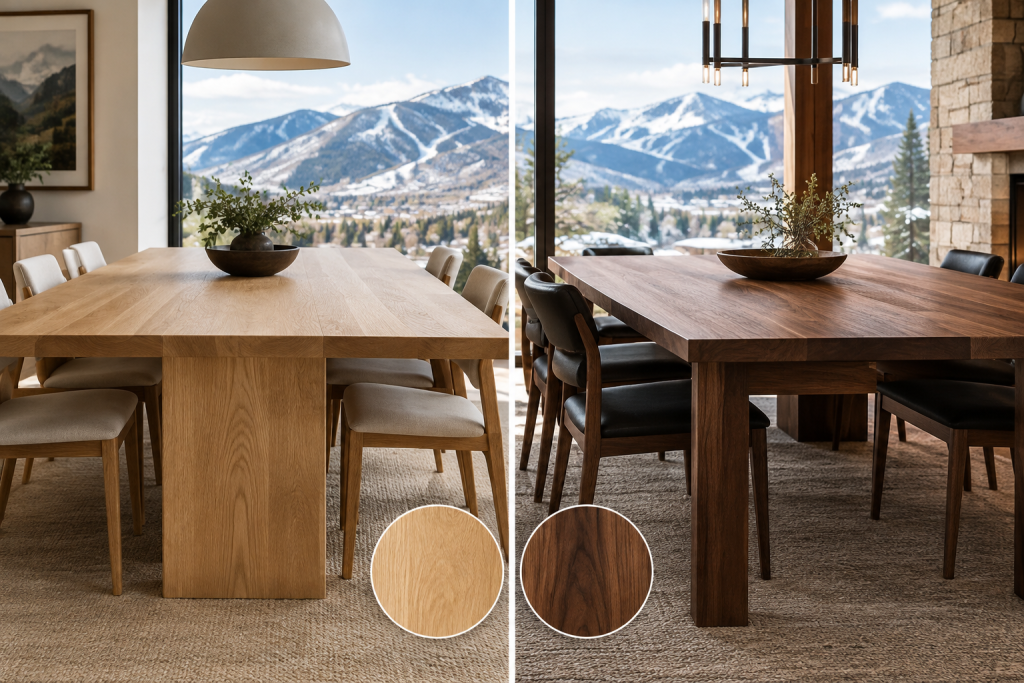
Choosing between a white oak and black walnut dining table for a Park City home usually comes down to more than which photograph looks best. Both woods can create a substantial, premium-feeling centerpiece, but they bring different color, grain and visual weight to a room. The right choice depends on your interior, the atmosphere you want around the table and the details that will shape the custom quote.
There isn’t one universally better species. White oak often feels lighter and more adaptable, while black walnut brings deeper color and a more dramatic presence. Here’s how to think through the choice before deciding on size, base style, finish or custom details.
White oak: light, textured and easy to pair
A white oak table typically has a lighter overall appearance, with visible grain that gives the surface character without making the room feel visually heavy. Depending on the selected finish and the specific boards, it can read as warm, pale, natural or slightly rustic.
That flexibility makes white oak a strong fit for several directions, including modern hardwood tables, relaxed mountain interiors, contemporary farmhouse rooms and spaces that already contain stone, leather or darker architectural materials. It can add warmth without competing with a strong view, bold light fixture or distinctive chairs.
White oak can also be a practical visual choice for a second home or vacation property where the table needs to work with changing décor over time. If chairs, rugs or wall colors are likely to change, a lighter wood may give you more room to adjust the rest of the dining area.
What to consider with white oak
- Color: Its lighter tone can make a dining area feel open and approachable.
- Grain: The grain is present and expressive, so the table still feels like real wood rather than a blank surface.
- Design compatibility: It can suit modern, farmhouse, trestle and more casual mountain-home designs.
- Finish: Finish selection can shift the visual warmth and should be considered alongside flooring, cabinetry and trim.
Black walnut: depth, contrast and a more formal feel
Black walnut is known for its richer brown tones and naturally varied grain. A walnut dining table generally becomes a focal point more quickly than a lighter wood because the surface has greater visual depth. In the right room, that contrast can look especially polished beside light walls, pale upholstery, metal accents or stone.
Walnut can work well when you want the table to anchor a dining room rather than blend into it. It may suit a modern hardwood design, a refined mountain interior or a room where the furniture needs enough presence to balance large windows, high ceilings or substantial architectural elements.
Its darker appearance can also make a long table feel especially intentional. That doesn’t mean walnut is only for formal rooms. The base, edge profile, finish and surrounding chairs can move the design toward relaxed, contemporary or traditional.
What to consider with black walnut
- Color: Deeper brown tones create contrast and give the tabletop a strong visual identity.
- Grain: Natural variation helps keep a dark surface from looking flat or overly uniform.
- Design compatibility: Walnut can complement modern, tailored and higher-contrast interiors.
- Room balance: In a smaller or darker dining area, consider how the table will relate to floors, walls and nearby furniture.
White oak vs walnut: which style suits your room?
Instead of asking which species is best, start by asking what you want the table to do visually.
Choose white oak if you want:
- A lighter, more relaxed centerpiece
- Visible wood character without a dark overall tone
- Flexibility with changing chairs, rugs and accent colors
- A natural fit for farmhouse, trestle or modern mountain design
Consider black walnut if you want:
- A darker focal point with noticeable contrast
- A more tailored or dramatic appearance
- A tabletop that stands apart from lighter finishes in the room
- A strong visual anchor for a modern or refined dining area
Look at the whole room before making the call. Bring together a floor sample, cabinet color, upholstery swatch and photographs of the space if possible. A wood species that looks perfect in isolation may feel too pale, too dark or too similar to the surrounding finishes once everything is in place.
How the wood choice affects a custom table quote
Wood species is one part of the quote, but it is not the only one. Final pricing depends on the actual dimensions, wood, tabletop width, base, finish, delivery requirements and selected options. Premium woods, distinctive material requirements and larger builds can affect the total.
Park City Tables’ Standard Collection includes white oak and black walnut along with Douglas fir, alder and maple. The collection uses established designs and more readily available lumber, creating a simpler and more predictable custom-table process. Standard designs may include farmhouse, trestle and modern hardwood tables, with published sizes generally ranging from 6 feet through 10 feet.
For reference, Standard Collection pricing currently begins around $2,195 for a 6-foot Douglas fir configuration. That is not a white oak or walnut price, and it should not be treated as a quote for either species. The final number changes with the wood, dimensions, base, finish and options. You can review the factors in custom table pricing before requesting a design.
A project with unusual dimensions, distinctive slab character, an uncommon base or more individualized material sourcing may fall into the Specialty Collection. Live-edge slabs and epoxy river designs are examples of specialty directions, and these projects may require sourcing material specifically for the build.
Size, seating and room clearance still matter more than species
A beautiful walnut or white oak top won’t make an awkwardly sized table comfortable. Before choosing the wood, think about how many people you want to seat regularly, how often you host larger gatherings and how much space chairs need to move in and out.
The design conversation considers table dimensions, seating requirements, chair width, room clearance and base placement. A room photograph and approximate measurements are enough to begin; completed furniture plans are not required. If your home has narrow doors, stairs, elevators or other access restrictions, those details should be discussed early rather than after the table is finished.
For a second home, vacation property or ski home, it is also worth planning around the people who will actually use the room. A table intended for family dinners may need a different width and base arrangement from one primarily used by occasional guests. Benches can provide another seating option, but they should be considered alongside clearances and the overall design.
Base style and finish can change the personality of either wood
Don’t choose the tabletop in isolation. A trestle base can reinforce a farmhouse or gathering-table feel, while a cleaner modern base may make white oak feel more contemporary or walnut feel more tailored. The base also affects legroom and chair placement, so appearance and comfort need to be considered together.
Finish matters too. It influences how warm, muted or prominent the grain appears. The best direction depends on the chosen wood and the materials already in the room. During a design consultation, you can narrow the wood, finish, base style, dimensions and optional details as one coordinated decision rather than selecting each piece separately.
What about live edge, epoxy or engraving?
If you want a more distinctive centerpiece, a specialty design may be worth considering. Live-edge slabs preserve more of the material’s natural outline, while clear or colored epoxy can be incorporated into an epoxy river table. These projects involve more individualized sourcing and may have different timing and pricing considerations than a Standard Collection table.
Custom engraving is another way to personalize a qualifying build. Options may include a family name, meaningful date, coordinates, monogram, company logo, short inscription or custom artwork. Placement can be on the tabletop, apron, base, end, underside or another appropriate location depending on the design. Simple custom engraving currently starts at $195, while more complex engraving and artwork are quoted individually. See the options for custom table engraving.
A practical way to make the decision
- Photograph the room in natural light.
- Note the approximate space available and the number of people you want to seat.
- Identify nearby materials, including flooring, cabinets, stone and upholstery.
- Decide whether the table should blend in or become a visual anchor.
- Collect examples of white oak and walnut tables with bases you like.
- Ask how the selected dimensions, wood and options will affect the quote and delivery plan.
Park City Tables currently advertises an estimated target of approximately 4 weeks for Standard Collection tables and approximately 8 weeks for Specialty Collection projects. These are estimates, not guaranteed completion dates, and material availability and project requirements can affect timing.
Ready to compare your two best options?
Request a custom quote from Park City Tables with a photo of your room, approximate dimensions, the number of people you’d like to seat and examples of tables you like. The design conversation can help narrow the size, wood, style, base, finish and options for your Park City or Wasatch Back home.
Call 435-200-4982 or request a quote online. If access is complicated, delivery and setup planning can also account for stairs, elevators, door widths and final placement. A little planning upfront beats discovering that the table is bigger than the route to the dining room. Woodworking has enough surprises without adding the staircase to the list.